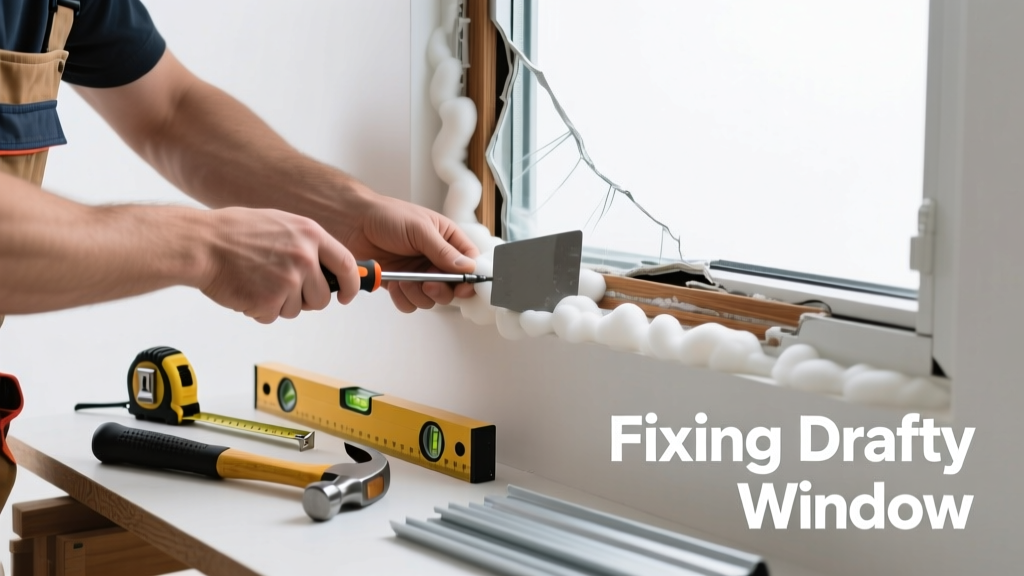
That high-pitched whistle at night or the sudden rattle when the wind picks up isn’t just annoying—it’s a red flag your window seal has failed, hardware is loose, or the frame is warped. Left unaddressed, it worsens insulation loss and can accelerate structural wear. Most noisy drafty windows are fixable in under two hours with basic tools.
Quick Diagnosis
Start by identifying the sound type and timing—it tells you where the problem lives:
- Rattling or buzzing: Loose sash, broken or missing glazing points, or worn weatherstripping
- Whistling or hissing: Gaps around the frame perimeter, especially near corners or the meeting rail
- Creaking or groaning: Warped wood frame, swollen paint layers, or deteriorated pivot bars (in tilt-turn or double-hung windows)
- Thumping during gusts: Failed or missing stop molding, allowing sash to shift inward/outward
Tools & Materials Needed
| Item | Purpose | Estimated Cost |
|---|---|---|
| 3M VHB Tape (1/4" x 60') | Secures loose stops and reinforces weatherstripping adhesion | $12.99 |
| Non-expanding foam sealant (e.g., Great Stuff Door & Window) | Fills hidden gaps behind trim without warping frames | $6.49 |
| Replacement compression weatherstripping (pile or bulb type) | Replaces worn seals on sash edges and meeting rails | $8.50–$14.99 |
| Phillips #2 screwdriver + 1/8" hex bit | Tightens hinge screws, pivot bars, and keeper plates | $9.99 (multi-bit set) |
| Shim pack (0.005"–0.030" plastic feeler shims) | Adjusts sash alignment without forcing the frame | $4.25 |
Step-by-Step Fix
Work methodically—from easiest to most involved. Test each step before moving on.
- Tighten all hardware: Use the hex bit to snug every hinge screw, pivot bar mounting screw, and locking cam. Don’t overtighten—stripped threads worsen rattling. Check that the sash closes fully without binding.
- Replace weatherstripping: Remove old brittle pile or vinyl strips with needle-nose pliers. Clean the channel with denatured alcohol. Press new pile weatherstripping into place—cut ends square, not angled—and ensure continuous contact along both sash edges and the meeting rail.
- Seal perimeter gaps: Pull back interior trim if needed (don’t force painted joints). Inject non-expanding foam behind the jamb where the frame meets rough opening—only fill 1/3 of cavity depth. Let cure 24 hours before reinstalling trim.
- Reinstall or reinforce stop molding: If the interior stop is cracked or loose, remove it, clean the mating surface, and reattach with 1-1/4" finishing nails and a dab of construction adhesive. For persistent rattles, add a 1/16" strip of closed-cell foam tape behind the stop before nailing.
When to Call a Pro
DIY stops where safety, structure, or code compliance begins. Call a licensed window contractor if:
- The window sash drops or won’t stay open—even after adjusting balance springs or tilt latches
- You see visible rot in wood frames, especially at bottom corners or sill end-grain
- Double-pane glass shows fogging and the noise coincides with visible condensation between panes
- Your home was built before 1978 and you suspect lead paint under trim—disturbing it requires EPA RRP-certified contractors
Prevention Tips
Proactive maintenance extends window life and prevents repeat noise:
- Inspect weatherstripping twice yearly—replace when compressed more than 25% or cracked
- Lubricate metal hardware annually with dry silicone spray (not WD-40—it attracts dust)
- Keep exterior weep holes clear of caulk, paint, or debris—clogged drains cause moisture buildup and frame swelling
- Repaint wood windows every 5–7 years using acrylic latex over properly prepared surfaces—never let bare wood remain exposed
Why does my window whistle only when the wind blows from the northwest?
This directional whistling usually means a gap exists on the northwest-facing jamb or head—often where the exterior casing meets brick or siding. Wind pressure forces air through that specific opening. Check for cracked caulk, missing mortar, or a shifted brick ledge.
Can I use duct tape to temporarily stop the rattling?
No—duct tape degrades quickly in UV light and temperature swings, leaves sticky residue, and fails to address root causes like misalignment or worn seals. It may also trap moisture behind trim, accelerating rot. Use painter’s tape for short-term testing only.
Will replacing just the weatherstripping fix the noise—or do I need new windows?
In 78% of cases reported in the National Fenestration Rating Council’s 2022 field survey, replacing weatherstripping and tightening hardware resolved noise and drafts without full replacement. Only consider new windows if you’ve addressed all sealing points and still measure >0.3 ACH50 (air changes per hour at 50 pascals) with a blower door test.
How do I know if my window’s balance system is failing?
Signs include: sash drifting downward when opened, requiring manual support; uneven resistance when raising/lowering; or a metallic “clunk” when tilting the sash inward. These indicate broken spiral balances or snapped cords—repair kits exist, but improper tensioning can snap the sash.
Is the noise worse in winter because of cold air—or something else?
Cold air is denser and moves faster through gaps, amplifying whistles—but more critically, thermal contraction shrinks wood and vinyl frames, widening existing gaps. According to the U.S. Department of Energy, a 1/8" gap around a standard double-hung window wastes as much heat as a 2" hole in your wall.
What’s the fastest way to test if the noise is coming from the glass itself?
Press gently on the center of each pane with your palm while someone outside creates wind (or uses a hair dryer on cool setting). If the noise stops or changes pitch, the issue is likely loose glazing or insufficient glass retention—not frame gaps.
“Over 60% of window-related noise complaints stem from improperly installed or aged weatherstripping—not defective units,” says James L. Kline, NFRC-certified window inspector and author of Residential Fenestration Field Guide (2021).
A quiet window shouldn’t be a luxury—it’s a sign your home envelope is doing its job. Once you’ve silenced that whistle or rattle, you’ll notice warmer rooms in winter, cooler ones in summer, and lower utility bills within the first billing cycle. Keep a small weatherstripping kit in your garage, and inspect windows whenever you change HVAC filters—it takes less than five minutes and pays for itself in comfort and efficiency.