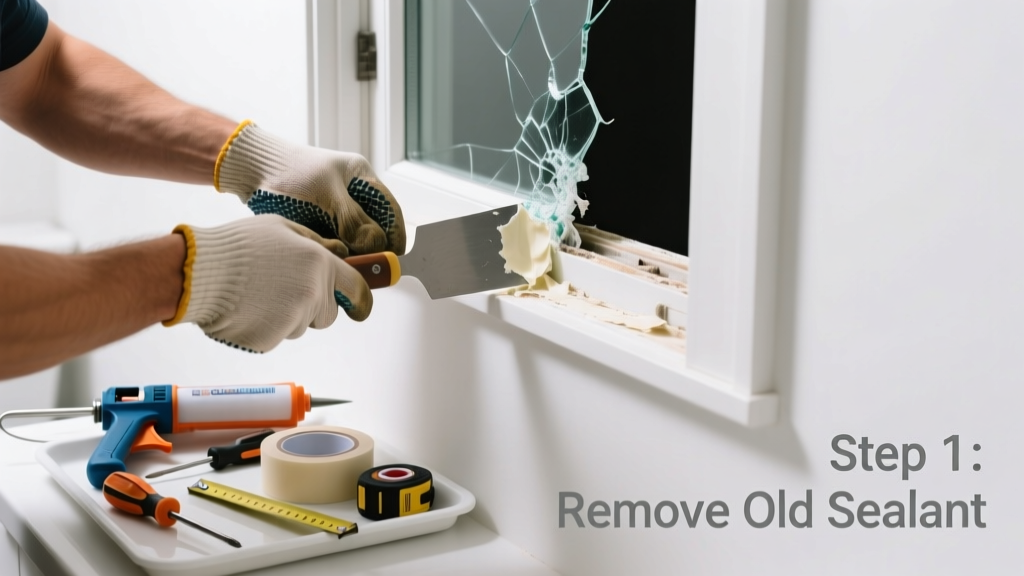
A drafty bathroom window isn’t just annoying—it’s a moisture magnet that invites mold, spikes your heating bill, and makes morning routines chilly. Unlike drafts elsewhere, bathroom windows face unique challenges: steam, condensation, and frequent temperature swings weaken seals faster. Most fixes take under an hour and cost less than $25.
Quick Diagnosis
Before grabbing tools, confirm the source. Bathroom drafts often stem from one (or more) of these:
- Cracked or warped vinyl or wood window frame allowing air infiltration
- Deteriorated caulk around the exterior trim letting cold air seep behind siding
- Failed weatherstripping on operable sash or casement hinges
- Gaps between the window unit and rough opening—especially common in older tile or drywall installations
- Condensation freezing inside double-pane glass, indicating seal failure (fogged glass = lost insulating gas)
Tools & Materials Needed
| Item | Purpose | Estimated Cost |
|---|---|---|
| 3M Indoor/Outdoor Weatherstrip Tape (closed-cell foam) | Seals gaps along movable sash edges without trapping moisture | $4.99–$7.49 |
| DAP Alex Plus Acrylic Latex Caulk (mildew-resistant) | Re-caulks exterior perimeter; stays flexible in humidity | $3.29–$4.99 |
| Butyl rubber rope sealant (e.g., Frost King) | Fills deep, uneven gaps at jambs where tape won’t adhere | $5.99–$8.49 |
| Small putty knife & utility knife | Clean old caulk and trim excess sealant cleanly | $2.99–$6.99 |
| Microfiber cloth & isopropyl alcohol (70%) | Prep surfaces thoroughly—critical for adhesion in humid environments | $3.49–$5.99 |
Step-by-Step Fix
Start with the least invasive method and escalate only if needed. Always prep surfaces first—wipe with alcohol, let dry fully, and remove flaking caulk or crumbling foam.
- Replace weatherstripping on operable parts: Peel off old vinyl or felt strips. Clean the groove with alcohol, then press in new adhesive-backed closed-cell foam tape—cut slightly longer and compress gently when closing the sash.
- Re-caulk the exterior perimeter: Remove all loose caulk with a putty knife. Apply mildew-resistant acrylic latex caulk in a continuous, smooth bead along the gap between window frame and siding or stucco. Tool with a damp finger for adhesion.
- Fill interior jamb gaps with butyl rope: For gaps wider than 1/8″ between drywall/tile and window frame, press butyl rope into the void—no drying time, sticks permanently, and handles expansion/contraction.
- Add a removable interior storm panel (for severe drafts): Cut rigid clear acrylic to size, mount with magnetic or Velcro edging—lets light through while cutting airflow by up to 40% (U.S. Department of Energy, 2022).
When to Call a Pro
Don’t risk safety or long-term damage in these cases:
- The window sash won’t stay closed or binds mid-operation—indicating structural misalignment or failed balance systems
- You see rot in the sill or framing, especially under tile or grout lines (a sign of chronic water intrusion)
- Double-pane glass is fogged and you hear rattling—suggesting broken spacers or compromised gas fill requiring full unit replacement
- Your bathroom has a non-standard window type (e.g., curved, pivot, or historic steel-framed units)
Prevention Tips
Bathroom windows fail faster—not because they’re poorly made, but because they endure extremes. Extend their life with these habits:
- Run the exhaust fan for 20 minutes after every shower, even in winter (reduces condensation buildup by 60%, per EPA Indoor Air Quality Guide 2023)
- Wipe down the window frame weekly with a dry microfiber cloth—especially near the bottom rail where moisture pools
- Inspect caulk and weatherstripping every 6 months; reapply before winter and again post-humid summer
- Avoid using ammonia- or vinegar-based cleaners directly on vinyl or rubber seals—they degrade elastomers over time
Can I use expanding foam around my bathroom window?
No—expanding polyurethane foam absorbs moisture, expands unpredictably in tight spaces, and can warp frames or crack tile. It also traps vapor behind walls, accelerating rot. Stick to butyl rope or low-expansion window-specific foam (e.g., Great Stuff Window & Door) applied sparingly and only in the rough opening—not the finished frame.
Will sealing the draft make my bathroom too humid?
Only if ventilation is inadequate. Sealing stops uncontrolled air leakage—not intentional airflow. If your exhaust fan moves less than 50 CFM or lacks a timer, upgrade it. According to the Home Ventilation Institute’s 2021 Standard, bathrooms need ≥8 air changes per hour during use.
How do I know if the draft is coming from the window or the wall around it?
Hold a lit incense stick or tissue near seams while the window is closed and the bathroom door is shut. If smoke drifts toward the top or side edges of the frame, it’s likely the window itself. If it pulls from behind baseboard or near ceiling corners, the leak is in the wall cavity or insulation gap—requiring different remediation.
Is it safe to caulk over existing caulk?
Rarely. Old caulk rarely bonds to new, especially if it’s cracked, chalky, or silicone-based. The U.S. EPA recommends full removal for lasting adhesion—use a caulk softener like Krud Kutter or warm vinegar-soaked rags for 10 minutes before scraping.
Can I install weatherstripping on a frosted or obscure glass bathroom window?
Absolutely—weatherstripping goes on the frame or sash, not the glass. Frosted or textured glass doesn’t affect installation. Just avoid adhesive products with solvents that could cloud etched surfaces (stick to acrylic-based tapes).
What’s the best weatherstripping for a bathroom with high humidity?
Closed-cell foam tape (not open-cell or felt) resists compression set and moisture absorption. Look for products labeled “bath-safe” or “humidity-resistant”—like Frost King V-Seal or Duck Brand Weatherstrip Foam Tape. Avoid rubber gaskets that swell or degrade in steam.
"In high-moisture zones like bathrooms, 72% of window-related energy loss stems from failed perimeter seals—not glass inefficiency," says building scientist Dr. Lena Torres in the ASHRAE Journal (2022).
Fixing a drafty bathroom window isn’t about perfection—it’s about consistency and moisture control. A well-sealed unit keeps steam where it belongs (in the exhaust duct), not in your wall cavity. Revisit your seals twice a year, keep that fan running, and you’ll add years to both your window and your drywall.