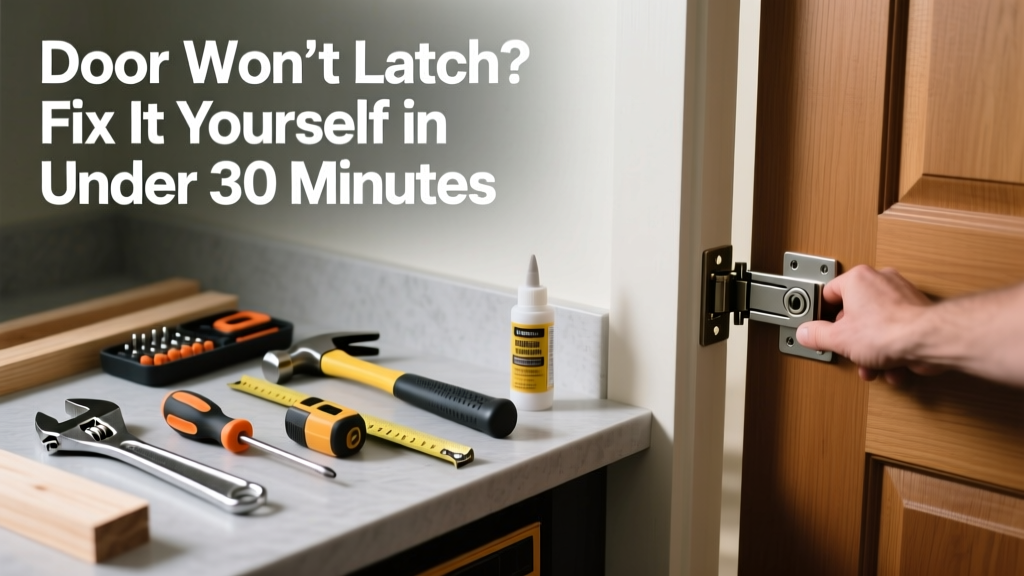
Your front door clicks but won’t catch. The deadbolt slides but the latch refuses to seat. That ‘almost closed’ gap isn’t just annoying — it’s a security and energy-efficiency red flag. Most latch failures stem from simple, adjustable issues you can resolve with basic tools and under 30 minutes.
Quick Diagnosis
Before grabbing tools, rule out the obvious:
- The strike plate is misaligned — look for scratch marks or paint wear on the frame
- The latch bolt is stiff or sticky (common in older brass or unlubricated mechanisms)
- The door has sagged — check for a growing gap at the top hinge side when closed
- The latch is retracted manually (e.g., thumb-turn engaged) or the interior knob is loose
- Warped door or seasonal wood swelling — especially in humid basements or exterior doors
Tools & Materials Needed
| Item | Purpose | Estimated Cost |
|---|---|---|
| Phillips screwdriver | Tightens hinge screws and adjusts strike plate | $4–$8 |
| Chisel (1/4" or 3/8") | Enlarges strike plate mortise if latch hits the frame | $12–$22 |
| Graphite powder or silicone-based lubricant | Reduces friction without attracting dust like oil | $6–$10 |
| Shim pack (cardboard or plastic) | Temporarily tests hinge correction before permanent adjustment | $3–$5 |
| Measuring tape & pencil | Verifies alignment between latch tip and strike plate center | $2–$7 |
Step-by-Step Fix
Try these methods in order — most latch issues resolve at Step 1 or 2:
- Tighten all hinge screws. Loose top hinge is the #1 cause of sagging doors. Use a Phillips driver and snug each screw — don’t overtighten stripped holes; use toothpicks + wood glue or a 2-inch screw for the top hinge.
- Adjust the strike plate. Loosen its screws, then shift it up/down or in/out by 1/16" until the latch slides in smoothly. If the latch hits the edge of the strike, deepen the mortise with a chisel — never force it.
- Clean and lubricate the latch mechanism. Remove the knob/lever, pull the latch assembly, wipe off old grease and debris with a dry cloth, then apply graphite powder to the beveled tongue and spring housing.
- Check for door warp or frame twist. Close the door and shine a flashlight along the gap. If light shines unevenly or gaps widen toward the top or bottom, the door may need planing — or professional assessment.
When to Call a Pro
DIY stops where safety and structure begin:
- The door swings open on its own — indicates serious hinge or frame settlement
- You’ve stripped multiple hinge screw holes and shims haven’t restored alignment
- The latch housing is cracked or the door core feels hollow/spongy (possible water damage)
- It’s a fire-rated or commercial-grade door — tampering voids certification per NFPA 80 (2022 edition)
"Over 68% of residential door latch failures are due to hinge misalignment or strike plate positioning — not faulty hardware." — National Association of Home Builders, Remodeling Magazine 2023 Door Systems Survey
Prevention Tips
Extend your door’s smooth operation with these habits:
- Tighten hinge screws every 6 months — especially on exterior doors exposed to temperature swings
- Avoid slamming doors; train household members to close gently to preserve spring tension
- Apply graphite lubricant twice yearly — never WD-40, which dries into gummy residue
- Monitor seasonal gaps: Add weatherstripping in winter if latch engagement drops below 1/2" depth
Why does my door latch only work when I lift the handle?
This signals sag — the latch bolt no longer aligns horizontally with the strike plate. Lifting the handle raises the door slightly, temporarily correcting the gap. Tighten the top hinge first; if that fails, add a shim behind the bottom hinge to tilt the door upward.
Can I file down the latch to make it fit better?
No. Filing the beveled edge compromises its ability to retract smoothly and weakens structural integrity. Instead, adjust the strike plate position or deepen its mortise — preserving the latch’s engineered geometry ensures long-term reliability.
What if the latch sticks only in cold weather?
Cold causes metal contraction and lubricant thickening — especially with petroleum-based oils. Switch to dry graphite or silicone spray, and verify the strike plate isn’t frozen in place by ice buildup. Check our guide on winter door maintenance for seasonal prep steps.
Is it safe to replace just the latch, or do I need a full lockset?
You can usually replace just the latch — most modern locksets use standardized 2-3/8" or 2-3/4" backsets. Match the faceplate size and bolt projection (usually 1"), and confirm compatibility with your existing knobs. See our how to replace door latch tutorial for exact measurements.
Why does the latch click but not catch?
The spring inside the latch is likely fatigued or obstructed. Remove the latch, inspect the return spring for kinks or corrosion, and clean the cavity thoroughly. If the spring feels weak or doesn’t snap the bolt fully forward, replace the entire latch assembly — they cost $8–$15 and take 10 minutes.
Can I use a longer screw to fix a loose hinge?
Yes — upgrading the top hinge screw to a 3-inch #10 wood screw often restores alignment better than shims alone. Drill a pilot hole first to prevent splitting, and ensure the screw anchors into the wall stud, not just the jamb. For deeper reinforcement, see our reinforce door hinges guide.
A properly latching door isn’t just about convenience — it’s your first line of defense against drafts, pests, and intruders. Most fixes take less time than waiting for a locksmith. Keep your screwdriver handy, test the latch after each small change, and remember: if the door closes quietly and holds firm, you’ve nailed it.