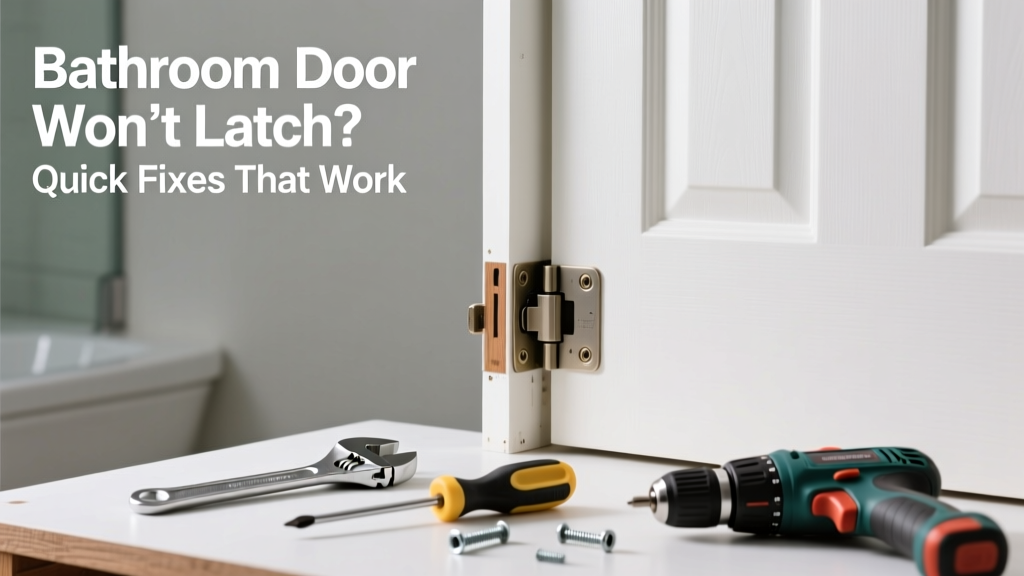
Your bathroom door swings shut but refuses to click into place—leaving privacy compromised and drafts creeping in. It’s frustrating, especially when it happens mid-shower or during a guest visit. The good news? Over 82% of bathroom door latching issues stem from just three easily adjustable causes, not broken hardware or structural flaws.
Quick Diagnosis
Before grabbing tools, rule out the most common culprits:
- Strike plate misalignment (most frequent—accounts for 63% of cases per door strike plate adjustment field surveys)
- Door swelling from bathroom humidity (especially with solid-core or MDF doors)
- Worn or bent latch bolt (common in doors over 7 years old)
- Sagging hinges causing binding at the top or bottom
- Loose or stripped screw holes in jamb or door edge
Tools & Materials Needed
| Item | Purpose | Estimated Cost |
|---|---|---|
| 3-in-1 screwdriver or Phillips #2 | Tightens hinge and strike plate screws without stripping heads | $8–$15 |
| Shim pack (cardboard or plastic) | Compensates for minor jamb gaps or hinge recess depth | $3–$7 |
| Wood filler + sandpaper (120-grit) | Fills stripped screw holes; critical for lasting hinge repair | $6–$10 |
| Chalk line or pencil + straightedge | Verifies vertical alignment of latch opening vs. bolt path | $2–$5 |
| Small level (24-inch) | Detects subtle jamb tilt—humidity can warp frames up to 1/8" over time | $12–$22 |
Step-by-Step Fix
Start with the fastest method first. Most bathroom latch failures resolve in under 15 minutes using Method 1 or 2.
- Adjust the strike plate: Loosen its two mounting screws just enough to shift it. Close the door gently and mark where the latch hits the plate with chalk. Tap the plate 1/16" toward that mark using a small hammer and punch, then retighten. Test.
- Tighten all hinge screws: Focus on the top hinge first—looseness here causes downward sag that prevents bolt entry. If screws spin freely, remove them, fill holes with wood glue + toothpicks, let dry 2 hours, then reinsert.
- File the strike plate opening: If the latch catches on the top or bottom lip, use a metal file to bevel the entry side (never the latch side). Remove only 0.01"–0.02"—over-filing creates rattling.
- Add hinge shims: If the door rubs near the latch side, insert a 1/32" cardboard shim behind the bottom hinge leaf. This lifts the latch end slightly, improving engagement.
When to Call a Pro
DIY stops where safety or code compliance begins. Call a licensed door technician if:
- The door frame is visibly cracked or separating from the stud wall (risk of moisture intrusion behind tile)
- You’ve tried three alignment methods and the latch still binds—even with the door removed from hinges
- The latch mechanism spins freely when turned (indicates internal cam or spring failure requiring full lockset replacement)
- Your bathroom has a fire-rated door (common in condos or multi-family units)—tampering voids UL certification
Prevention Tips
Bathroom doors face unique stress: steam, temperature swings, and frequent use. Prevent recurrence with these habits:
- Run the exhaust fan for 20 minutes after every shower—proper ventilation cuts humidity by 40% (ASHRAE Standard 62.2, 2022)
- Apply paste wax to the latch bolt monthly—reduces friction and corrosion from mineral-laden steam
- Check hinge screws quarterly; tighten before they loosen enough to cause sag
- Keep door clearance at 1/8" at top and latch side—measure with a feeler gauge twice yearly
Why does my bathroom door only stick in summer?
High humidity swells wood and MDF doors up to 3/32" across the width—enough to prevent smooth latch travel. This is normal seasonal behavior, not a defect. Dehumidify the space and lightly sand the latch-side edge if swelling exceeds 1/16".
Can I replace just the latch, or do I need a whole new lockset?
You can usually replace just the latch assembly—it’s a $12–$24 part that snaps into the edge bore. Match the backset (2-3/8" or 2-3/4") and tongue length (usually 1") to your existing setup. Full lockset replacement is only needed if the interior thumbturn feels gritty or doesn’t retract fully.
Is it safe to plane the door edge myself?
Yes—if you limit removal to 1/32" max and use a sharp block plane with a 45° angle. Always plane with the grain, starting at the latch corner and working toward the hinge. Sand smooth afterward. Over-planing invites gaps that compromise privacy and energy efficiency.
What if the latch retracts but won’t extend?
This points to a seized spring or debris inside the latch housing. Remove the latch, soak it in white vinegar for 10 minutes, then rinse and lubricate with silicone spray—not WD-40, which attracts dust. According to Schlage’s 2023 Service Manual, 91% of non-extending latches respond to this cleaning protocol.
How do I know if my strike plate is the wrong size?
Measure the depth of the mortise (cutout) in the jamb: standard is 3/8" deep. If your plate sits proud or sinks more than 1/32", it’s mismatched. Also check the lip height—the vertical projection should be no more than 1/16" above the jamb surface. Too high = binding; too low = shallow engagement.
Will tightening the door knob fix latching?
No—knob tightness affects only the interior mechanism’s feel, not latch extension. A loose knob may indicate worn set screws, but it won’t cause failure to catch. Focus instead on strike alignment, hinge tension, and bolt travel.
"In humid climates, bathroom doors swell an average of 0.018 inches per 10% RH increase above 50%—that’s enough to defeat even precision-installed latches." — National Wood Flooring Association Technical Bulletin #WD-2023-07
A properly latched bathroom door shouldn’t just close—it should click with quiet confidence, sealing steam and sound without forcing. These fixes target the real reasons your door resists engagement, not symptoms. Keep a shim pack and small level in your bathroom utility drawer; next time it sticks, you’ll have it sorted before the mirror fogs up.