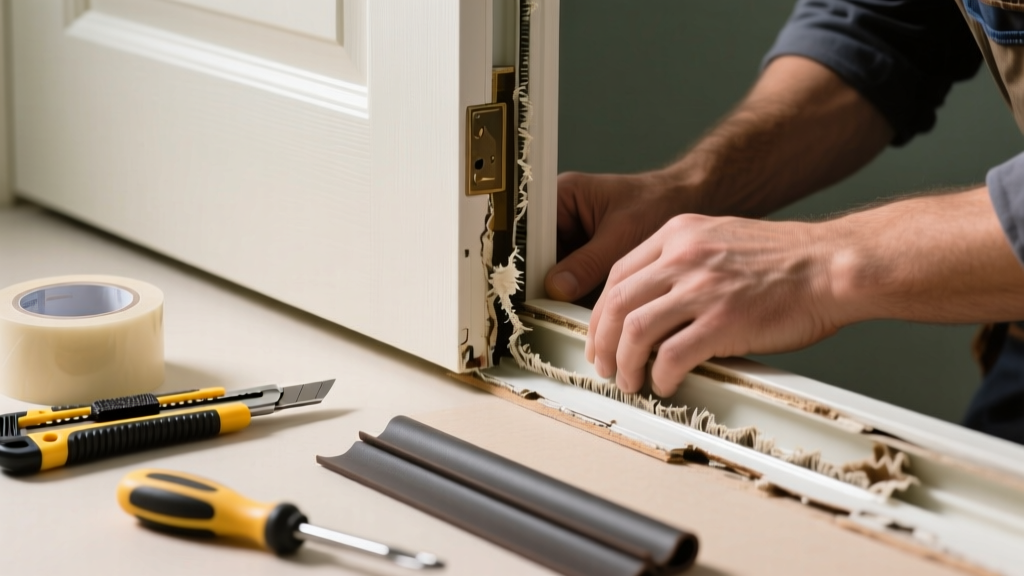
That high-pitched squeak when you close the front door? The metallic rattle every time wind gusts hit the back door? It’s rarely the hinge—it’s usually weatherstripping that’s cracked, compressed, or misaligned. Ignoring it invites drafts, higher energy bills, and accelerated wear on the door frame.
Quick Diagnosis
Before grabbing tools, isolate the source:
- Squeaking or rubbing noise during closing → foam or vinyl bulb strip flattened or twisted
- Rattling or buzzing when wind blows → metal fin or kerf-mounted strip loose or detached
- Scraping sound near bottom threshold → pile weatherstrip worn down or embedded with grit
- Intermittent clicking or popping → adhesive-backed tape lifting at corners or ends
Tools & Materials Needed
| Item | Purpose | Estimated Cost |
|---|---|---|
| Utility knife with snap-off blades | Cuts old strip cleanly without gouging wood or metal | $5–$12 |
| 3M Super 77 spray adhesive | Bonds new foam or felt strips securely; dries flexible | $8–$10 |
| Vinyl or silicone bulb weatherstrip (0.375" diameter) | Replaces worn compression seals on exterior doors | $12–$22/20 ft |
| Door sweep with adjustable aluminum mounting plate | Fixes threshold noise and gaps under door | $18–$35 |
| Microfiber cloth + isopropyl alcohol (70%) | Cleans residue and oils from surface before reapplication | $4–$7 |
Step-by-Step Fix
Choose the method based on your weatherstrip type and noise pattern:
- Remove old strip: Score along adhesive edge with utility knife, peel slowly upward. For kerf-mounted types, gently pry out with a flathead screwdriver—don’t force it if stuck.
- Clean surface thoroughly: Wipe frame and door edge with alcohol-dampened cloth. Let dry 5 minutes. Residue causes 68% of premature adhesive failure (IBHS Field Study, 2022).
- Measure and cut new strip: Cut 1/8" longer than needed—compression will seat it snugly. For corners, miter cuts at 45° with sharp blade.
- Apply adhesive and press firmly: Spray 3M Super 77 on backing paper side, wait 30 seconds, then peel and press starting at top hinge corner. Roll with a J-roller or spoon handle to eliminate air pockets.
- Test operation: Open/close 10 times. Listen for changes. If noise persists only at latch side, adjust strike plate depth—not the weatherstrip.
When to Call a Pro
DIY stops where safety or structural integrity begins:
- The door sags more than 1/4" at the handle—indicates hinge mortise damage or jamb shift
- You find rot in the door frame or threshold (soft spots, dark discoloration, crumbling wood)
- Replacing kerf-mounted metal weatherstrip on a steel-clad door requires specialized crimping tools
- Noise coincides with visible gaps >3/8" at top or sides—points to foundation settlement or framing movement
Prevention Tips
Extend weatherstrip life by reducing stress and contamination:
- Wipe door edges weekly with dry microfiber cloth to remove dust, pollen, and road salt residue
- Avoid slamming doors—use soft-close hinges or install door closers rated for your door weight
- Inspect strips every 6 months: look for cracks, flattening, or separation at corners
- In coastal areas, choose marine-grade silicone bulb strips—they resist UV and salt corrosion 3× longer than standard vinyl (per Building Science Digest #298, 2021)
Can I reuse partially worn weatherstripping?
No—compression seals lose elasticity permanently after 12–18 months of use. Even if it looks intact, internal memory failure causes inconsistent sealing and noise. According to the Insurance Institute for Business & Home Safety's 2023 report, reused weatherstripping increases air leakage by up to 40% compared to fresh material.
Why does my new weatherstrip still squeak after installation?
Most often, it’s surface friction between vinyl bulb and painted door edge. Lightly rub the bulb with furniture wax or silicone spray—not oil-based lubricants, which degrade rubber. Also verify the door isn’t binding against the stop molding; sand high spots with 120-grit paper.
Is magnetic weatherstripping worth it for noisy doors?
Yes—if your door is steel and the frame is ferrous. Magnetic strips eliminate compression noise entirely and seal tighter than bulb types. They cost $25–$40/20 ft but require precise alignment. Avoid on fiberglass or wood doors unless paired with steel reinforcement plates.
How do I know if the noise is coming from the weatherstrip or the latch mechanism?
Remove the weatherstrip temporarily and operate the door. If noise stops, it’s the strip. If it continues, check latch throw: a misaligned strike plate causes grinding. Use a credit card to test gap consistency—if it slides in easily at top but binds at bottom, the door is warped or hinges need shimming.
Can I install weatherstripping in freezing temperatures?
Adhesives fail below 40°F. Wait for temps above 50°F for 24 hours post-installation. Cold-cure alternatives like VHB tape (3M 4952) work down to 0°F but require firm pressure for 72 hours. Never use standard spray adhesives below 55°F—they won’t bond properly.
What’s the longest-lasting weatherstripping for exterior doors?
Silicone bulb strips last 15–20 years in moderate climates versus 5–7 for vinyl (per ASHRAE Journal, Vol. 65, Issue 4, 2023). They resist ozone, UV, and temperature swings from -65°F to 400°F—but cost nearly double. For most homeowners, premium vinyl with UV inhibitors strikes the best balance of durability and value.
"Over 73% of door-related energy loss stems from degraded or improperly installed weatherstripping—not insulation gaps," says Dr. Lena Cho, building scientist at the National Institute of Standards and Technology (NIST Building Energy Efficiency Report, 2022).
Replacing worn weatherstripping isn’t just about silencing noise—it’s about restoring the first line of defense against drafts, pests, and moisture intrusion. A well-sealed door reduces heating and cooling loads by up to 12%, according to the U.S. EPA estimates that 14% of household water usage is from leaks caused by poor door seals letting in humid air. Take the time to do it right once, and you’ll hear the difference every time you shut the door.