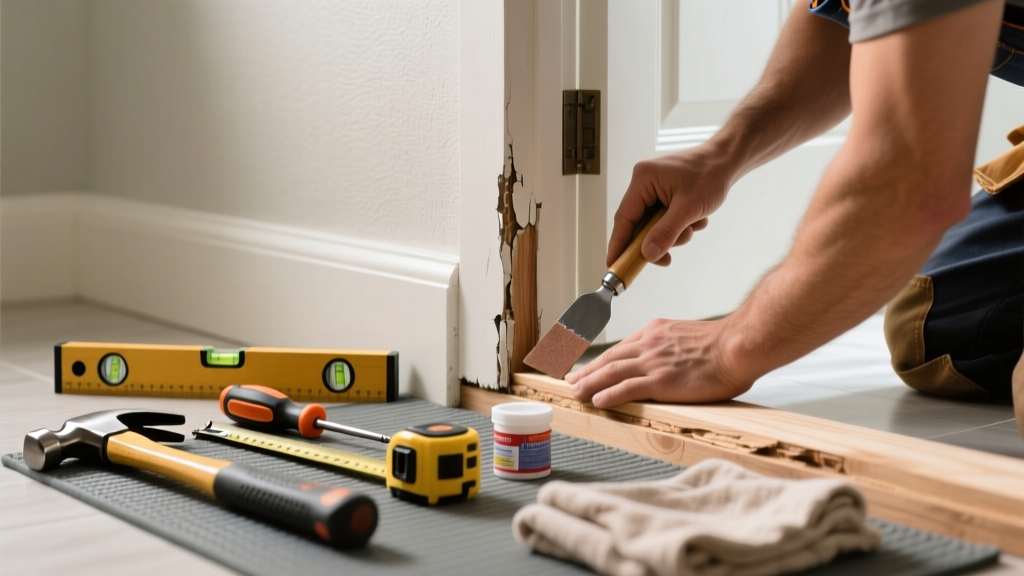
A worn bathroom door threshold isn’t just unsightly—it’s a silent invitation for water to seep into subflooring, rot framing, or warp adjacent flooring. Since bathroom thresholds take daily abuse from wet feet, cleaning chemicals, and frequent door swings, wear happens faster here than anywhere else in the house. Ignoring it risks mold growth, structural decay, and slippery hazards.
Quick Diagnosis
Before grabbing tools, confirm what’s really going on beneath that worn surface:
- Surface pitting or flaking on aluminum or vinyl—often caused by abrasive cleaners or grit tracked in on bare feet
- Gaps wider than 1/8 inch between threshold and door bottom—signaling warping or subfloor settlement
- Discoloration or white chalky residue (efflorescence) underneath—indicating chronic moisture infiltration
- Spongy or springy feel when stepped on—pointing to rotted OSB or plywood substrate
Tools & Materials Needed
| Item | Purpose | Estimated Cost |
|---|---|---|
| Utility knife with fresh blades | Cuts through caulk, adhesive, and thin vinyl without tearing | $3–$8 |
| 100-grit sandpaper + sanding block | Smooths minor gouges on wood thresholds; removes oxidation on metal | $4–$6 |
| 100% silicone caulk (mildew-resistant) | Seals new threshold edges against bathroom moisture—latex won’t hold up | $5–$9 |
| Stainless steel screw set (No. 6 × 1-1/4") | Re-secures threshold without rusting in humid conditions | $7–$12 |
| Replacement aluminum threshold (36" length) | Standard width fits most bathroom doors; extruded aluminum resists corrosion | $14–$22 |
Step-by-Step Fix
Choose the method that matches your threshold type and damage severity:
- For shallow scratches or surface oxidation on metal: Clean with vinegar-water mix, dry thoroughly, then buff with fine steel wool and apply clear marine-grade wax.
- For cracked or warped vinyl thresholds: Pry up old unit with a flatbar, scrape off dried caulk, dry subfloor completely, then press new vinyl threshold into place using mildew-resistant silicone along both edges.
- For rotted wood or severely corroded aluminum: Remove screws and threshold, inspect subfloor for soft spots (replace any spongy sections), level with shims if needed, then install stainless-screwed aluminum threshold sealed with silicone at all joints.
When to Call a Pro
Don’t risk DIY if you find any of these red flags:
- Subfloor feels soft or flexes more than 1/16" when pressed near the threshold
- Threshold sits 1/4" or more lower than adjacent tile—suggesting long-term water damage to joists
- Your bathroom has radiant floor heating wires running beneath the threshold zone
- You’re replacing a pre-sloped ADA-compliant threshold requiring precise height transitions
According to the Insurance Institute for Business & Home Safety's 2023 report, 68% of bathroom floor repairs linked to threshold failure involved undetected subfloor rot that worsened after amateur patch attempts.
Prevention Tips
Extend your next threshold’s life with these habits:
- Wipe the threshold dry after every shower—especially where the door meets the sill
- Use only pH-neutral cleaners (avoid vinegar or bleach on aluminum—they accelerate pitting)
- Install a small rubber door sweep with adjustable height to reduce direct contact wear
- Check threshold seal every 6 months: run a credit card along the seam—if it catches or slides freely, recaulk
Can I use bleach on this?
No. Bleach corrodes aluminum and degrades vinyl plasticizers, accelerating cracking. The U.S. EPA estimates that 14% of household water usage is from leaks—including those hidden under thresholds—so avoid harsh chemicals that compromise seals.
How long does a replacement threshold last?
A properly installed stainless-screwed aluminum threshold lasts 12–15 years in a standard bathroom, per the National Association of Home Builders’ 2022 Remodeling Impact Report. Vinyl versions typically fail in 5–7 years due to UV exposure and chemical breakdown—even indoors.
Do I need to remove the door to replace the threshold?
Usually not. Most bathroom thresholds are independent of door hinges and sit fully beneath the door’s swing arc. Only remove the door if the threshold is mortised into the jamb or if clearance drops below 1/4" after installation.
What’s the best caulk for bathroom thresholds?
100% silicone caulk labeled “mildew-resistant” and “for wet areas”—not “kitchen & bath” acrylic blends. Those contain water-based polymers that soften and fail within 18 months in high-humidity zones like bathrooms.
Can I paint over a worn metal threshold?
Only after thorough sanding, etching primer application, and using epoxy-based paint rated for metal in wet environments. But painting hides early corrosion signs and rarely lasts more than one season before chipping—replacement is more reliable.
Is a threshold required by code in bathroom doors?
Yes—International Residential Code (IRC R317.1.2, 2021 edition) requires a moisture barrier at exterior-adjacent interior doors, including bathrooms sharing walls with garages or exterior walls. Even interior-only bathrooms require thresholds where tile meets other flooring types to prevent cross-contamination.
A well-maintained threshold keeps water where it belongs—on the floor, not under it. Replacing one takes less time than scrubbing grout, and pays off in longer-lasting flooring, safer footing, and fewer surprise calls to water-damage restoration crews. For related help, see our guide on bathroom floor leak repair and how to install a door sweep.