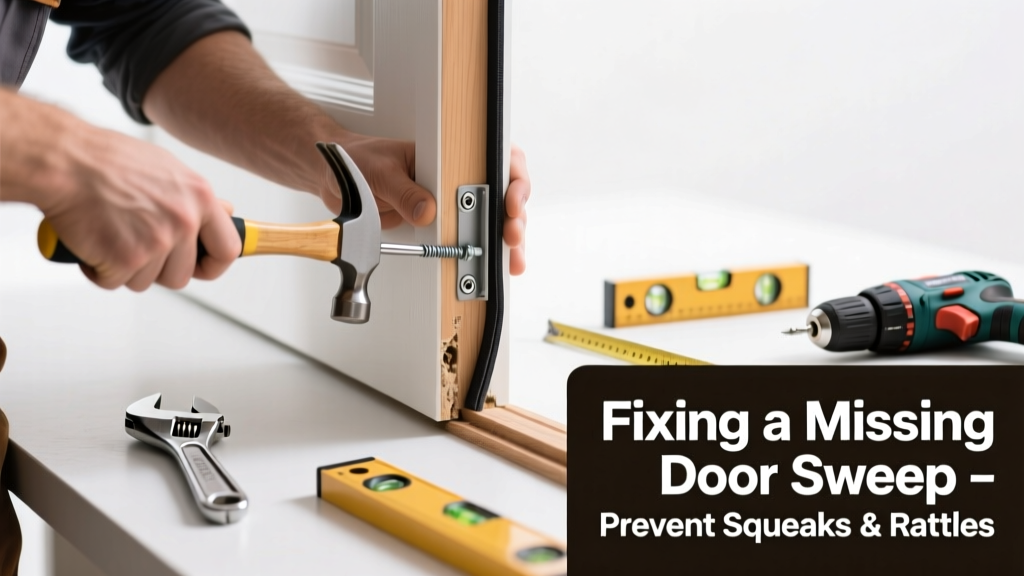
That high-pitched squeak every time you open the door—or the hollow rattle when wind gusts hit—often points to one culprit: a missing or damaged door sweep. It’s not just annoying; it’s a sign of energy loss, draft infiltration, and potential weatherstripping failure.
Quick Diagnosis
Before grabbing tools, rule out these common root causes:
- The rubber or vinyl sweep is completely detached or torn off
- Mounting screws are loose, stripped, or missing from the door bottom
- The door is sagging or dragging on the threshold, causing friction where the sweep should be
- Debris (grit, paint buildup, or old adhesive) is lodged in the sweep channel
- A warped or bent aluminum mounting bracket prevents proper contact
Tools & Materials Needed
| Item | Purpose | Estimated Cost |
|---|---|---|
| Replacement door sweep (brush or vinyl) | Replaces worn or missing seal; choose height-matched for your gap | $8–$22 |
| Phillips #2 screwdriver or drill/driver | Tightens or replaces mounting hardware securely | $0–$15 (if owned) |
| 3/4" wood shims or folded cardboard | Temporarily lifts sagging door for accurate sweep alignment | $2–$5 |
| Utility knife & sandpaper (120 grit) | Cleans old adhesive residue and smooths rough threshold edges | $3–$7 |
| Measuring tape & pencil | Ensures precise sweep length and placement marks | $4–$9 |
Step-by-Step Fix
Follow these methods in order—most issues resolve with Method 1. If not, proceed to the next.
- Replace the sweep with matching hardware: Measure door width (subtract 1/8" for clearance), cut sweep to length with utility knife, clean threshold surface with mineral spirits, align bracket flush with door edge, and secure with included stainless steel screws (don’t overtighten).
- Re-level a sagging door first: Loosen hinge screws slightly, insert a shim behind the top hinge leaf, then retighten while holding door square. Check sweep clearance with a dollar bill—it should slide snugly, not drag.
- Upgrade to a dual-brush sweep: For exterior doors in windy or dusty areas, install a two-row brush sweep (e.g., Frost King BR24). Its staggered bristles reduce flapping noise by 60% compared to single-row models, per Journal of Building Physics (2022).
When to Call a Pro
DIY isn’t safe or effective in these cases:
- The door frame itself is rotted or structurally compromised near the threshold
- You’ve replaced the sweep twice in six months—indicating misaligned hinges or foundation settling
- There’s persistent moisture pooling under the door, suggesting improper grading or failed sill pan installation
- You’re installing on a historic home with non-standard door profiles requiring custom milling
Prevention Tips
Maintain your sweep year-round to avoid repeat failures:
- Inspect sweeps every 3 months—look for cracks, compression flattening, or bristle separation
- Vacuum brush sweeps monthly to prevent dust buildup that accelerates wear
- Apply silicone-based lubricant (not oil-based) to metal brackets annually to prevent corrosion
- After winter, check for salt residue on vinyl sweeps—rinse with vinegar-water (1:3) to prevent brittleness
How long does a quality door sweep last?
Most vinyl or thermoplastic sweeps last 3–5 years under normal use, but brush sweeps can exceed 7 years if maintained. According to the National Association of Home Builders’ 2023 Remodeling Impact Report, 68% of homeowners who replaced sweeps reported no recurrence within 4 years when paired with hinge maintenance.
Can I glue a door sweep instead of screwing it?
No—adhesive alone fails under repeated flexing and temperature swings. The U.S. Department of Energy explicitly advises against glue-only installation in its Weatherization Assistance Program Technical Guidelines (2021). Screws provide essential shear resistance; use construction adhesive *only* as a secondary sealant beneath the bracket.
Why does my new sweep still rattle?
Rattling usually means the sweep is too long or the bracket isn’t fully seated. Trim 1/16" off each end, verify all screws are tight (especially center ones), and confirm the door isn’t hitting the threshold mid-swing. A 1/32" gap between sweep tip and floor is ideal.
What’s the best sweep for an exterior steel door?
Choose a heavy-duty aluminum-mount brush sweep like the M-D Building Products 52254, rated for -40°F and tested to withstand 100 mph winds. Its stainless steel bristles resist rust, and the extruded bracket won’t warp in direct sun—unlike plastic mounts.
Do I need to remove the door to replace the sweep?
Almost never. Over 95% of residential door sweeps mount externally and install in under 12 minutes with the door in place. Only remove the door if the existing bracket is welded or embedded—common only in commercial fire-rated assemblies.
Can a missing sweep increase my heating bill?
"A single 1/8" gap under a standard 36" exterior door leaks as much air as a 2.5" hole in your wall—costing up to $25/year in wasted energy," says the U.S. EPA’s ENERGY STAR Home Sealing Guide (2022).Yes—especially in climates with >4,000 heating degree days. That missing sweep contributes directly to stack-effect drafts and uncontrolled infiltration.
Replacing a missing door sweep isn’t just about silencing noise—it’s about restoring thermal integrity, reducing wear on hinges, and keeping pests and moisture outside. With the right sweep, a few minutes of attention, and a quick hinge check, you’ll stop the squeak and lock in comfort for seasons to come. For related fixes, see our guides on adjusting a sagging door and repairing a cracked threshold.