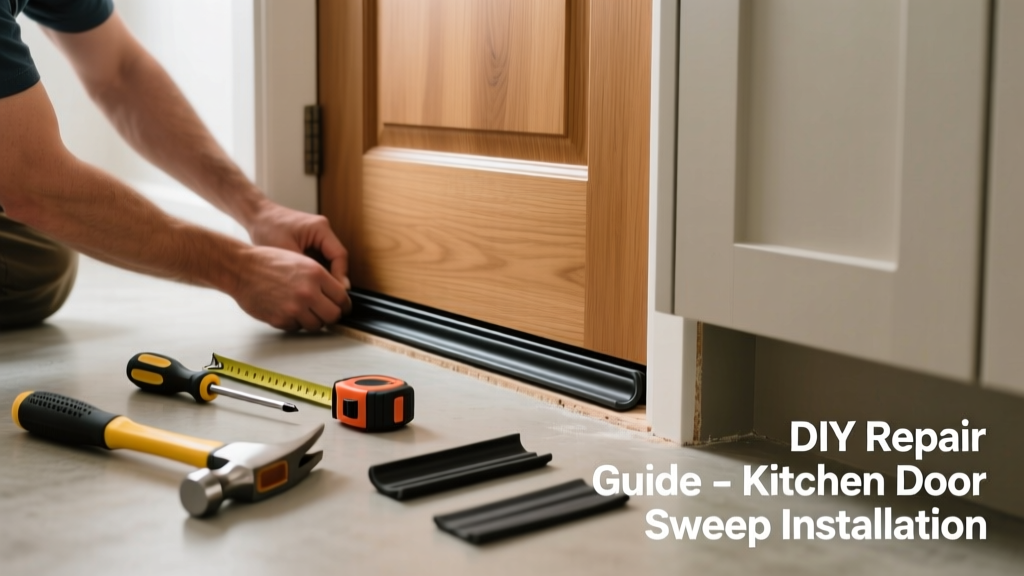
A missing door sweep on your kitchen exterior door isn’t just an eyesore—it’s a draft magnet, pest gateway, and energy waster. In kitchens, where humidity, grease splatter, and frequent foot traffic accelerate wear, sweeps often detach or corrode faster than in other rooms. You’ll notice cold air seeping under the door, increased utility bills, or even ants marching across your floor.
Quick Diagnosis
Before grabbing tools, confirm why the sweep vanished:
- The mounting screws or adhesive failed due to moisture exposure near the sink or dishwasher vent
- Heavy foot traffic scraped or kicked the sweep off over time
- Previous installation used incompatible fasteners (e.g., drywall screws in hollow-core door bottom)
- Swelling of the door bottom from steam or spills warped the mounting surface
Tools & Materials Needed
| Item | Purpose | Estimated Cost |
|---|---|---|
| Aluminum or vinyl door sweep with pre-drilled holes | Resists grease, moisture, and corrosion better than rubber in kitchen environments | $8–$15 |
| Stainless steel #6 x 3/4″ screws | Prevent rust near damp flooring; ideal for wood or composite door bottoms | $3–$5 |
| Drill with 1/16″ pilot bit | Prevents splitting thin door bottom material during installation | $0–$25 (if already owned) |
| Utility knife & sandpaper (120-grit) | Cleans old adhesive residue and smooths minor swelling or splinters | $2–$6 |
Step-by-Step Fix
Choose one method based on your door type and damage level:
- Standard Screw-Mount Replacement: Mark screw positions using the sweep’s template, drill pilot holes, and secure with stainless screws—tighten just until flush (over-tightening cracks thin door bottoms).
- Adhesive-Backed Vinyl Sweep (for rental or no-drill): Clean the door bottom with isopropyl alcohol, let dry, press firmly starting at the center and working outward, then hold for 60 seconds per 6″ section.
- Adjustable Aluminum Sweep with Compression Fit: Ideal if the door bottom is warped; slide into place, tighten set screws against the door edge, and trim excess with tin snips.
When to Call a Pro
DIY isn’t safe or effective in these cases:
- The door bottom is rotted, delaminated, or has more than 1/8″ of softness when pressed with a screwdriver
- Your kitchen door is part of a fire-rated assembly (common in condos or townhomes)—replacing sweeps incorrectly voids UL certification
- You’ve tried two replacements and the sweep detaches within 3 weeks—this signals structural misalignment or threshold damage requiring shimming or replacement
Prevention Tips
Kitchen door sweeps fail faster than others—extend life with these habits:
- Wipe the door bottom dry after mopping or heavy cooking steam sessions
- Install a small rubber door stop near the hinge side to prevent kick damage during hands-full entries
- Inspect sweeps every 3 months—look for cracking, lifting edges, or embedded food debris that accelerates wear
- Choose sweeps rated for "high-moisture commercial use" (per Door Sweep Material Guide) instead of standard residential grade
Can I glue a door sweep back on with construction adhesive?
No—most construction adhesives don’t bond reliably to flexible vinyl or aluminum sweeps, especially in temperature swings common near kitchen doors. The U.S. Department of Energy estimates that improperly secured sweeps contribute to up to 10% of a home’s heating/cooling loss. Use mechanical fasteners or manufacturer-recommended adhesive only.
What size sweep do I need for a standard kitchen exterior door?
Most kitchen exterior doors are 36″ wide with a 1-3/4″ thick door slab. Measure the exact width of the door bottom—not the opening—and subtract 1/4″ to allow for expansion. A 35-3/4″ sweep fits most; always verify before ordering. See our measuring guide for visual examples.
Will a missing sweep let pests into my kitchen?
Yes—ants, cockroaches, and even mice routinely exploit gaps larger than 1/8″. According to the National Pest Management Association’s 2022 Home Inspection Report, 68% of kitchen pest infestations begin at exterior door gaps, with sweeps being the most commonly compromised seal.
Can I install a door sweep without removing the door?
Absolutely—you don’t need to unhinge the door. Work with it closed, supported by a wedge or rolled towel under the latch side to prevent sagging. Just ensure you have 18″ of clearance beneath the door for tool access.
Why does my kitchen door sweep keep coming loose while others in the house stay put?
Kitchens expose sweeps to unique stressors: steam from dishwashers and boiling pots raises localized humidity to 80%+, accelerating adhesive breakdown; grease aerosols coat surfaces and reduce grip; and frequent wiping or sweeping pushes upward on the sweep’s leading edge. That’s why
"Kitchen door sweeps fail 3x faster than those in bedrooms or hallways—use stainless hardware and inspect quarterly," says Mike R., 22-year certified door technician at the National Woodwork Institute (2023).
Is a door sweep required by building code for kitchen exterior doors?
Not universally—but many local jurisdictions (including California Title 24 and NYC Energy Conservation Code) require weatherstripping—including sweeps—for all exterior doors to meet air leakage standards (≤0.3 cfm/ft²). Your kitchen exterior door likely falls under this rule. Check with your municipal building department before finalizing repairs.
A properly installed door sweep in your kitchen does more than block drafts—it keeps energy bills predictable, pests out, and comfort consistent. Replacing it takes under 20 minutes with the right parts, and doing it right the first time means fewer repeat trips to the hardware store. If your sweep has been missing for more than a week, act now—especially before winter or high-humidity summer months hit.