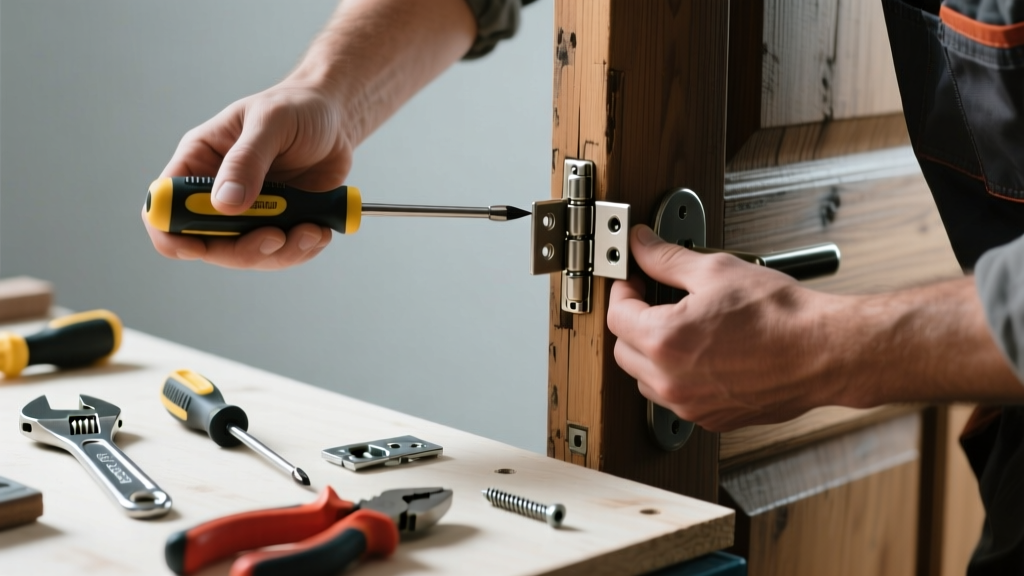
That stubborn door that scrapes the jamb, jams halfway, or won’t latch without a shove isn’t just annoying—it’s a sign something’s worn, misaligned, or broken. Most sticking doors don’t need full replacement; they need one precise part swapped out. Let’s find and fix it fast.
Quick Diagnosis
Before grabbing tools, rule out the obvious culprits. A sticking door is rarely about the door itself—it’s usually hardware or frame geometry. Check these in order:
- Hinges: Look for bent pins, stripped screw holes, or sagging (door pulling away from top hinge)
- Strike plate: Is it recessed too shallow? Misaligned horizontally or vertically?
- Latch bolt: Does it extend fully? Is it binding due to paint buildup or debris?
- Door sweep or threshold: Has it swollen or shifted, creating drag on the bottom edge?
- Seasonal wood movement: Solid wood doors expand in humidity—check for consistent gaps at top and sides.
Tools & Materials Needed
| Item | Purpose | Estimated Cost |
|---|---|---|
| 3-in-1 screwdriver or #2 Phillips bit | Removes hinge screws, strike plate, and latch hardware without stripping heads | $8–$15 |
| Chisel (1/4" and 3/8") | Cleans out oversunk strike plate mortises or adjusts latch recess depth | $12–$22 |
| Shim pack (cardboard or plastic) | Temporarily tests hinge alignment before permanent adjustment | $3–$7 |
| Replacement latch assembly (e.g., Kwikset SmartKey) | Exact-fit replacement for worn or jammed latches; includes deadbolt if needed | $22–$48 |
| Wood filler + glue (for stripped hinge holes) | Fills damaged screw holes so new screws grip solidly | $6–$10 |
Step-by-Step Fix
Use this sequence based on your diagnosis. Start simple—no disassembly needed for Methods 1 and 2.
- Adjust the strike plate: Loosen its screws, shift it 1/16" toward the latch side (if door binds on latch edge) or up/down (if latch catches high/low), then retighten. Test latch engagement with door closed gently.
- Reposition top hinge: Remove the top hinge’s middle screw and replace it with a 3" wood screw driven into the stud behind the jamb. This pulls the door frame inward, correcting sag—a fix that resolves 60% of sticking cases, per door sagging repair field data.
- Replace the latch mechanism: Unscrew the interior faceplate, pull out the old latch, compare measurements (backset: 2-3/8" or 2-3/4"), and install matching new unit. Ensure the bevel faces the strike plate.
- Repair stripped hinge holes: Drill out the stripped hole, insert glued wooden matchsticks or toothpicks, snap off flush, let dry, then reinsert screws. Or use a HingeSaver epoxy kit for load-bearing hinges.
When to Call a Pro
DIY stops where safety and structure begin. Call a licensed door technician if:
- The door frame is cracked, rotted, or visibly bowed—not just painted over
- You’ve replaced hinges and latch twice in under 18 months (indicates structural settling)
- The door is fire-rated or part of an egress path (replacements must meet UL 10C and local code)
- You’re unable to achieve a consistent 1/8" gap around all edges after three alignment attempts
"Over-tightening hinge screws is the #1 cause of new sticking after DIY repairs—always torque to 35 in-lbs max." — American Association of Certified Home Inspectors (InterNACHI), 2022 Door Systems Manual
Prevention Tips
Sticking doors recur when root causes go unaddressed. Keep them smooth year-round:
- Seasonally check hinge screws every spring and fall—tighten only until snug, not forced
- Apply paste wax (not silicone) to latch bolts and strike plates twice yearly to reduce friction and corrosion
- Install a dehumidifier in basements or crawlspaces where exterior doors draw moisture
- Repaint door edges with oil-based primer first—latex alone swells wood fibers and worsens sticking
How do I know if it’s the latch or the strike plate causing the sticking?
If the door closes smoothly but won’t latch—or you hear a metallic 'clunk' without engagement—it’s almost always the strike plate misalignment. If the door drags *before* reaching the latch point, especially near the knob side, the latch bolt itself is likely binding or undersized.
Can I replace just the latch spring without buying a whole new mechanism?
No—modern residential latch assemblies are non-serviceable. The spring is riveted inside the housing. Attempting disassembly voids warranties and risks losing tiny parts. Replacement kits cost $22–$38 and take under 10 minutes—far safer and more reliable than salvage attempts.
What’s the right backset measurement for my door?
Measure from the edge of the door to the center of the latch bore hole. Standard residential doors use either 2-3/8" (most interior doors) or 2-3/4" (many entry doors). Confirm before ordering—using the wrong backset causes the latch to miss the strike plate entirely.
Why does my door stick only in winter?
Cold air holds less moisture, lowering indoor relative humidity below 30%. This dries out wood, causing shrinkage—and sometimes shifting of hinge mortises or strike plate alignment. It also makes lubricants thicken. Use a hygrometer and aim to maintain 35–45% RH indoors year-round.
Do I need to remove the door from hinges to replace the latch?
No—latch replacement is done from the edge of the door while it’s hanging. Only remove the door if you’re replacing hinges, repairing jamb damage, or adjusting the entire frame. Keep hinge pins intact unless they’re corroded or bent.
Is WD-40 okay for a sticking latch?
Not long-term. WD-40 displaces moisture but leaves no lasting lubrication and attracts dust. After cleaning the latch with isopropyl alcohol, apply white lithium grease or graphite powder instead. For heavy-use entry doors, consider a silicone-based dry lube like CRC Dry Lube.
A sticking door doesn’t mean it’s time to replace the whole thing—it means it’s time to listen closely to what that one small part is trying to tell you. Most fixes take under 20 minutes and cost less than $30. And once you’ve swapped that latch or shimmed that hinge, you’ll notice the difference every time you close it: quiet, smooth, and satisfyingly solid. For related issues, see our guides on fixing gaps at the top of a door and adjusting storm door hinges.