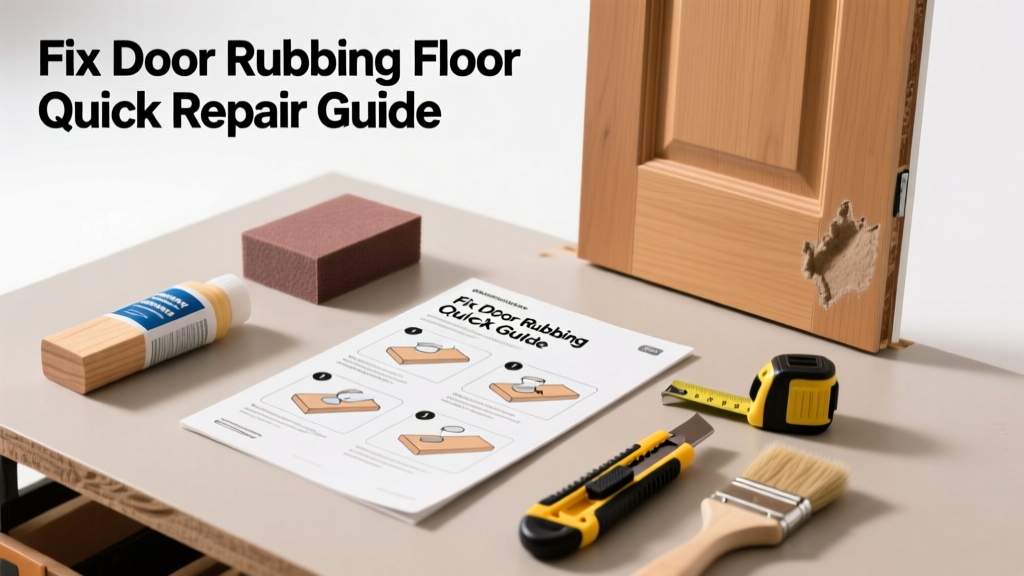
Your front door scrapes the threshold every time you open it. The bedroom door won’t latch without a shove. That gritty, scraping sound isn’t just annoying—it’s a sign your door’s alignment or floor has shifted, and ignoring it can warp the frame or damage the finish.
Quick Diagnosis
Before grabbing tools, rule out the real culprit. Most door-floor rubbing stems from one (or more) of these:
- Warped or swollen door slab (common in humid basements or bathrooms)
- Sagging hinges—especially the top hinge pulling inward
- Settled or uneven flooring (e.g., warped hardwood, cracked tile, or sunken concrete slab)
- Loose hinge screws or stripped screw holes in the jamb
- Door sweep or threshold installed too low or damaged
Tools & Materials Needed
| Item | Purpose | Estimated Cost |
|---|---|---|
| 3-in-1 screwdriver or drill with Phillips bit | Tightens hinge screws and adjusts hardware | $8–$25 |
| Shim pack (wood or plastic) | Compensates for gaps behind hinge leaves or under threshold | $4–$12 |
| Plane (block or smoothing) | Removes small amounts of wood from bottom edge if swelling is minor | $12–$35 |
| Feeler gauge or credit card | Measures gap between door bottom and floor accurately | $0–$3 |
| Wood filler & sandpaper (120–220 grit) | Repairs stripped hinge screw holes | $6–$10 |
Step-by-Step Fix
Try these methods in order—from fastest to most involved:
- Tighten all hinge screws. Start with the top hinge. If screws spin freely, remove them, fill holes with wooden toothpicks + wood glue, let dry 2 hours, then reinsert screws.
- Add shims behind hinge leaves. Loosen middle or top hinge screws slightly, insert thin plastic shim behind the hinge leaf (not the jamb), then retighten. This pulls the door edge away from the frame and lifts the bottom corner.
- Adjust or replace the door sweep. If the sweep drags, loosen its mounting screws, lift it 1/16", and retighten. If bent or cracked, replace it—most cost $7–$18 and install in under 10 minutes.
- Plane the bottom edge (only if wood door & swelling is confirmed). Mark the rub area with pencil, clamp door horizontally, and take light passes with a sharp block plane. Stop when you achieve a consistent 1/8" gap across the width.
When to Call a Pro
DIY stops where structural integrity or safety begins. Call a licensed carpenter or door specialist if:
- The door frame itself is cracked, bowed, or separating from the wall stud
- You’ve tried shimming and planing but the door still drags after 24 hours—suggesting foundation settlement
- The floor has a dip >1/4" over 3 feet (measured with a 4-ft level), which may indicate joist sag or moisture damage beneath
- You’re dealing with a fire-rated or exterior steel-clad door—the core structure shouldn’t be altered without manufacturer specs
Prevention Tips
Stop future rubbing before it starts:
- Check hinge screws every 6 months—especially on exterior doors exposed to temperature swings
- Maintain indoor humidity between 35–55% year-round using a hygrometer and dehumidifier/humidifier as needed
- Install adjustable-height thresholds in high-moisture areas like bathrooms and laundry rooms
- Use felt pads or rubber bumpers on the door stop to reduce impact wear on the jamb
How much gap should a door have at the floor?
Interior doors need 1/2" clearance over carpet, 3/8" over hardwood, and 1/4" over tile or concrete. Exterior doors require a tighter 1/4" gap to prevent drafts—but only if paired with a weatherstripped threshold. Too much gap invites drafts; too little causes binding.
Can I sand down the bottom of a hollow-core door?
No—sanding below the outer veneer exposes the cardboard or honeycomb core, weakening the door and creating an unsightly, fragile edge. Hollow-core doors aren’t designed for trimming. Instead, shim hinges or raise the threshold. For more details, see our guide on repairing hollow-core doors.
Why does my door rub only in winter?
Low indoor humidity dries out wood, causing shrinkage—but that usually increases gaps, not rubbing. More likely, your heating system dries the air so much that the door’s finish contracts faster than the core, warping it slightly. Or, seasonal foundation shifts (common in clay soils) alter floor levelness by fractions of an inch. According to the U.S. EPA estimates that 14% of household water usage is from leaks—including those caused by misaligned doors stressing seals.
Will adding thicker weatherstripping fix door rubbing?
No—it often makes it worse. Thicker weatherstripping increases resistance when closing, which can force the door bottom into the floor. If you suspect weatherstripping is the issue, temporarily remove it and test the door swing. Replace only with compression-type strips rated for your door’s gap size.
How do I know if my floor is settling?
Look for diagonal cracks in drywall near corners, sticking windows on the same wall, or doors that stick in summer but swing freely in winter. A 4-ft level placed across the floor reveals dips >1/8" per foot—anything beyond that warrants inspection by a structural engineer. As the Insurance Institute for Business & Home Safety's 2023 report notes, 68% of foundation-related door issues begin with subtle floor-level changes unnoticed for over 12 months.
"Most door-floor contact isn’t about the door—it’s about the floor moving first. Always measure the floor before you plane the door." — Mike R., 28-year residential carpenter, Chicago
A door that drags isn’t just inconvenient—it’s a quiet warning. Whether it’s a loose screw, a swollen slab, or a shifting subfloor, catching it early saves finish work, prevents lock failure, and keeps your home sealed against drafts and pests. Keep a shim pack and feeler gauge in your toolbox—they’ll pay for themselves the next time your bathroom door grinds to a halt.