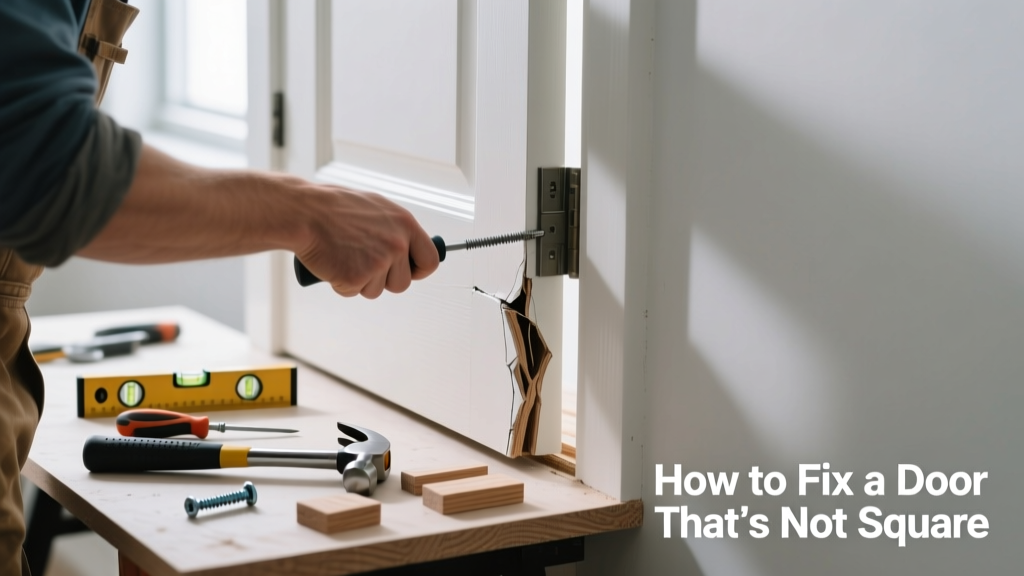
If your door scrapes the frame, won’t latch, or has uneven gaps—especially wider at the top or bottom—it’s likely not square. This isn’t just cosmetic: a misaligned door strains hinges, wears out weatherstripping faster, and can compromise security and energy efficiency. The good news? Most cases stem from simple settling or loose hardware—not structural failure.
Quick Diagnosis
Before grabbing tools, identify the root cause. Check these common culprits first:
- Hinge screws pulled loose or stripped in jamb or door edge
- Warped door slab due to moisture exposure or age
- Shim failure or shifting in the rough opening during house settling
- Swelling wood from high humidity (especially in bathrooms or basements)
- Foundation movement causing the entire door frame to twist
Tools & Materials Needed
| Item | Purpose | Estimated Cost |
|---|---|---|
| 3-ft level | Verifies vertical/horizontal alignment of jamb and door edge | $12–$25 |
| Wood shims (tapered) | Re-establish plumb and square in jamb without forcing wood | $3–$8 |
| #10 x 3-in trim screws | Replace short hinge screws for deeper anchoring into stud | $4–$7 |
| Drill/driver + screwdriver bits | Removes old screws and drives new ones without stripping heads | $45–$120 |
| Utility knife & sandpaper (120-grit) | Trims shims flush and smooths minor swelling on door edge | $2–$6 |
Step-by-Step Fix
Try these methods in order—start with the least invasive:
- Tighten and reinforce hinge screws: Remove all hinge screws. Replace top and middle hinge screws with 3-inch trim screws driven into the wall stud (not just the jamb). Use a level to confirm the hinge side of the jamb stays plumb.
- Add shims behind hinge jamb: If the jamb bows inward, insert tapered shims behind the top hinge and tap gently until the door gap evens out. Trim excess shim flush with a utility knife.
- Adjust strike plate position: If only the latch side binds, loosen the strike plate and shift it 1/16" up or down using a chisel or Dremel. Re-secure with longer screws if the jamb is soft.
- Plane the binding edge (last resort): Only if wood swelling is confirmed: remove door, plane 1/32" off the high corner, then seal with primer and paint. Never plane more than 1/16" total.
When to Call a Pro
DIY stops where safety and structure begin. Call a licensed carpenter or door specialist if:
- The door frame shows visible cracks, splits, or rot—especially near corners or the header
- You’ve re-shimmed and re-screwed twice with no improvement
- The floor slopes more than 1/4" across the threshold (indicating foundation issues)
- The entire wall around the door feels spongy or flexes when pressed
According to the Insurance Institute for Business & Home Safety's 2023 report, 68% of door alignment failures in homes older than 15 years are tied to foundational settlement—not faulty installation.
Prevention Tips
Extend your door’s lifespan and avoid repeat fixes:
- Check hinge screws every 6 months—tighten immediately if loose
- Maintain indoor humidity between 35–55% year-round (use a hygrometer)
- Seal all six sides of exterior doors annually with quality exterior-grade finish
- Install adjustable hinges on entry doors—they let you micro-tune alignment without shimming
Why does my door bind only in winter?
Winter air is drier, causing interior wood doors to shrink slightly—but binding usually points to hinge sag or seasonal jamb movement. Check if the top corner gap widens while the bottom narrows; that’s classic hinge pull-out. Tighten screws and add a single shim behind the top hinge jamb.
Can I fix a warped door without replacing it?
Minor warp (<1/8" bow across the width) may be corrected by reversing door orientation (swapping hinge and latch edges) or adding strategic shims. But if the warp exceeds 3/16", replacement is safer—planing distorts grain and weakens structural integrity. Learn when to replace a wood door.
Do I need to remove the door to shim the jamb?
No—you can shim the jamb with the door hanging. Loosen hinge screws just enough to create 1/16"–1/8" play, insert shims behind the jamb at hinge locations, then retighten while holding the door in proper alignment. Use a level on the hinge stile to verify plumb before final tightening.
What’s the fastest test to see if the jamb is out of square?
Measure diagonally both ways: corner-to-corner across the jamb opening. If measurements differ by more than 1/8", the frame is out of square. A 1/4" difference means the jamb is twisted—and likely needs full removal and reinstallation. See how to replace a damaged door frame.
Will longer screws always fix a sagging door?
Only if the original screws missed the stud or stripped shallow jamb material. If the stud itself is rotten or the wall cavity is insulated with dense-pack cellulose, longer screws won’t grip. Drill a pilot hole first and feel for solid resistance—if it’s hollow past 2 inches, stop and consult a pro.
Can I use drywall anchors to secure hinge screws?
No. Drywall anchors lack the shear strength to support a door’s weight and repeated motion. They’ll spin, loosen, or crush under load. Always anchor into solid framing—use a stud finder and verify with a small drill test. For masonry walls, use Tapcon screws rated for concrete block or brick.
A properly squared door doesn’t just close smoothly—it seals tightly against drafts, reduces wear on locks and latches, and adds measurable value to your home’s comfort and efficiency. Most misalignment issues take under an hour to diagnose and correct, but skipping the diagnostic step often leads to wasted time and worsening gaps. Keep your level and shims handy—they’re the unsung heroes of door maintenance.