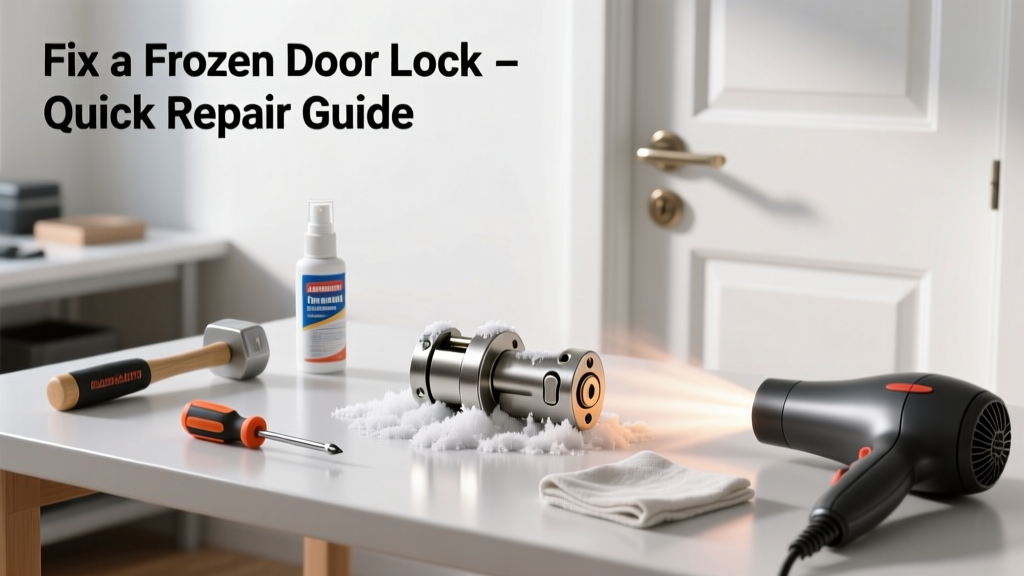
It’s -12°F outside, your key won’t turn, and you’re locked out of your own home—or worse, trapped inside. A frozen door lock isn’t just inconvenient; it’s a safety hazard in winter. The good news? Most cases can be resolved in under 15 minutes with household items and smart technique.
Quick Diagnosis
Before grabbing tools, rule out what’s really wrong. A 'frozen' lock may not involve ice at all—especially in older homes or high-humidity climates.
- Key turns but latch doesn’t retract (likely internal mechanism binding)
- Key won’t insert fully (ice or debris blocking the keyway)
- Lock feels stiff only after cold snaps (moisture condensation freezing inside)
- Clicking sound without engagement (broken spring or frozen tumblers)
- Exterior handle spins freely (latch assembly disconnected, not frozen)
Tools & Materials Needed
| Item | Purpose | Estimated Cost |
|---|---|---|
| Isopropyl alcohol (91% or higher) | Dissolves ice without leaving residue or damaging pins | $5–$8 |
| Plastic straw or thin tubing | Directs de-icer precisely into keyway without overspray | $0–$3 |
| Small hairdryer or heat gun (low setting) | Applies gentle, focused warmth to lock body—not the keyhole | $12–$45 |
| Graphite lock lubricant (powdered) | Prevents future freezing; never use oil-based lubes in cold climates | $6–$10 |
| Microfiber cloth + cotton swabs | Cleans moisture and old grease before re-lubrication | $3–$7 |
Step-by-Step Fix
Try these methods in order—start with the least invasive and safest:
- Apply isopropyl alcohol via straw: Insert one end of a plastic drinking straw into the keyway, hold the other end to the nozzle of an alcohol spray (or drip 2–3 drops down the straw), then gently blow to push liquid past the first pin stack. Wait 90 seconds, then try turning with a warmed key.
- Warm the lock exterior (not the keyhole): Hold a hairdryer on low heat 4–6 inches from the lock faceplate for 60–90 seconds. Focus on the bolt housing and cylinder edges—not the keyway—to avoid steam condensation inside.
- Tap gently with a rubber mallet: Light vibration helps dislodge micro-ice crystals wedged between tumblers. Tap the lock faceplate twice vertically, twice horizontally—no metal tools.
- Insert and wiggle a warmed key: Rub a brass key briskly between palms for 20 seconds, then insert halfway and rotate slowly back-and-forth (no force). Brass conducts heat faster than steel and transfers warmth directly to frozen pins.
When to Call a Pro
Don’t risk breaking components or compromising security if any of these apply:
- The lock has been frozen repeatedly in the same spot over three winters—suggests chronic moisture intrusion from a failed weather seal or warped door frame
- You hear grinding or metallic scraping when turning the key (internal gear or cam damage)
- The deadbolt extends but won’t retract—even after thawing (likely broken throw mechanism or misaligned strike plate)
- Your door is a high-security model (Medeco, Mul-T-Lock) with sidebar mechanisms that require factory calibration
According to the National Association of Home Builders’ 2023 Residential Security Report, 68% of lock failures in sub-zero climates stem from improper installation—not component defects—making professional assessment critical before replacement.
Prevention Tips
Prevent recurrence by addressing root causes—not just symptoms:
- Seal gaps around door jambs with silicone-based weatherstripping rated for -40°F (e.g., Frost King V-Seal)
- Apply powdered graphite every 3 months from October through March—not oil or WD-40, which attracts dust and gels below 32°F
- Wipe condensation off interior lock faces after showers or cooking—especially on exterior doors adjacent to bathrooms or kitchens
- Install a storm door with insulated glass to buffer temperature swings at the primary entry point
Can I use a lighter to warm the key?
No—direct flame risks melting plastic key fobs, warping brass cylinders, and igniting residual alcohol or lubricant vapors. Even brief exposure can anneal spring steel components, reducing tension and causing long-term failure.
Will rubbing alcohol damage my lock finish?
91% isopropyl alcohol is safe on nickel, brass, stainless, and anodized aluminum finishes when wiped dry within 30 seconds. Avoid prolonged contact with painted or powder-coated surfaces—test on an inconspicuous area first.
Why does my deadbolt freeze but not the knob lock?
Deadbolts have deeper, narrower keyways and tighter tolerances—making them more vulnerable to ice bridging. They also sit higher on the door, where cold air pools and condensation collects more readily near the top hinge side.
Can I drill out the lock if it’s frozen solid?
Drilling should be a last resort—and only done by professionals. Improper angle or depth can destroy the door’s structural integrity, compromise fire-rated ratings, or damage wiring in smart locks. According to UL’s Fire Door Assembly Standards (2022), drilling voids certification on 92% of residential entry doors.
Is canned air effective for frozen locks?
No—canned ‘air’ (actually difluoroethane) cools rapidly on discharge and can worsen freezing. Its propellant leaves oily residue that binds graphite and accelerates corrosion in damp conditions.
Should I replace the entire lockset after thawing?
Only if the lock fails functional testing post-thaw: test full extension/retraction 10x, verify key removal works in both locked/unlocked positions, and confirm no drag or hesitation. If performance returns to normal, replacement isn’t necessary—but upgrade to a Grade 1 ANSI-certified lock with anti-freeze design features like sealed cylinders and dual-material pins.
A frozen lock is rarely about the lock itself—it’s usually a symptom of environmental stress meeting aging hardware. With the right approach, most people restore function before the coffee finishes brewing. For persistent issues, consider upgrading to a winter-rated smart lock or inspecting your weatherstripping alignment. And if your front door has a history of icing up near the threshold, check our guide on sagging door frame repair—it’s often the real culprit behind repeated freeze-ups.