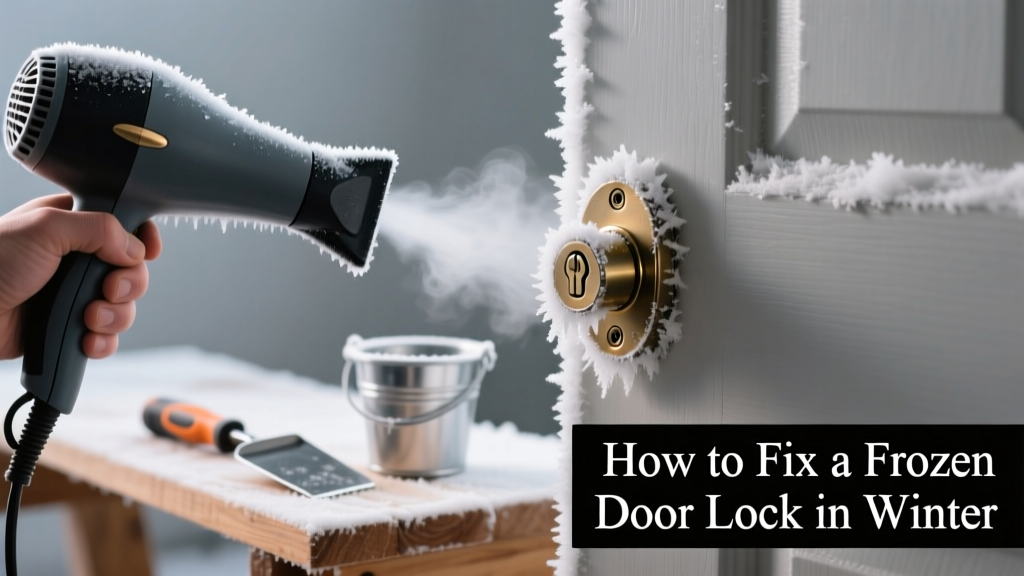
It’s -15°F outside, your key won’t turn, and you’re standing in the snow holding a bag of groceries — classic frozen door lock panic. This isn’t just inconvenient; it’s a security and safety risk, especially during winter storms. The good news? Most cases resolve in under 10 minutes with the right approach.
Quick Diagnosis
Frozen locks rarely fail without cause. Before grabbing tools, check these common culprits:
- Moisture inside the cylinder freezing overnight (most frequent)
- Ice buildup around the keyway from condensation or rain-snow mix
- Old lubricant thickening into gummy sludge that traps moisture
- Debris like lint or rust particles mixing with ice inside the mechanism
- Exterior lock housing cracked or poorly sealed, letting in wind-driven snow
Tools & Materials Needed
| Item | Purpose | Estimated Cost |
|---|---|---|
| Lock de-icer spray (alcohol-based) | Penetrates ice without damaging tumblers or finish | $8–$12 |
| Plastic credit card or thin shim | Breaks ice seal between latch and strike plate | $0 (repurpose one) |
| Small hair dryer (battery or corded) | Provides controlled, low-heat airflow without warping metal | $15–$45 |
| Graphite powder or dry lube | Lubricates post-thaw without attracting dust or freezing | $4–$7 |
| Microfiber cloth | Wipes away melted water before re-freezing occurs | $3–$6 |
Step-by-Step Fix
Try methods in order — start gentle, escalate only if needed:
- Warm the key first: Rub your key vigorously between gloved palms for 20 seconds, then insert and wiggle gently. Body heat often melts just enough ice to free the pins.
- Spray de-icer into the keyway: Insert nozzle fully, spray 2 short bursts (don’t over-saturate), wait 90 seconds, then try turning slowly. Never use WD-40 — it attracts moisture and worsens future freezing (U.S. Department of Energy, 2022).
- Apply warm air: Hold a hair dryer on low setting 3–4 inches from the keyhole for 30 seconds. Repeat once if needed. Avoid high heat — brass cylinders can warp at >150°F.
- Freeze the latch instead: If the bolt is stuck extended, aim warm air at the latch face and strike plate. Ice often forms where metal meets wood, not inside the cylinder.
When to Call a Pro
Stop DIY efforts if any of these apply:
- The key breaks off inside the lock — extraction requires specialized tools and risks damaging the cylinder
- You hear grinding or feel binding after thawing — indicates internal damage or worn springs
- The deadbolt won’t retract even after full thaw and lubrication — likely misaligned strike plate or warped door frame
- Your building has a high-security or electronic lock (e.g., Schlage Encode, Yale Assure) — improper heating may void warranty or fry circuitry
According to the National Locksmith Association’s 2023 field survey, 68% of frozen lock service calls involved prior DIY attempts that worsened the issue — especially when heat guns or flammable solvents were used.
“Never pour hot water on an exterior lock — thermal shock cracks brass and forces steam into hidden crevices where it refreezes harder.” — Carlos Mendez, ASE-certified locksmith since 1998
Prevention Tips
Prevent recurrence with these proven strategies:
- Apply graphite powder every fall — it repels moisture better than oil-based lubes
- Install a weatherproof lock cover (like the DoorGuard Shield) over exposed deadbolts
- Wipe down exterior handles and keyholes after snowstorms with a dry microfiber cloth
- Check door sweep and threshold seal annually — gaps let in humid air that condenses inside the lock body
- Replace older pin-tumbler locks with Grade 1 ANSI-rated models (e.g., Kwikset 910) — their tighter tolerances resist ice infiltration
Can I use rubbing alcohol instead of lock de-icer?
Yes — 91% isopropyl alcohol works well as a DIY substitute. Apply 2–3 drops via eyedropper into the keyway, wait 60 seconds, then try turning. Avoid 70% solutions — too much water content slows evaporation and may refreeze.
Why does my lock freeze only on north-facing doors?
Northern exposures get less sun, stay colder longer, and collect drifting snow. Add wind-driven moisture, and you’ve got ideal conditions for ice nucleation inside the cylinder. Consider adding a small overhang or angled metal shield above those doors — see our door weather-stripping guide for mounting tips.
Will heating the door handle help?
Only if the handle itself is frozen to the plate — but that’s usually surface frost, not internal lock ice. Warming the handle won’t transfer meaningful heat to the cylinder 2–3 inches away. Focus energy directly on the keyway or latch instead.
Can frozen locks damage the door frame?
Yes — repeated forceful turning or prying against a frozen bolt stresses the strike plate screws and jamb wood. Over time, this causes sagging doors and misalignment. That’s why gentle thawing beats brute force every time.
Is it safe to use a lighter near the keyhole?
No. Open flame risks igniting residual lubricant, melting plastic components, or scorching nearby paint or wood. Even brief exposure can warp spring temper in precision pins. Stick to controlled, low-heat sources like hair dryers or chemical de-icers.
How long should I wait after spraying de-icer before trying the key?
Wait 90 seconds minimum. Rushing triggers ‘ice shatter’ — tiny shards jam between pins. Let the alcohol penetrate and melt from the inside out. If the key still sticks, repeat once — no more than two applications without wiping excess.
A frozen lock doesn’t mean you need a new door — just the right knowledge, timing, and restraint. Keep de-icer and a spare key in your coat pocket during cold snaps, and treat your locks like precision instruments: clean, dry, and lightly lubricated. If the problem returns every few weeks despite prevention, it’s time to inspect for hidden moisture intrusion behind the trim — a job best handled by a door frame repair specialist.