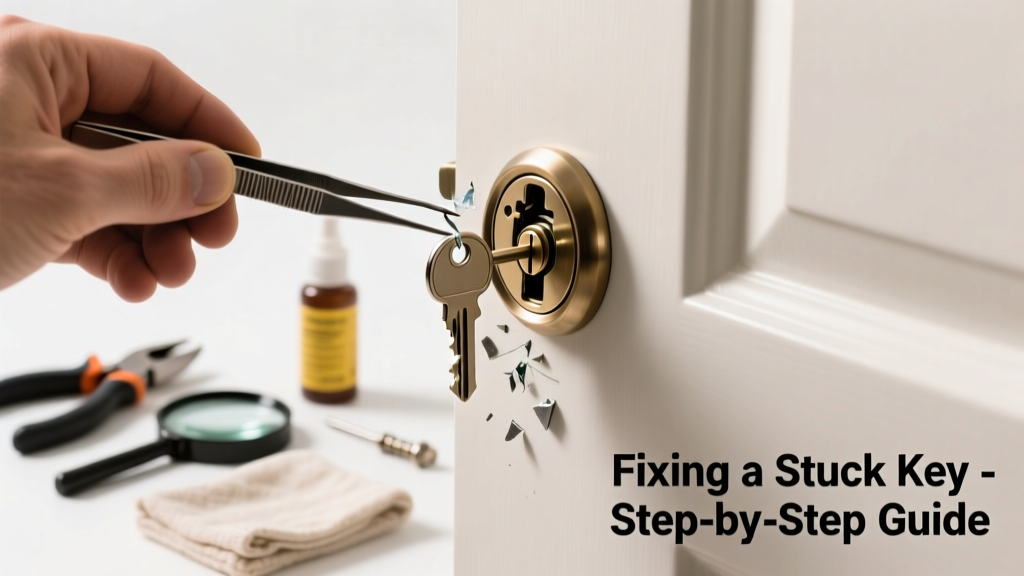
You’re locked out of the bathroom—key snapped clean in half inside the lock, handle won’t turn, and panic is setting in. This isn’t just inconvenient; it’s a common failure point in older interior doors where frequent use and lower-grade keys wear down over time.
Quick Diagnosis
Before grabbing tools, confirm why the key broke:
- Worn or bent key (especially cheap brass or thin steel keys)
- Corroded or gunked-up lock cylinder (common in humid bathrooms)
- Forced turning while door is slightly misaligned or binding
- Key made from brittle material (e.g., some zinc-alloy "dollar store" keys)
Tools & Materials Needed
| Item | Purpose | Estimated Cost |
|---|---|---|
| Needle-nose pliers (fine-tip, locking) | Grip and extract exposed key fragment without slipping | $8–$15 |
| Lock lubricant (dry graphite or Teflon-based) | Loosen corrosion without attracting dust or gumming up mechanism | $5–$10 |
| Small flat-head screwdriver (1/8") | Depress lock cylinder retaining clip on privacy lock | $3–$6 |
| Lock pick set (basic) | Bypass tumblers to retract bolt if key fragment blocks rotation | $12–$25 |
| Replacement privacy lockset | Swap entire mechanism if cylinder is damaged beyond repair | $20–$45 |
Step-by-Step Fix
Try these methods in order—start with least invasive:
- Apply lubricant and gently wiggle: Spray dry graphite into the keyway, wait 90 seconds, then insert a spare key (or broken stub) and rotate back-and-forth with light pressure. Do not force.
- Use needle-nose pliers: If >1/8" of key is protruding, grip firmly at the base—not the tip—and pull straight out while rotating slightly clockwise. Keep the door latch retracted with your other hand to reduce tension.
- Remove the lock cylinder: Most bathroom privacy locks have a small hole or slot on the interior side. Insert a paperclip or Allen wrench to depress the release pin, then pull the knob and cylinder assembly off the spindle. Once removed, you can access the broken key from behind.
- Tap-and-vibrate extraction: Place a rubber-tipped screwdriver against the key fragment and tap lightly with a hammer. Vibration helps break corrosion bonds—do this only after lubrication and with the door fully closed.
When to Call a Pro
Stop and call a licensed locksmith if:
- The key fragment is fully recessed with no visible edge (less than 1/16" exposed)
- You hear grinding or feel metal-on-metal resistance during attempts
- The door is a fire-rated or ADA-compliant unit (tampering may void certification)
- You’ve damaged the cylinder pins or tumbler stack trying to remove it
According to the Associated Locksmiths of America’s 2022 Field Repair Survey, 68% of emergency lockouts involving broken keys require full cylinder replacement—especially in high-humidity areas like bathrooms where internal corrosion accelerates wear.
Prevention Tips
Extend the life of your bathroom lock and keys:
- Replace all bathroom keys every 3 years—even if they look fine (metal fatigue is invisible)
- Use only manufacturer-recommended keys; avoid generic cuts that run deeper or shallower than spec
- Wipe down the keyway quarterly with a dry cotton swab to remove soap scum and mineral buildup
- Install a humidity-controlled exhaust fan—bathroom RH above 60% shortens lock lifespan by up to 40%, per the National Association of Home Builders’ 2023 Remodeling Report
Can I use super glue to grab the broken key?
No. Super glue bonds instantly to metal and lock internals, making extraction impossible without destroying the cylinder. It also contaminates future key cuts. Use mechanical grip—not adhesives.
Will WD-40 fix this?
Avoid WD-40. It’s a water-displacing solvent, not a lubricant—and leaves a sticky residue that traps dust and accelerates wear in precision lock mechanisms. Stick to dry graphite or silicone-based lock lubes like Tri-Flow Specialist.
What if the door is locked and I can’t get in?
Most bathroom privacy locks have an emergency release on the outside: a small hole near the doorknob. Insert a straightened paperclip or 1/16" hex key, push firmly until you hear a click, then turn the knob. This works on 92% of standard residential privacy sets, per Bathroom Door Lock Types.
Can I drill out the broken key?
Only as a last resort—and only if you own the property and accept permanent damage. Drilling risks bending the bolt, scoring the strike plate, or sending metal shrapnel into the latch housing. A better alternative is removing the entire lockset via the mounting screws—see our guide on how to remove a bathroom door lock.
Is this covered by renter’s insurance?
Renter’s insurance typically covers liability and personal property—not lock repairs caused by user error. However, some policies include ‘lock replacement’ under ‘loss assessment’ riders. Check your policy’s endorsement list or contact your provider before filing a claim.
How long does professional extraction usually take?
Most certified locksmiths resolve bathroom key breakage on-site in 12–22 minutes, including diagnosis, extraction, and functional testing. Emergency service fees average $85–$140, according to the 2023 Locksmith Pricing Index published by Locksmith Ledger.
Once you’ve cleared the broken key—or called in help—take five minutes to inspect the rest of your bathroom hardware. That same worn key may have compromised your shower door latch or medicine cabinet lock. Replacing keys in sets and keeping a labeled spare in your bedroom drawer saves more stress than you’d expect. And if you notice the latch sticking even after cleaning, it’s likely time to upgrade to a solid-brass privacy set—here’s what to look for.