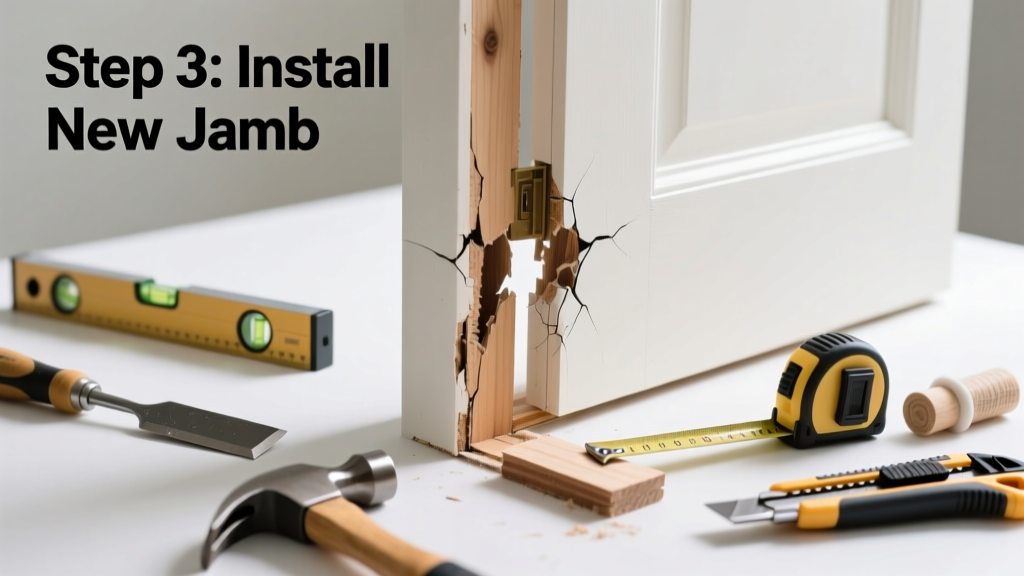
A split door jamb isn’t just unsightly—it compromises security, weather sealing, and door operation. If you’re hearing a hollow 'pop' when closing or noticing gaps near the strike plate, the jamb’s structural integrity is already compromised. This fix targets only the failed section—not the whole frame—saving time, money, and drywall.
Quick Diagnosis
Before grabbing tools, confirm the split isn’t masking deeper issues. Common causes include:
- Repeated slamming or heavy door use stressing the hinge-side jamb
- Moisture swelling and cracking pine or MDF jambs (especially in bathrooms or exterior doors)
- Improper shimming during original installation, creating uneven pressure points
- Foundation settling pulling the rough opening out of square
Tools & Materials Needed
| Item | Purpose | Estimated Cost |
|---|---|---|
| 10-in pry bar | Leverage without splintering adjacent trim or drywall | $12–$24 |
| 16-gauge finish nails (2 in) | Secure new jamb section without splitting wood | $4–$8 |
| Wood glue (Titebond III) | Water-resistant bonding for interior/exterior use | $5–$9 |
| Replacement jamb stock (1×3 or 1×4, same species/thickness) | Exact match for grain, density, and expansion rate | $8–$15 |
| Clamps (2x bar clamps or F-clamps) | Hold glued joint while curing; critical for clean alignment | $18–$32 |
Step-by-Step Fix
Replace only the split segment—typically the strike side or top corner where stress concentrates. Follow these verified methods:
- Remove trim and assess damage: Carefully pry off casing using a thin pry bar and pull nails with end nippers. Measure the depth and height of the split section—most splits affect 6–12 inches near the latch.
- Cut out the damaged portion: Use a flush-cut saw or oscillating tool to sever the jamb at clean 45° angles above and below the split. Leave 1/8" gap on each side for glue and fit adjustment.
- Prepare and install replacement: Cut new stock to match length and profile. Apply Titebond III to both mating surfaces, press into place, clamp firmly, and nail through the back of the jamb into the stud (not just the old wood).
- Seal and refinish: Fill nail holes with wood filler, sand smooth, prime, and paint. Reinstall casing with 2" finishing nails spaced every 8 inches.
When to Call a Pro
DIY stops being safe or effective in these scenarios:
- The split extends more than 18 inches or involves both hinge and strike sides simultaneously
- You discover rot behind the jamb or evidence of termite damage (frass, mud tubes, soft wood)
- The door no longer latches due to misalignment >1/8", suggesting structural movement in the rough opening
- Your home was built before 1978 and lead paint is present on the jamb or casing
According to the National Association of Home Builders’ 2023 Residential Repair Standards, “Jamb repairs exceeding 20% of total frame length require engineered anchoring and load-path verification”—a clear signal to bring in a licensed contractor.
Prevention Tips
Extend jamb life by addressing root causes:
- Install door closers on exterior or high-traffic interior doors to prevent slamming
- Check and tighten hinge screws quarterly—loose hinges transfer stress directly to the jamb
- Apply silicone caulk behind casing on exterior doors to block moisture migration
- Use solid-core doors (35+ lbs) instead of hollow-core—they reduce bounce and shock loading
Can I glue the split instead of replacing it?
No—gluing a split jamb rarely restores structural strength. The U.S. Department of Housing and Urban Development’s 2022 Home Maintenance Guide states that “adhesive-only repairs on load-bearing door framing fail under repeated lateral force within 6–18 months.” Glue may hide the problem temporarily but won’t hold the strike plate or resist kick-in force.
Do I need to remove the door to replace the jamb section?
Not necessarily. You can leave the door hung if the split is on the strike side and doesn’t interfere with hinge clearance. However, if the split is near hinges or requires prying from the hinge-side jamb, removing the door (by lifting it off pins or unscrewing hinges) gives safer access and prevents accidental misalignment.
What type of wood should I use for the replacement jamb?
Match the existing species and thickness exactly—common options are finger-jointed pine (interior), primed MDF (painted interior), or cedar/redwood (exterior). Avoid swapping MDF for solid wood: their expansion rates differ wildly. For guidance on selecting stable lumber, see our best wood for door jambs comparison.
How long does the glue take to cure before I can reinstall the strike plate?
Titebond III requires 24 hours of clamp pressure and full 72-hour cure before bearing load. Install the strike plate only after the glue has fully hardened and you’ve confirmed no movement when testing the door latch. Rushing this step risks re-splitting at the joint.
Can I use construction adhesive instead of wood glue?
Construction adhesive (e.g., Liquid Nails) lacks the shear strength and fine-gap-filling properties needed for tight jamb joints. It also cures rigidly, making future adjustments impossible. Wood glue remains the industry standard for structural wood-to-wood bonds—backed by ASTM D4297 testing standards for interior joinery.
Is this repair covered by homeowners insurance?
Generally, no. Insurance covers sudden, accidental damage—not wear-and-tear splits caused by aging, moisture, or poor maintenance. However, if the split resulted directly from a covered peril (e.g., wind-driven rain causing rot, or a fallen tree striking the door), file a claim with documentation—including dated photos and a contractor’s assessment. Review your policy’s “dwelling coverage” section for exclusions related to gradual deterioration.
A well-executed jamb patch lasts 10–15 years when paired with routine hinge maintenance and moisture control. Don’t let a small split snowball into warped doors, drafty rooms, or compromised entry security. If you’re unsure about measuring angles or clamping pressure, revisit our full door jamb replacement guide for foundational techniques—or call a local carpenter for a 30-minute consult. Most charge $75–$125 for an on-site assessment, far less than full-frame replacement.