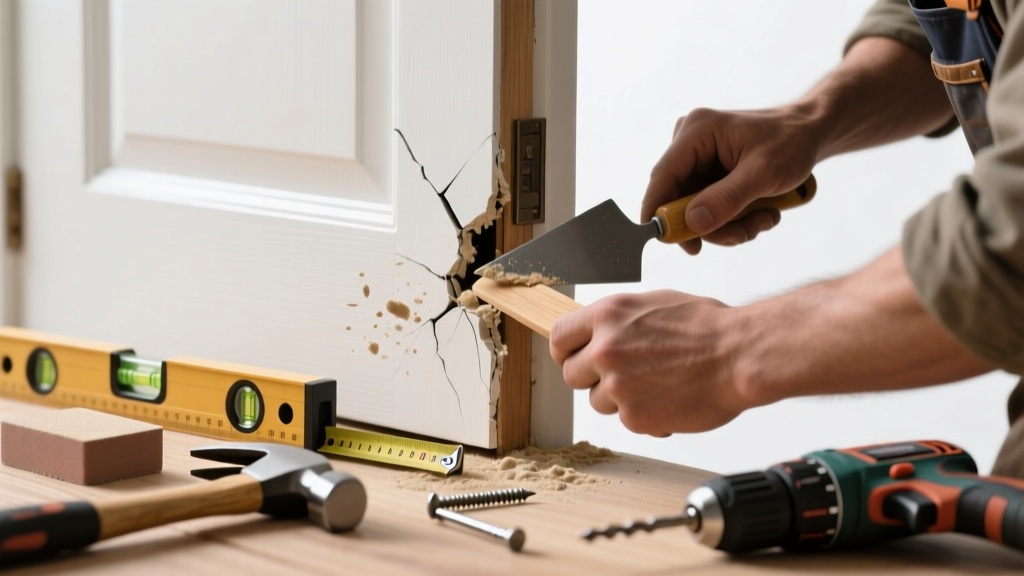
If your interior door suddenly starts groaning, popping, or squeaking every time you open or close it—and the sound seems to come from the frame, not the hinges—you’re likely dealing with a split in the door jamb. This isn’t just annoying; it’s a sign of structural stress that can worsen without intervention.
Quick Diagnosis
A split jamb often hides behind trim or paint, so listen closely and inspect carefully. Start by checking for these telltale signs:
- Squeaking or cracking noise localized near the strike plate or top corner of the jamb
- Visible hairline crack running vertically along the jamb (especially near hinge or latch side)
- Door binding or sticking only when humidity changes—indicating wood movement
- Loose trim that wiggles when pressed near the crack
- Gap between door edge and jamb that widens when pressure is applied
Tools & Materials Needed
| Item | Purpose | Estimated Cost |
|---|---|---|
| 16-gauge finish nails (1-1/4") | Secure split jamb without splitting wood further | $4–$8 |
| Wood glue (Titebond III) | Waterproof adhesive for long-term bond in humid areas | $6–$12 |
| Clamps (2x bar clamps or spring clamps) | Hold jamb tightly while glue cures | $12–$35 |
| Utility knife & chisel (1/4") | Clean out debris and open crack for glue penetration | $8–$20 |
| Drill with countersink bit | Prevent nail heads from tearing wood fibers | $15–$45 |
Step-by-Step Fix
Most jamb splits respond well to this three-phase repair—glue, clamp, pin. For severe splits or recurring issues, try one of these methods:
- Clean & prep: Remove baseboard trim if needed. Use a utility knife to gently widen the crack just enough to inject glue, then blow out dust with compressed air or a straw.
- Glue & clamp: Inject Titebond III into the split using a syringe or toothpick. Clamp across the jamb (not parallel) to draw edges together—apply even pressure for 90 minutes minimum.
- Pin & reinforce: Drill pilot holes at 45° angles across the split, then drive finish nails. Set nails slightly below surface and fill with wood filler matching your jamb.
- Optional reinforcement: For jambs older than 25 years or near exterior doors, embed a 1/8" steel L-bracket behind the jamb at the split location using construction adhesive and screws.
When to Call a Pro
Don’t risk worsening structural integrity if you observe any of these red flags:
- The split extends more than 12 inches or runs through both sides of the jamb
- Adjacent drywall shows cracks wider than 1/8 inch or bulging near the door frame
- The door no longer latches reliably—even after hinge adjustment
- You suspect termite damage (look for frass, hollow-sounding wood, or mud tubes)
- The jamb is part of a load-bearing wall (common in older homes with balloon framing)
According to the National Association of Home Builders’ 2022 Residential Construction Guidelines, “Jamb splits exceeding 6 inches in length within 6 inches of a hinge or strike plate require professional evaluation before repair.”
Prevention Tips
Moisture and seasonal expansion are the biggest culprits. Keep indoor relative humidity between 35–55% year-round using a hygrometer and dehumidifier or humidifier as needed. Also:
- Re-caulk exterior door jambs annually to prevent water infiltration
- Avoid slamming doors—install soft-close hinges on high-use interior doors
- Inspect jambs every spring and fall for early signs of movement or cracking
- Use kiln-dried hardwood jambs (e.g., poplar or maple) during replacements—not pine, which shrinks more
Can I just use super glue instead of wood glue?
No. Super glue (cyanoacrylate) creates a brittle bond that fails under wood’s natural flex and seasonal movement. Wood glue like Titebond III remains slightly flexible and resists moisture—critical for jamb longevity. The U.S. Forest Products Laboratory confirms polyvinyl acetate (PVA) glues outperform CA adhesives in wood-to-wood joints by over 300% in shear strength testing (2021).
Will filling the crack with caulk fix the noise?
Caulk masks the symptom but doesn’t address the root cause: movement at the split. Without clamping and bonding, the crack will reopen and the noise will return—often louder. Caulk also prevents future glue application if you attempt a proper repair later.
How long do I need to leave the clamps on?
Minimum 90 minutes for initial set, but 2 hours is safer—especially in cooler or more humid rooms. Titebond III reaches 75% cure strength in 2 hours and full strength in 24 hours. Don’t reinstall trim or test the door until clamps are off and glue is fully cured.
Do I need to remove the door to fix this?
Not usually. Most jamb splits occur away from the hinge mortises, so the door can stay hung. If the split is directly behind a hinge or interferes with hinge screw depth, temporarily remove the door—but only after marking hinge positions with a pencil for precise reinstallation.
What if the noise returns after my repair?
Recurrence usually means either insufficient clamping pressure (the split wasn’t fully closed), inadequate glue penetration (dust blocked absorption), or an underlying moisture issue. Check for leaks around windows or plumbing near the wall, and verify HVAC ducts aren’t blowing directly onto the jamb. Consider installing a moisture barrier behind the jamb during next renovation—how to add one properly.
Can I paint over the repair right away?
Wait at least 24 hours after removing clamps and filling nail holes. Use a primer formulated for filled wood (like Zinsser Bulls Eye 1-2-3) before topcoating. Skipping primer leads to uneven sheen and visible patches—especially on stained jambs. For best results, lightly sand filled areas with 220-grit paper before priming. See our guide on interior door trim painting tips for color-matching tricks.
A repaired jamb should remain silent for 5–7 years under normal conditions—if humidity stays stable and the door isn’t abused. But remember: wood moves. What looks like a one-time fix is really maintenance. Treat your jambs like living parts of your home: inspect them, protect them from moisture, and reinforce them before they scream for help again. And if you’ve tried two repairs and still hear that pop? It’s not stubbornness—it’s time to consider a full jamb replacement.