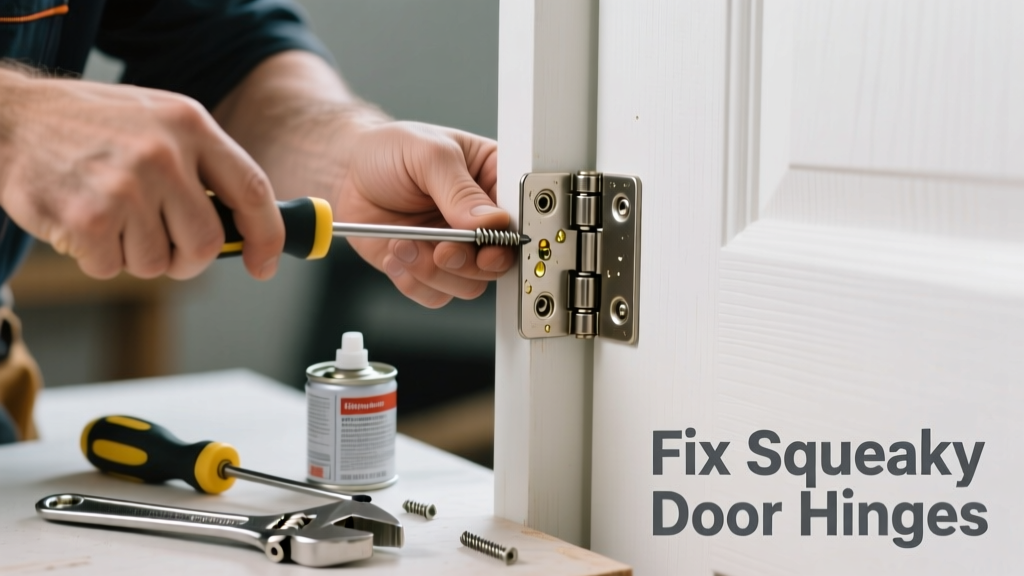
That high-pitched squeak every time you open the bathroom door? The sticky resistance when closing the front entry? It’s not just annoying—it’s often an early warning sign of hinge wear, misalignment, or corrosion. Left unaddressed, a poorly functioning hinge can warp the door frame, strain the latch, or even compromise security.
Quick Diagnosis
Before grabbing tools, identify the root cause. Most squeaky or malfunctioning hinges fall into one of these categories:
- Dirty or dried-out hinge pins (most common cause of squeaking)
- Loose mounting screws—especially top hinge (causes sagging and binding)
- Bent or corroded hinge knuckles or pins (common in exterior doors or humid bathrooms)
- Door rubbing against frame due to hinge misalignment or seasonal wood swelling
- Worn-out or stripped screw holes in jamb or door edge
Tools & Materials Needed
| Item | Purpose | Estimated Cost |
|---|---|---|
| 3-in-1 oil or white lithium grease | Lubricates pin without attracting dust; lithium lasts longer on exterior doors | $4–$8 |
| Phillips and flat-head screwdrivers | Tighten or remove hinge screws; flat-head helps gently pry pins | $6–$12 (set) |
| Needle-nose pliers | Grip stubborn hinge pins, especially if rusted or bent | $5–$10 |
| Wood shims or toothpicks + wood glue | Fills stripped screw holes to restore grip | $2–$4 |
| Small wire brush or steel wool (000 grade) | Cleans corrosion off pins and knuckles before re-lubrication | $3–$7 |
Step-by-Step Fix
Try these methods in order—start simple, escalate only if needed:
- Wipe and lubricate: Wipe hinge knuckles clean with a dry rag. Apply 1–2 drops of 3-in-1 oil directly to the top of the hinge pin. Open and close the door 10 times to work it in. Wait 15 minutes—repeat if squeak persists.
- Remove and clean the pin: Tap the hinge pin upward using a hammer and nail set or small punch. Pull it out fully with pliers. Scrub with steel wool, rinse with isopropyl alcohol, dry thoroughly, then coat lightly with white lithium grease before reinserting.
- Tighten and reinforce screws: Check all hinge screws—especially the top hinge. If any spin freely, remove them, fill the hole with glued toothpicks or a hardwood dowel, let dry 1 hour, then re-drill pilot holes and reinstall screws.
- Realign the hinge: If the door binds mid-swing, loosen—but don’t remove—all screws on the jamb-side hinge leaf. Gently shift the hinge up/down or in/out by tapping with a rubber mallet, then retighten while holding position.
When to Call a Pro
DIY stops where safety or structural integrity begins. Call a licensed carpenter or door technician if:
- The door sags more than 1/4 inch at the handle (sign of jamb warping or foundation shift)
- Hinge mortises are cracked or split in the door edge or frame—especially on solid-core or fire-rated doors
- You’re dealing with historic hardware, concealed hinges, or pivot systems (e.g., commercial glass doors)
- Multiple doors in the home show identical symptoms—could indicate moisture damage or settling issues needing inspection
Prevention Tips
Proactive care extends hinge life by years. Follow these habits:
- Lubricate interior hinges every 6 months; exterior hinges every 3 months (per the National Association of Home Builders’ 2022 Maintenance Guidelines)
- Wipe down hinge knuckles after cleaning bathrooms or kitchens to prevent soap scum buildup
- Replace standard steel screws with #12 x 3-inch stainless-steel hinge screws on exterior doors—they resist corrosion and provide deeper anchoring
- Check for door clearance seasonally: wood expands in humidity, so adjust hinges slightly in summer if rubbing occurs
Can I use WD-40 on squeaky door hinges?
WD-40 works short-term but isn’t a true lubricant—it’s a water-displacing solvent that dries out quickly and attracts dust. According to the Door & Access Systems Manufacturers Association’s 2021 Technical Bulletin, repeated WD-40 use increases hinge wear by up to 40% compared to lithium grease.
Why does only one hinge squeak while others are quiet?
It’s rarely random. The top hinge bears the most weight and stress, making it first to show wear. Also, paint buildup or caulk smearing during repainting often seals the top hinge pin in place—trapping moisture and accelerating corrosion.
My hinge pin won’t budge—should I force it?
No. Forcing a stuck pin risks bending the knuckle or cracking the hinge leaf. Instead, apply penetrating oil like PB Blaster, wait 20 minutes, tap gently upward with a brass punch, and alternate with heat from a hair dryer (not a torch) to expand the metal slightly.
Can loose hinges affect my door lock’s performance?
Absolutely. A sagging door misaligns the strike plate, causing the latch to grind or fail to engage fully. The U.S. Department of Housing and Urban Development notes that 23% of residential lock failures stem from hinge-related door misalignment—not faulty hardware.
Is it normal for new hinges to squeak after installation?
No—new hinges shouldn’t squeak unless improperly installed. Common causes include over-tightened screws distorting the leaf, insufficient lubrication at assembly, or using mismatched hinge types (e.g., overlay hinges on inset doors). Always test swing and listen before final tightening.
Do I need to remove the door to fix this?
Not usually. Over 90% of hinge fixes—including pin removal, cleaning, and screw reinforcement—can be done with the door hanging. Only remove it if replacing hinges entirely or repairing damaged mortises, as outlined in how to remove a door and door hinge replacement guide.
"A hinge isn’t just hardware—it’s the pivot point of function, security, and longevity. Treat it like a bearing, not a bolt." — Gary Lippincott, Certified Door Technician, DASMA, 2020
Squeaky hinges are rarely about noise alone—they’re feedback from your door’s mechanical health. Addressing them promptly keeps operation smooth, prevents premature wear on locks and frames, and avoids the bigger headaches that come from ignoring small signs. Keep a tube of lithium grease in your workshop and check hinges during seasonal deep-cleaning—it’s one of the highest-return, lowest-effort maintenance tasks in any home. For persistent issues, refer to our door sticking problems guide or consult a local carpenter certified by the National Association of the Remodeling Industry.