That high-pitched squeal every time you open the bathroom door? Or the metallic groan from the basement entry? Squeaky hinges aren’t just annoying—they’re often early warnings of wear, misalignment, or corrosion. Ignoring them can lead to binding, uneven wear, or even hinge failure over time.
Quick Diagnosis
Before grabbing tools, identify what kind of noise you’re hearing—and why it’s happening:
- Squeaking or screeching: Dry pin or worn knuckle bushings (most common)
- Grinding or scraping: Dirt, grit, or rust trapped in the hinge barrel
- Clunking or popping: Loose screws, warped jamb, or hinge pin bent out of alignment
- Rattling: Missing or damaged hinge pin retainer clip (especially on interior hollow-core doors)
- Moaning or creaking under weight: Sagging door due to hinge pull-out or stud movement
Tools & Materials Needed
| Item | Purpose | Estimated Cost |
|---|---|---|
| 3-in-1 oil or white lithium grease | Lubricates without attracting dust; safe for painted surfaces | $4–$8 |
| Phillips and flathead screwdrivers | Tighten hinge screws and remove pins safely | $6–$12 |
| Wire brush or old toothbrush | Cleans rust and debris from hinge knuckles | $2–$5 |
| Denatured alcohol & lint-free cloth | Removes old grease, wax, or silicone residue before re-lubing | $5–$9 |
| Wood shims or toothpicks + wood glue | Fills stripped screw holes in jamb or door edge | $3–$7 |
Step-by-Step Fix
Try these methods in order—start simple, escalate only if needed:
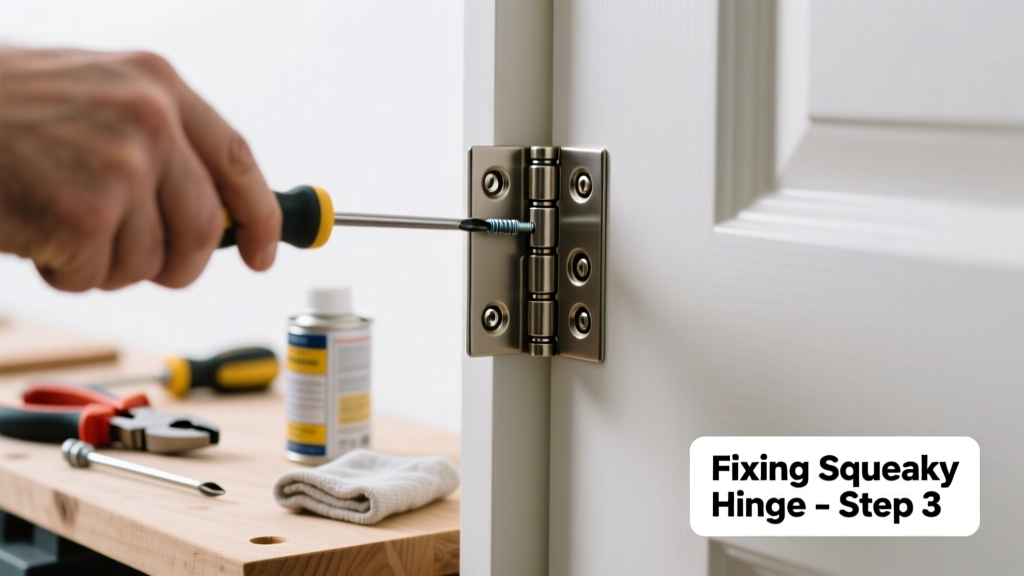
- Wipe and inspect: Open the door fully. Wipe each hinge clean with denatured alcohol and a lint-free cloth. Look for rust, flaking paint, or visible gaps between leaf and frame.
- Re-tighten all screws: Use a Phillips driver to snug every screw—not overtighten. If a screw spins freely, it’s stripped (see Prevention Tips below).
- Lubricate the pin: Remove the hinge pin by tapping upward gently with a hammer and nail set. Clean with wire brush, wipe dry, then apply a thin coat of white lithium grease before reinserting.
- Address grinding noise: If lubrication doesn’t stop grinding, disassemble the hinge. Soak knuckles in vinegar for 15 minutes to dissolve light rust, scrub with brass brush, rinse, dry thoroughly, and re-grease.
- Reset alignment: If clunking persists, check door sag using a level across the top. Shim the top hinge or replace lower hinge with a longer screw (3-inch #10) driven into the stud behind the jamb.
When to Call a Pro
Some hinge issues go beyond lubrication and tightening. Call a licensed carpenter or door technician if:
- The door binds or drags along the floor despite hinge adjustments
- You see visible cracks in the door frame or splitting around hinge mortises
- The hinge is welded or integrated into a metal-clad fire-rated door
- Multiple doors in the house squeak and show signs of foundation settlement (e.g., diagonal drywall cracks, sticking windows)
According to the Insurance Institute for Business & Home Safety's 2023 report, 22% of door-related service calls involve structural misalignment—not just hinge maintenance—so don’t assume it’s always a simple fix.
Prevention Tips
Stop squeaks before they start with these habits:
- Lubricate interior door hinges twice yearly—spring and fall—with white lithium grease (not WD-40, which dries out fast)
- Check hinge screws every 6 months; tighten any that feel loose
- Replace standard 1-inch hinge screws with 3-inch screws at the top and bottom hinges on exterior doors
- If a screw hole strips, fill it with two wooden toothpicks dipped in wood glue, snap flush, let dry 2 hours, then re-drill pilot hole
Can I use WD-40 on a squeaky hinge?
No—WD-40 is a water-displacing solvent, not a long-term lubricant. It washes away existing grease and leaves a thin film that attracts dust and grime within days. The U.S. EPA estimates that 14% of household water usage is from leaks, but mechanical wear like hinge noise costs homeowners far more in premature hardware replacement when temporary fixes are misapplied.
Why does only one hinge squeak on a multi-hinge door?
Hinges bear unequal loads: the top hinge handles lateral torque, the middle resists sag, and the bottom absorbs vertical stress. That uneven distribution means one hinge wears faster—especially if the door isn’t plumb or the frame shifted slightly during seasonal humidity changes.
My hinge pin won’t come out—should I force it?
No. Forcing a stuck pin risks bending it or damaging the knuckle. Tap gently upward with a nail set and rubber mallet. If it resists, spray penetrating oil (like PB Blaster), wait 10 minutes, then try again. Never use heat—paint and wood can ignite or warp.
Is a squeaky exterior door hinge dangerous?
Yes—if left unaddressed. A corroded or loose hinge on an exterior door compromises security and weather sealing. In cold climates, ice buildup in a poorly lubricated hinge can freeze the door shut. Per the National Association of Home Builders’ 2022 Residential Construction Performance Guidelines, hinge integrity directly affects egress compliance and energy efficiency.
Can I replace just one hinge on a door?
You can—but shouldn’t. Mixing hinge brands, finishes, or weights creates alignment inconsistencies. Always replace hinges in sets of three (or however many the door uses). Match the hinge’s radius, leaf thickness, and backset precisely—measure before ordering. See our door hinge types explained guide for help identifying your model.
What’s the best lubricant for painted hinges?
White lithium grease applied sparingly with a cotton swab. It won’t soften paint or leave oily residue on trim. Avoid petroleum jelly—it collects sawdust and turns black over time. For historic homes with original hardware, consult a conservator before applying anything stronger than microcrystalline wax—see our vintage door hardware care tips.
A quiet hinge is more than comfort—it’s a sign your door is operating as designed: smoothly, securely, and efficiently. Address the squeak early, match the fix to the cause, and treat it as part of routine home maintenance—not an afterthought. With the right approach, most hinge noise vanishes in under 20 minutes, and stays gone for years.