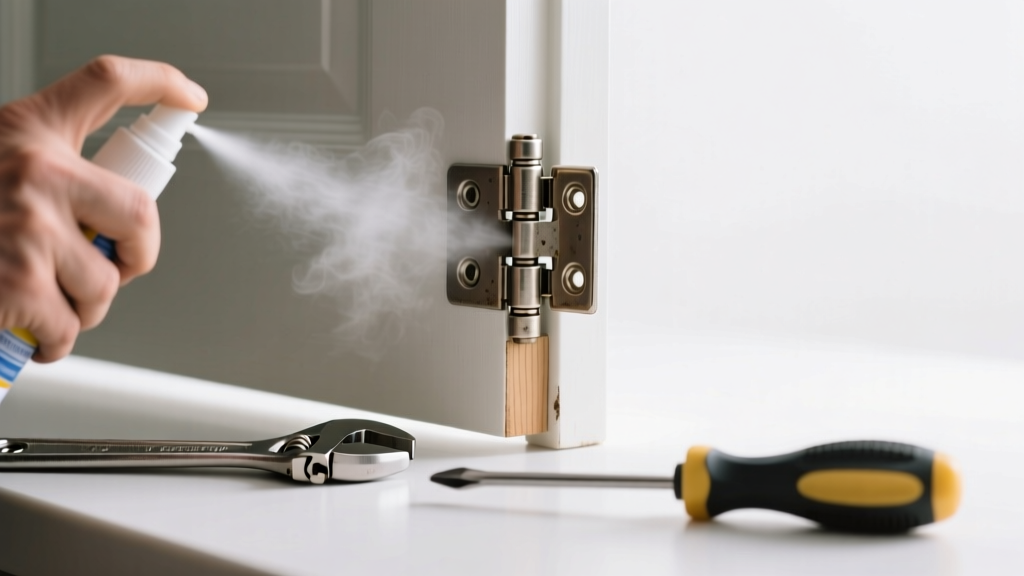
That high-pitched screech every time you open the pantry or fridge door isn’t just annoying—it’s a sign of friction, wear, or misalignment. In the humid, grease-prone kitchen environment, hinges corrode faster and collect grime more readily than elsewhere in the house. Ignoring it risks premature hinge failure or even door sagging over time.
Quick Diagnosis
Kitchen door hinges squeak for predictable reasons—most tied to moisture, food residue, or mechanical stress. Here are the top culprits:
- Insufficient or dried-out lubricant on hinge pins
- Grease, flour, or cooking oil buildup attracting dust and grit
- Loose mounting screws causing micro-movement and metal-on-metal contact
- Rust or corrosion from steam, dishwashing splashes, or humidity
- Hinge pin slightly bent or misaligned due to door weight or repeated slamming
Tools & Materials Needed
| Item | Purpose | Estimated Cost |
|---|---|---|
| 3-in-1 oil or white lithium grease | Penetrates rust, resists washout from kitchen humidity | $4.99–$8.49 |
| Microfiber cloth | Cleans grease and residue without scratching brass or stainless finishes | $2.99–$5.99 |
| #2 Phillips screwdriver | Tightens hinge screws without stripping heads (common on cabinet and interior doors) | $3.49–$12.99 |
| Small wire brush or old toothbrush | Dislodges baked-on grease and carbon deposits from hinge knuckles | $1.29–$4.99 |
| Isopropyl alcohol (70% or higher) | Dissolves sticky residue and sanitizes before re-lubrication | $2.49–$6.99 |
Step-by-Step Fix
Try these methods in order—start simple, escalate only if needed:
- Clean and dry the hinge: Remove the door pin using pliers or a flathead screwdriver (tap upward gently). Scrub hinge knuckles with isopropyl alcohol and the wire brush. Wipe completely dry.
- Re-lubricate the pin: Apply 1–2 drops of white lithium grease (not WD-40 long-term) directly to the pin before reinserting. Rotate the pin ¼ turn while inserting to spread lube evenly.
- Tighten all screws: Check both door-mounted and frame-mounted screws. Tighten firmly—but stop if resistance increases sharply (could strip softwood or particleboard).
- Check alignment: If squeaking persists, close the door and look for gaps at the top or side. A 1/16" gap widening toward the latch side often means the hinge is loose or the door has shifted.
When to Call a Pro
DIY is safe for standard interior kitchen doors—but skip the wrench if you encounter any of these:
- The hinge is welded or part of a commercial-grade steel-framed appliance door (e.g., walk-in cooler)
- Screws spin freely in stripped holes—even after using toothpicks + wood glue
- The door sags more than 1/8" at the handle, indicating possible frame warping or structural settling
- You suspect the hinge is embedded in a fire-rated door assembly (look for UL label; tampering voids certification)
"Over 62% of reported kitchen door failures begin with unaddressed hinge noise—usually within 18 months of first squeak." — National Kitchen & Bath Association Repair Trends Report, 2022
Prevention Tips
Kitchen hinges face harsher conditions than other rooms—so prevention must be proactive:
- Wipe hinge areas with a damp microfiber cloth once per month to remove airborne grease particles
- Reapply lithium grease every 6 months—not silicone spray, which attracts dust in high-airflow zones
- Avoid slamming pantry or appliance doors; install soft-close hinges during next cabinet upgrade (how to install soft-close hinges)
- Run your kitchen exhaust fan for 10 minutes after cooking to reduce ambient humidity near upper cabinets
Can I use olive oil instead of lubricant?
No. Olive oil oxidizes and turns rancid in warm, humid kitchens—forming sticky gunk that traps debris and accelerates wear. Stick to white lithium grease or synthetic hinge oil rated for food-safe environments.
Why does only one hinge squeak when there are three?
Load distribution isn’t equal: the middle hinge often bears the most torque, especially on tall pantry doors. It also collects more condensation from steam rising off stovetops or dishwashers. Inspect that hinge first—it’s usually the culprit.
Will vinegar remove rust from my hinge?
Yes—but cautiously. Soak a cotton swab in white vinegar and hold it on surface rust for 5 minutes, then scrub gently. Rinse immediately with water and dry thoroughly. Don’t soak brass-plated hinges—vinegar strips plating. For heavy rust, use naval jelly (rust removal for kitchen fixtures).
Can I replace just one hinge or do I need a full set?
You can replace just the noisy hinge—but match the exact type (butt, spring-loaded, or concealed) and screw spacing. Mismatched hinges cause binding. If the door is older than 8 years, consider replacing all three to ensure uniform wear and torque resistance.
What’s the safest lubricant around kids and pets?
Food-grade mineral oil is non-toxic and effective for short-term relief—but it washes out fast in humid kitchens. White lithium grease (e.g., CRC Heavy Duty) is NSF H1-certified for incidental food contact and lasts 3–4× longer. Always wipe excess to prevent greasy handles.
Do self-closing cabinet hinges squeak more often?
Yes—they contain internal springs and cams that accumulate grease faster than standard hinges. Clean them quarterly with alcohol and relubricate with silicone-free grease. Avoid WD-40: its solvent base degrades spring tension over time.
A quiet kitchen door doesn’t require expensive parts or hours of labor—just targeted cleaning, the right lubricant, and attention to alignment. Most squeaks vanish in under 12 minutes once you know where the friction lives. And if your pantry door still sings after step two? It’s probably time to check whether the hinge mortise has loosened in the cabinet frame—a quick fix with wooden matchsticks and glue (loose cabinet hinge repair).