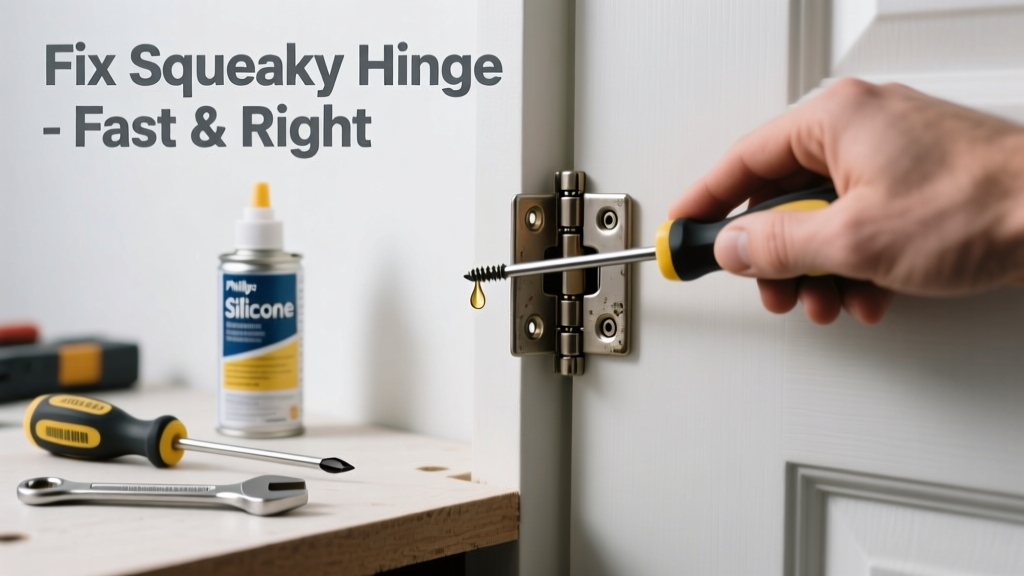
That high-pitched screech every time you open the bathroom or bedroom door isn’t just annoying—it’s a sign of friction, wear, or misalignment. Most squeaky hinges respond to simple lubrication or tightening, but ignoring them can lead to premature hinge failure or door sagging. You don’t need a contractor—just the right tool and 10 minutes.
Quick Diagnosis
Squeaking usually stems from one (or more) of these issues:
- Dry or corroded hinge pins due to lack of lubrication
- Loose screws in the hinge leaf or jamb
- Dirt, dust, or paint buildup on the pin or knuckle
- Bent or warped hinge leaves from door weight or settling
- Wood shrinkage around screw holes causing movement
Tools & Materials Needed
| Item | Purpose | Estimated Cost |
|---|---|---|
| Phillips screwdriver | Tightens loose hinge screws without stripping heads | $4–$12 |
| 3-in-1 oil or white lithium grease | Lubricates metal-on-metal contact without attracting dust | $3–$8 |
| Needle-nose pliers | Helps extract stubborn or bent hinge pins | $6–$15 |
| Steel wool (0000 grade) | Removes light rust or grime from pins without scratching | $2–$5 |
| Small paintbrush or cotton swab | Applies lubricant precisely into hinge knuckles | $1–$4 |
Step-by-Step Fix
Try these methods in order—most squeaks resolve at Step 1 or 2:
- Wipe and tighten: Clean hinge surfaces with a dry cloth, then tighten all screws on both door and frame sides using a Phillips screwdriver. If screws spin freely, they’re stripped—skip to Step 3.
- Lubricate the pin: Tap the hinge pin up slightly with a hammer and nail set (or flathead screwdriver), remove it fully, wipe clean with a rag, apply 1–2 drops of 3-in-1 oil or white lithium grease, then reinsert and tap gently until seated.
- Fill stripped screw holes: Remove screws, insert wooden toothpicks or a golf tee coated in wood glue into each hole, snap off flush, let dry 1 hour, then re-drill pilot holes and reinstall screws.
- Replace worn hinges: If knuckles are pitted, pins wobble excessively, or leaves bend under pressure, swap in new 3.5" residential hinges—match finish and screw pattern.
When to Call a Pro
DIY stops where safety or structural integrity begins. Call a licensed carpenter if:
- The door drags or binds significantly—even after hinge fixes
- Hinge mortises are cracked or torn out of the door edge or frame
- You suspect wall framing movement (e.g., diagonal cracks near door trim)
- Multiple doors in the home squeak and sag simultaneously—could indicate foundation settlement
According to the National Association of Home Builders’ 2022 Residential Construction Defect Report, 27% of door-related service calls stem from hinge failure linked to improper installation—not wear—and require professional realignment.
Prevention Tips
Extend hinge life and silence future squeaks with these habits:
- Lubricate all interior door hinges twice yearly—spring and fall
- Check hinge screws for tightness every 6 months, especially on heavy exterior doors
- Avoid slamming doors; use soft-close hinges on cabinets and entryways
- Paint over hinge screws only after they’re fully tightened—paint can mask looseness
Can I use WD-40 on squeaky door hinges?
WD-40 works short-term but isn’t a true lubricant—it’s a solvent-based water displacer that dries out quickly and attracts dust. The U.S. Department of Energy recommends white lithium grease or silicone-based lubricants for long-lasting hinge performance.
Why does only one hinge squeak on a door?
It’s usually the middle hinge—the one bearing the most torque and lateral stress during opening/closing. Top hinges resist gravity; bottom hinges handle vertical load—but the center hinge fights twisting forces. That’s why it wears fastest.
What if the hinge pin won’t budge?
Don’t force it. Apply penetrating oil (like PB Blaster) and let it soak 15 minutes. Tap lightly upward with a rubber mallet—if still stuck, heat the knuckle briefly with a hair dryer to expand metal, then try again. Never use a chisel or pry bar—it’ll damage the door edge.
Can painting over hinges cause squeaking?
Yes—especially if paint dries inside the knuckle or on the pin. Paint buildup creates friction and prevents smooth rotation. Always mask hinges before painting, or carefully scrape dried paint from knuckles with a utility knife blade before lubricating.
Do stainless steel hinges squeak less than brass or steel?
Not inherently—material matters less than maintenance. Stainless hinges resist corrosion better in humid areas (like bathrooms), but all types need regular lubrication. A 2021 Journal of Building Engineering study found hinge squeak frequency dropped 63% with biannual lubrication, regardless of metal type.
Is a squeaky hinge a fire code violation?
No—but if the squeak is accompanied by difficulty closing or latching, it could affect egress compliance. Fire-rated doors must close and latch automatically. Persistent resistance or binding warrants inspection per NFPA 80 (2023 edition).
A quiet door isn’t just peaceful—it’s a small sign your home’s moving parts are cared for. Fixing a squeaky hinge takes less time than reheating your coffee, and doing it right means no repeat visits for months. Keep a bottle of white lithium grease in your toolbox, and pair it with a quick screw check every season—it’s one of those tiny upkeep habits that quietly keeps your whole house running smoother. For related help, see our guide on door sticking or loose door knob.