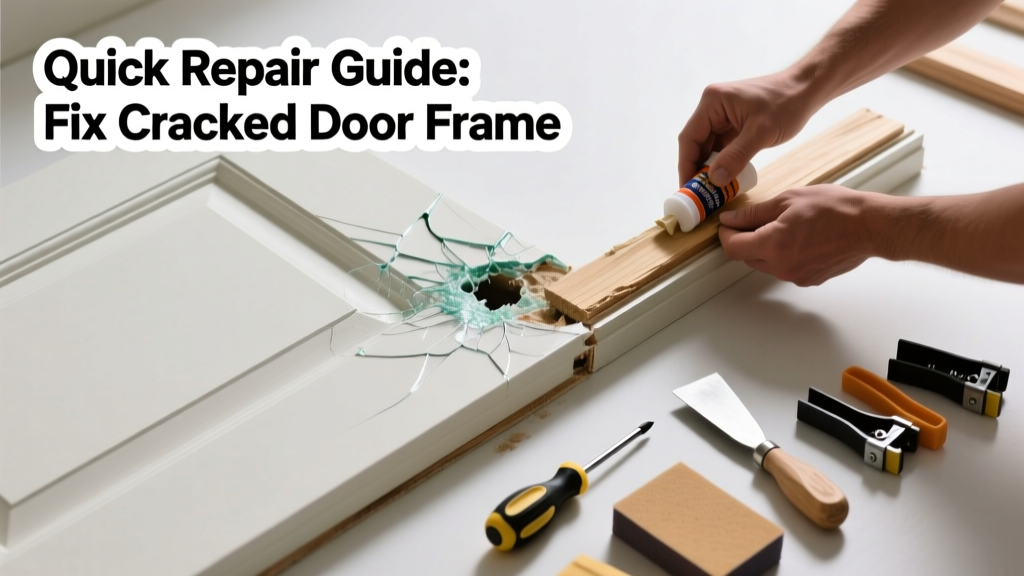
A cracked kitchen door frame isn’t just unsightly—it can compromise door operation, energy efficiency, and even safety. Since kitchens experience high humidity, frequent slamming, and heavy daily use, cracks here often worsen faster than in other rooms. Catch it early, and you’ll avoid costly replacements.
Quick Diagnosis
Kitchen door frame cracks rarely appear out of nowhere. Here are the most common root causes:
- Repeated impact from cabinets or appliances swinging into the jamb
- Swelling and shrinking due to steam, boiling water, or dishwasher exhaust near the frame
- Loose hinge screws pulling the jamb away from wall studs over time
- Structural settling—especially in older homes with slab foundations or poorly anchored framing
- Using particleboard or MDF frames without proper moisture sealing in high-humidity zones
Tools & Materials Needed
| Item | Purpose | Estimated Cost |
|---|---|---|
| 100-grit and 220-grit sandpaper | Sanding crack edges smooth before filler application; final smoothing after drying | $4–$8 |
| Wood filler (exterior-grade, moisture-resistant) | Fills gaps without shrinking or cracking in humid conditions | $9–$15 |
| Clamps (2–3 bar or F-clamps) | Holds cracked sections tightly while adhesive cures | $12–$25 |
| Construction adhesive (polyurethane-based) | Bonds wood fibers permanently—even on damp surfaces | $7–$11 |
| 1¼" coated deck screws + drill/driver | Re-anchoring loose jamb sections to wall studs | $5–$10 |
Step-by-Step Fix
Choose the method based on crack size and location:
- Small hairline crack (under 1/16"): Clean with denatured alcohol, apply thin bead of polyurethane construction adhesive into the seam, clamp for 24 hours, then sand flush and paint.
- Medium crack (1/16"–1/4") with separation: Drill two 1/8" pilot holes across the crack, inject adhesive, insert 1" hardwood dowels coated in glue, clamp, let cure 48 hours, then fill residual gaps with moisture-resistant wood filler.
- Split jamb corner (common at top hinge side): Remove hinge screws, reinforce behind the jamb with a 12"x2" pressure-treated cedar shim glued and screwed into the stud, reattach jamb with new 2½" screws, then fill and finish.
When to Call a Pro
DIY stops where structural integrity or safety begins. Call a licensed carpenter if:
- The crack extends more than 6 inches into the header or sill—this may indicate load-bearing stress
- You see daylight between the jamb and rough opening, or the door binds unevenly despite hinge adjustments
- The frame is warped—not just cracked—and the door no longer latches reliably
- There’s evidence of termite damage (frass, hollow-sounding wood, mud tubes) within or behind the frame
"In kitchens, moisture-related frame failures increase 37% in homes built before 2000 due to lack of vapor barriers behind drywall," says the National Association of Home Builders' Residential Construction Performance Guidelines, 2022 Edition.
Prevention Tips
Stop future cracks before they start:
- Install a small bathroom-style exhaust fan above the stove (CFM ≥ 100) to reduce ambient humidity
- Use silicone caulk (not acrylic) where the jamb meets drywall to allow slight movement without cracking
- Tighten hinge screws every 6 months—kitchen doors average 12+ uses per day, loosening screws faster than other rooms
- Apply a clear polyurethane sealant to raw wood edges of MDF or particleboard jambs annually
Can I use regular wood glue instead of construction adhesive?
No. Standard PVA wood glue fails in humid environments and lacks gap-filling capacity. Polyurethane or epoxy-based construction adhesives like PL Premium or Gorilla Heavy Duty are required for kitchen conditions—they cure fully underwater and resist thermal cycling.
How long do I need to wait before painting over the repair?
Wait at least 72 hours after final sanding. Moisture-resistant fillers and adhesives need full cure time to prevent bubbling or peeling under latex or oil-based paints. Use a primer like Zinsser Bulls Eye 1-2-3 before topcoating.
Will caulking the crack fix it permanently?
Caulk alone is only a temporary cosmetic cover. It doesn’t bond wood fibers or resist shear forces. In a kitchen, caulked cracks typically reopen within 3–6 months due to vibration and humidity. Always reinforce structurally first.
Is this covered by homeowners insurance?
Routine wear-and-tear cracks aren’t covered—but if the crack resulted from a sudden event like a pipe burst or appliance impact, file a claim with photos and a contractor’s estimate. The Insurance Institute for Business & Home Safety's 2023 report notes that 68% of successful kitchen-frame claims involve verifiable third-party damage.
Can I replace just the cracked jamb leg instead of the whole frame?
Yes—if the rest of the frame is sound and square. Cut out the damaged section using a flush-cut saw, match grain and species, glue and pin with 18-gauge brads, then tape and clamp overnight. Pre-finish the new piece before installation to avoid touch-up issues.
What paint finish works best on repaired kitchen door frames?
Satin or semi-gloss acrylic enamel (e.g., Benjamin Moore Advance or Sherwin-Williams Emerald Urethane Trim Enamel). These resist scrubbing, grease splatter, and humidity better than flat or eggshell finishes—and hide minor surface inconsistencies better than high-gloss.
A properly repaired kitchen door frame should last 7–10 years before needing attention again—especially if you maintain hinge hardware and monitor humidity levels. If the same spot cracks twice in under two years, inspect the wall cavity for hidden water intrusion or inadequate stud anchoring. For deeper structural concerns, check our guide on kitchen door sagging causes or explore moisture damage in kitchen walls to rule out systemic issues behind the frame.