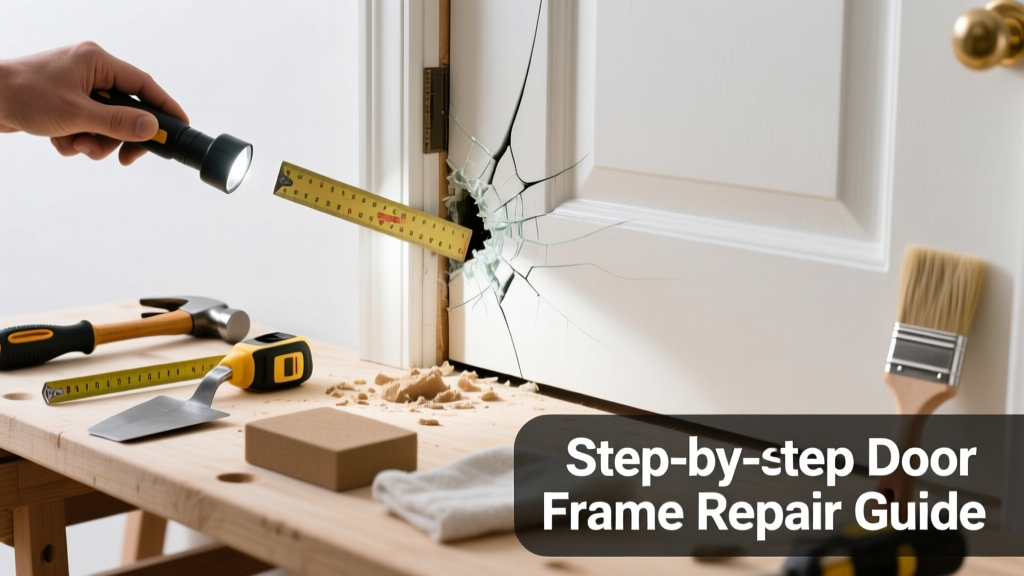
A cracked door frame isn’t just unsightly—it can compromise security, energy efficiency, and door operation. Small hairline splits might tighten up with glue and clamps; deeper structural cracks often signal shifting foundations or repeated slamming. Ignoring them risks worsening damage, drafts, or even door misalignment.
Quick Diagnosis
Before grabbing tools, identify the root cause. Most cracked frames stem from one (or more) of these:
- Seasonal wood shrinkage in older homes—especially near HVAC vents or fireplaces
- Foundation settling, causing uneven stress on jambs and headers
- Repeated forceful closing or improper hinge screws (e.g., 3/4" instead of 3")
- Moisture exposure behind trim leading to rot and brittleness
- Impact damage from furniture, moving boxes, or pets
Tools & Materials Needed
| Item | Purpose | Estimated Cost |
|---|---|---|
| Wood glue (Titebond III) | Bonds split grain without shrinking; waterproof and gap-filling | $8–$12 |
| Clamps (bar or F-style, 24" minimum) | Applies even pressure while glue cures—critical for clean joints | $15–$35 |
| Wood filler (Minwax High-Performance) | Fills gaps where glue alone won’t bridge; sands smooth and accepts stain | $6–$9 |
| 120- and 220-grit sandpaper | Preps surface for glue adhesion and finishes repair invisibly | $3–$7 |
| Chisel (1/4" bevel-edge) | Cleans out loose splinters and opens crack slightly for glue penetration | $10–$18 |
Step-by-Step Fix
Choose your method based on crack size and location. All assume the frame is solid wood—not hollow MDF or particleboard (which rarely repairs well).
- Clean & Prep: Remove paint or debris from crack using a utility knife and 120-grit paper. Tap loose fibers gently with a chisel; vacuum dust thoroughly.
- Glue & Clamp (for hairline to 1/8" cracks): Inject Titebond III deep into the split with a syringe tip or toothpick. Clamp across the crack for 2 hours minimum—overnight is ideal. Wipe excess glue before it skins over.
- Reinforce with Dowels (for 1/8"–3/8" vertical splits): Drill two 3/16" holes across the crack at 45° angles, 1" apart. Insert hardwood dowels coated in glue, then clamp. Trim flush after curing.
- Fillet Patch (for corner cracks at head jamb or strike side): Cut a 2" x 2" patch from matching pine or poplar. Glue and pin with 1" brads. Feather edges with filler and sand smooth.
When to Call a Pro
DIY stops being safe or effective in these scenarios:
- The crack runs continuously through the header or extends into wall framing
- You see visible gaps (>1/4") between frame and drywall, especially with diagonal wall cracks nearby
- Door binds, rubs, or fails to latch—even after adjusting hinges
- Mold, soft wood, or musty odor indicates hidden rot behind the casing
- Crack reappears within 2 weeks of repair despite proper clamping and moisture control
According to the Insurance Institute for Business & Home Safety's 2023 report, 68% of door-related structural failures begin with unaddressed frame cracks that worsen due to delayed intervention.
Prevention Tips
Extend your repair’s lifespan with proactive habits:
- Tighten hinge screws every 6 months—replace stripped ones with 3" #10 screws anchored into stud
- Install a rubber door stop or cushioned closer to reduce impact force
- Run a dehumidifier in basements or crawlspaces if RH exceeds 60% regularly
- Inspect interior trim seasonally—look for paint splits, gaps, or subtle bowing
- Keep exterior door frames caulked and painted; check for peeling near threshold corners
Can I use super glue instead of wood glue?
No. Super glue (cyanoacrylate) creates brittle bonds that shatter under wood movement. Wood glue remains flexible as humidity changes, absorbing minor expansion and contraction. Titebond III is ASTM D4297-certified for structural interior/exterior use.
Will painting over the crack hide it temporarily?
Paint may mask a hairline crack for a few weeks—but pressure from door operation or seasonal shifts will reopen it, often wider. Paint also prevents proper glue adhesion during future repair. Always prep bare wood first.
How long does the glue need to cure before rehanging the door?
Wait at least 4 hours for light use, but 24 hours is safest—especially for hinge-side repairs. Titebond III reaches 75% strength in 1 hour, but full bond develops over 24 hours. Rushing risks micro-movement that breaks the joint.
Is epoxy better than wood glue for large cracks?
Epoxy fills gaps well but doesn’t bond with wood grain like PVA glue—it adheres only to surface cellulose. For structural integrity, wood glue + mechanical reinforcement (dowels or patches) outperforms epoxy alone. Reserve epoxy for non-load-bearing cosmetic fills.
Can I repair a cracked metal-clad door frame myself?
Yes—if the crack is in the wood substrate beneath the steel skin. Peel back damaged cladding carefully, repair wood, then reattach cladding with stainless staples and seam sealer. If the steel itself is fractured, replacement is required—metal-clad frames aren’t weldable in place.
What’s the average cost to hire someone for this repair?
Most handymen charge $120–$220 for a single cracked frame repair, including materials and 1.5–2 hours labor. Licensed carpenters may charge $180–$300, especially if reinforcing framing or replacing jamb sections. According to HomeAdvisor’s 2024 Remodeling Cost Report, minor door frame repairs average $172 nationally.
A well-executed repair lasts 5–10 years—if you address moisture sources and avoid over-tightening hinges. If the crack returns in under 12 months, revisit foundation stability or consult a structural engineer. For related issues, see our guides on door hinge sagging and door sticking in winter—both often share root causes with frame cracking.