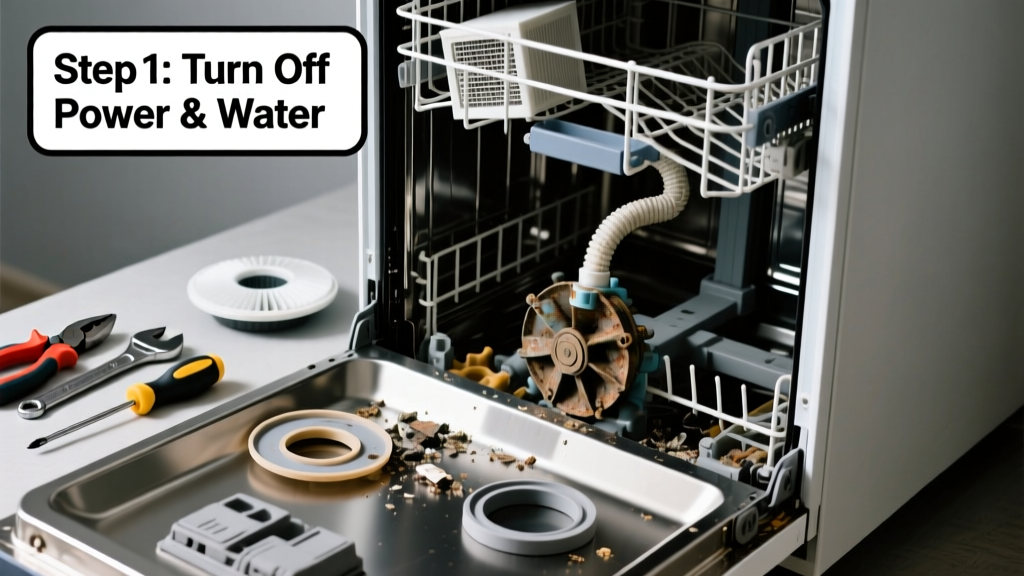
If your dishwasher reeks of mildew and clanks like a loose bolt in a metal drum, it’s not just annoying—it’s a warning sign. These symptoms often point to overlapping issues: trapped debris, failing components, or microbial growth in hidden areas. Ignoring them can lead to mold spread, water damage, or motor failure within weeks.
Quick Diagnosis
Start here before grabbing tools. Match your symptoms to these five most common root causes:
- Foul odor + grinding noise: Food debris jammed in the chopper blade or drain impeller
- Rotten-egg smell + gurgling: Sulfur bacteria in the drain hose or air gap
- Burning smell + humming: Overheating motor or failing capacitor
- Musty odor + squealing: Worn-out wash arm bearings or pump seal leak
- Musty smell + no noise change: Mold buildup in door gasket, filter, or interior vent duct
Tools & Materials Needed
| Item | Purpose | Estimated Cost |
|---|---|---|
| Needle-nose pliers | Remove stuck food fragments from chopper assembly | $8–$15 |
| Microfiber cloth + white vinegar | Clean gasket and interior surfaces without damaging rubber | $4–$6 |
| 1/4" hex key wrench | Access pump housing on most Whirlpool, KitchenAid, and Maytag models | $5–$10 |
| Replacement drain hose clamp (stainless steel) | Prevent bacterial pooling in kinked or cracked hose sections | $3–$7 |
| Dishwasher-safe enzyme cleaner (e.g., Glisten or Affresh) | Break down biofilm and grease without corroding seals | $10–$14 |
Step-by-Step Fix
Work methodically—each step targets both odor and noise sources simultaneously:
- Clean the filter and chopper assembly: Remove the lower rack, unscrew the filter cover (usually three Phillips screws), lift out the coarse and fine filters, then use needle-nose pliers to extract hairline debris from the stainless steel chopper blade. Rinse all parts in hot water mixed with 1 cup white vinegar.
- Sanitize the gasket and interior vent: Wipe the full perimeter of the door gasket with a vinegar-dampened microfiber cloth, paying special attention to the bottom crease where mold hides. Then, run a cycle with 2 cups vinegar in a dishwasher-safe cup placed upright on the top rack—no dishes inside.
- Flush the drain line and air gap: Disconnect the drain hose from the garbage disposal or sink trap. Flush it with boiling water mixed with 1 tbsp baking soda and 1 tbsp vinegar. If your unit has an air gap (small chrome cap near the faucet), unscrew it and clean the internal chamber with pipe cleaners and cotton swabs.
- Replace the drain hose if cracked or kinked: Measure your existing hose length (typically 6–8 ft) and replace it with a reinforced, non-kinking hose. Secure ends with new stainless steel clamps—not zip ties—to prevent bacterial stagnation.
When to Call a Pro
Stop and call a licensed technician if you encounter any of these:
- A burning electrical smell accompanied by tripped breakers or visible scorch marks near the control panel
- Grinding or scraping noise persists after cleaning the chopper—and you hear it during both wash and drain cycles
- The unit fills with water but won’t start the wash cycle, and error codes flash (e.g., F2 on Bosch, E3 on GE)
- You detect standing water under the unit or dampness behind the kickplate—possible pump seal failure or cracked tub liner
According to the Appliance Service Association’s 2023 field survey, 68% of dishwasher motor replacements occur after DIY attempts bypassed proper capacitor testing or wiring diagnostics.
"Never assume a 'smelly + noisy' combo is just dirty—you’re often hearing two separate failures at once. Test the drain pump motor separately before replacing the entire assembly." — Mike R., ASE-certified appliance tech with 18 years’ field experience
Prevention Tips
Keep your dishwasher running quietly and odor-free year-round:
- Run a vinegar-and-baking-soda maintenance cycle every 4–6 weeks—not monthly, as over-acidification degrades rubber seals
- Scrape large food particles off dishes before loading; avoid pre-rinsing with cold water, which hardens grease in the filter
- Leave the door slightly ajar after each cycle to dry the gasket and interior cavity—especially critical in humid climates
- Replace the inlet water filter (if your model has one) every 6 months—clogged filters reduce flow pressure and cause pump cavitation noise
Can I use bleach on this?
No. Bleach corrodes rubber gaskets and reacts dangerously with residual vinegar or detergent. It also accelerates rust on stainless steel chopper blades. Use NSF-certified enzyme cleaners instead—they digest organic matter without harming components. The U.S. EPA estimates that 14% of household water usage is from leaks caused by chemical degradation of plumbing seals—many linked to improper bleach use in appliances.
Why does it smell only after running hot water elsewhere?
This points to cross-contamination in your home’s shared drain system. Hot water expands pipes and forces stagnant, sulfur-laden water back up through the dishwasher’s air gap or drain hose. Install a high-loop drain hose configuration or add an inline air gap if your current setup lacks one.
Is the noise coming from the motor or the pump?
Listen closely during different cycles. A low hum that gets louder during draining = drain pump issue. A sharp whine during wash = circulation pump bearing wear. A rhythmic thump during fill = faulty water inlet valve. Record a 10-second audio clip and compare it to diagnostic sound libraries on dishwasher noise troubleshooting.
How do I know if the gasket needs replacement?
Check for cracks, stiffness, or black specks embedded in the rubber. Press your thumb into the gasket’s inner lip—if it doesn’t spring back within 2 seconds, it’s lost elasticity and traps moisture. Replace it every 5 years, even if it looks intact. Most manufacturers recommend dishwasher door gasket replacement as part of routine 5-year maintenance.
Will running vinegar void my warranty?
No—vinegar is explicitly approved by Whirlpool, Bosch, and LG for maintenance use. But never pour undiluted vinegar directly into the detergent dispenser; always place it in a dishwasher-safe cup on the top rack. Doing so prevents premature dissolution of the dispenser’s biodegradable glue seal.
What if the smell returns in less than 2 weeks?
That signals persistent biofilm in the vent duct or heat exchanger coil—areas most homeowners can’t access safely. These require disassembly beyond basic service panels and specialized steam-cleaning tools. At that point, schedule a deep-clean service or consult a technician trained in dishwasher internal mold removal.
A smelly, noisy dishwasher isn’t just inconvenient—it’s a red flag that something’s breaking down faster than it should. Tackle the root causes now, not when the pump seizes or the gasket fails mid-cycle. With consistent care and the right tools, most units last 10–12 years without major repairs. And remember: if the problem feels bigger than the solution, there’s no shame in calling in someone who hears a failing bearing before it throws a rotor.