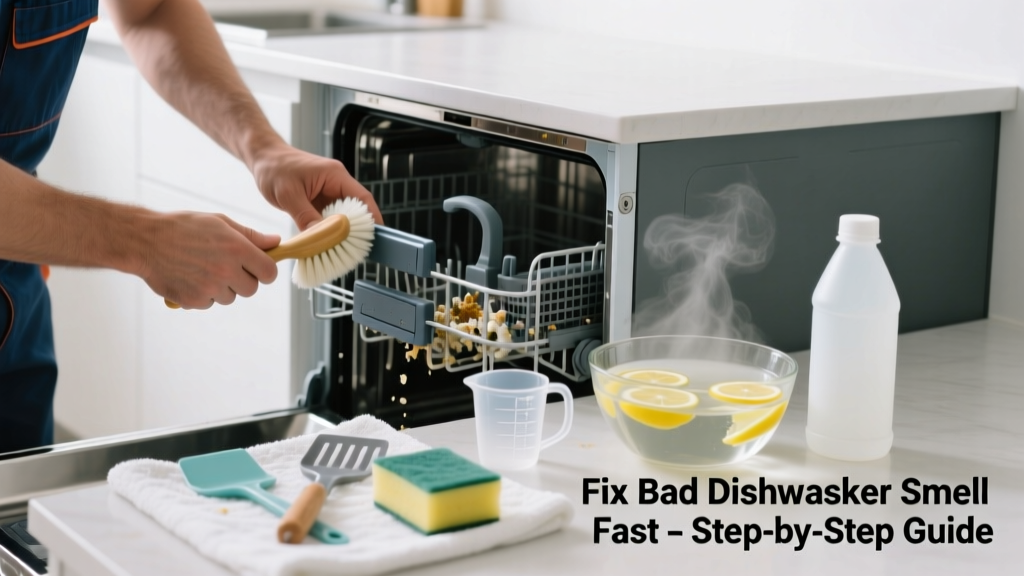
That sour, musty, or rotten-egg smell wafting from your dishwasher isn’t just annoying—it’s a red flag that food debris, mold, or bacterial buildup is festering in hidden spots. Even brand-new dishwashers develop stink within months if not maintained properly, especially in humid kitchens where moisture lingers.
Quick Diagnosis
Before grabbing supplies, identify the likely culprit:
- Stale food particles trapped in the filter or drain basket
- Mold or mildew growing in the door gasket or interior rubber seals
- Standing water or sludge in the drain hose or pump assembly
- Rancid grease buildup in the spray arms or chopper blade area
- Old, damp dish towels or sponges left near the unit (often mistaken for dishwasher odor)
Tools & Materials Needed
| Item | Purpose | Estimated Cost |
|---|---|---|
| White vinegar (16 oz) | Breaks down mineral deposits and neutralizes organic odors | $2.50–$4.00 |
| Baking soda (1 cup) | Absorbs lingering smells and gently scrubs grime | $1.25–$2.75 |
| Microfiber cloth + old toothbrush | Cleans tight spaces like gaskets and filter threads | $3.00–$6.00 |
| Plumber’s gloves (nitrile) | Protects hands from bacteria and sharp edges during deep clean | $4.99–$8.50 |
| Flashlight | Reveals hidden mold or debris behind the lower rack or under the spray arm | $5.00–$15.00 |
Step-by-Step Fix
- Clean the filter and drain basket: Pull out the bottom rack, locate the cylindrical filter (usually centered at the tub floor), twist and lift it out. Rinse under hot water, scrub with baking soda paste and an old toothbrush, then reseat firmly.
- Deodorize with vinegar: Place a dishwasher-safe cup filled with 1 cup white vinegar on the top rack. Run a full hot-water cycle (no dishes) on the “Heavy” or “Sanitize” setting.
- Scrub the gasket and door edge: Wipe the rubber door seal with a vinegar-dampened microfiber cloth. Pay special attention to folds and crevices where black mold often hides—use the toothbrush for stubborn spots.
- Clear the drain hose and air gap: If your sink has an air gap (small chrome cap near the faucet), unscrew the cap and clear hair or food bits from the tube below. For models without one, check the drain hose loop under the sink for kinks or clogs—gently flush with boiling water mixed with ¼ cup baking soda.
When to Call a Pro
DIY stops working—and safety becomes a concern—when you notice any of these:
- Water pooling under the dishwasher or leaking from the front panel during operation
- A persistent sulfur (rotten egg) smell even after multiple vinegar cycles—this may indicate a failing water heater anode rod or contaminated municipal supply
- The unit won’t drain, makes grinding noises, or trips the circuit breaker during startup
- Mold growth extends beyond the gasket into internal wiring or insulation (visible behind access panels)
According to the U.S. EPA estimates that 14% of household water usage is from leaks—and undetected dishwasher drainage issues contribute significantly to hidden moisture damage.
"If you smell sewer gas or hear gurgling from nearby drains while the dishwasher runs, shut it off immediately and contact a licensed plumber—this points to a venting failure or P-trap dry-out." — International Association of Certified Home Inspectors (InterNACHI), 2022 Residential Plumbing Standards
Prevention Tips
Odor prevention is simpler than elimination—and far less messy. Make these habits part of your routine:
- Rinse large food scraps before loading; skip pre-rinsing only if using a high-quality detergent with enzymes
- Run the dishwasher at least once every 2 days—even with a partial load—to prevent stagnant water
- Wipe the door gasket dry after each cycle, especially in coastal or high-humidity kitchens
- Replace the filter gasket every 18–24 months (check your model’s manual—how to replace a dishwasher filter gasket)
- Use a monthly maintenance cycle: ½ cup vinegar on top rack + ¼ cup baking soda sprinkled in the bottom, run on hot without dishes
Can I use bleach on this?
No—bleach can corrode stainless steel interiors, degrade rubber gaskets, and react dangerously with residual vinegar or detergent. Stick to vinegar, baking soda, or commercial dishwasher cleaners labeled NSF-certified for appliance use. For mold in the gasket, a 1:10 hydrogen peroxide–water solution is safer and more effective.
Why does it smell only after running?
Heat activates trapped organic matter—like dried-on dairy, meat fats, or citrus pulp—that’s been decomposing in the filter or drain line. The steam forces those volatile compounds into the air. That’s why a post-cycle odor is almost always a sign of incomplete drainage or microbial growth—not a faulty heating element.
Does hard water cause dishwasher smells?
Indirectly, yes. Hard water leaves calcium and magnesium deposits that trap food particles and create biofilm-friendly surfaces. According to the Water Quality Association’s 2023 report, homes with >7 grains per gallon (GPG) hardness see 3x more frequent odor complaints in dishwashers—especially when combined with low-rinse-aid usage.
Will a new dishwasher solve it?
Only if the old unit has internal corrosion, cracked hoses, or failed pumps. Most new dishwashers develop the same smells within 6–12 months without proper maintenance. Before replacing, try the full deep-clean protocol—and consider adding a whole-house water softener if hardness exceeds 5 GPG (hard water dishwasher problems).
Can garbage disposal issues affect dishwasher smell?
Absolutely. Since most dishwashers drain through the garbage disposal, a clogged or slow-draining disposal creates backflow and stagnation. Run the disposal with ice cubes and citrus peels weekly—and always run it for 15 seconds *after* the dishwasher finishes its drain cycle.
Is the smell coming from the sink instead?
Test it: Run the dishwasher empty with all cabinet doors closed, then open them immediately. If the odor spikes inside the cabinets but not near the sink, it’s the dishwasher. If it’s strongest at the sink strainer or disposal, clean the P-trap and check for food debris in the disposer flange (sink smells like sewer).
A foul dishwasher smell doesn’t mean your appliance is doomed—it means it’s overdue for some targeted care. Most cases resolve in under 45 minutes with the right tools and timing. Keep a small bottle of vinegar and a dedicated toothbrush near the unit, and treat odor like a warning light: address it early, and you’ll extend your dishwasher’s life by years—not just eliminate the stink.