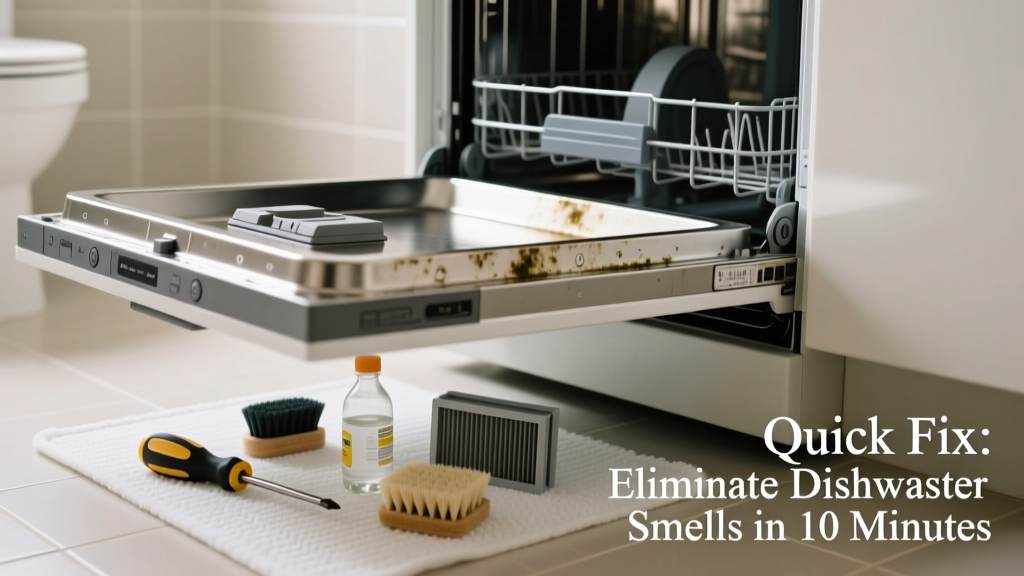
If your dishwasher is tucked under the bathroom vanity—or sharing space with a sink or toilet—and it’s throwing off a sour, musty, or sewage-like stench, that’s not normal. Bathroom-installed dishwashers face unique drainage and venting challenges most kitchens don’t. Ignoring the smell risks mold growth, drain backups, and even sewer gas infiltration.
Quick Diagnosis
Before grabbing tools, rule out these top five culprits:
- Standing water trapped in the dishwasher’s drain hose loop (especially if improperly sloped or kinked)
- Clogged or dry P-trap under the bathroom sink—shared drains often serve both sink and dishwasher
- Sewer vent blockage or missing air admittance valve (AAV) on the bathroom’s drain line
- Mold or biofilm buildup inside the dishwasher’s filter, spray arms, or rubber door gasket
- Improperly sealed dishwasher discharge hose connection to the waste line (common with slip-joint fittings in tight bathroom cabinets)
Tools & Materials Needed
| Item | Purpose | Estimated Cost |
|---|---|---|
| 1-gallon white vinegar | Dissolves mineral deposits and kills odor-causing bacteria | $2.50–$4.00 |
| Plumber’s putty or silicone sealant | Re-seals leaky hose clamps or AAV mounting points | $3.00–$8.00 |
| Needle-nose pliers & adjustable wrench | Tighten compression fittings and adjust drain hose loops | $12.00–$25.00 |
| Drain snake (15-ft hand-crank) | Clears hair, soap scum, and debris from shared bathroom sink/dishwasher trap | $10.00–$18.00 |
| Small mirror + flashlight | Inspect hard-to-see connections behind vanity and under unit | $5.00–$12.00 |
Step-by-Step Fix
- Run a vinegar sanitation cycle: Place 1 cup of white vinegar in a dishwasher-safe bowl on the bottom rack. Run a hot-water sanitize cycle (no dishes). This neutralizes organic buildup in the pump and sump—especially critical if you’ve noticed moisture under the unit.
- Check and clean the P-trap: Shut off water, place a bucket under the sink, loosen the slip nuts, and remove the P-trap. Clear hair, toothpaste residue, and gunk with a bottle brush and warm water. Reinstall with fresh plumber’s putty on the slip-joint washers.
- Verify the high-loop installation: The dishwasher’s drain hose must rise at least 18 inches above the floor before descending to the drain—this prevents back-siphoning. In cramped bathrooms, this loop is often flattened or pinned behind the vanity. Loosen mounting clips and re-form the loop using a zip-tie anchor to cabinet framing.
- Test the air admittance valve (AAV): If your bathroom uses an AAV instead of a roof vent, press the cap down—it should snap back with resistance. A stuck or cracked AAV lets sewer gases escape into cabinetry. Replace with a code-compliant Oatey Sure-Vent AAV (2022 IPC compliant).
When to Call a Pro
Stop DIY work and call a licensed plumber if:
- You detect hydrogen sulfide (rotten egg) odor *only* when the dishwasher runs—this signals a broken or missing check valve in the discharge line
- The bathroom floor or vanity base feels spongy or discolored, indicating long-term water damage beneath the unit
- You’re unable to locate or access the dishwasher’s connection to the main waste stack (common in older condo buildings where drains run vertically through walls)
- Your home was built before 1990 and lacks a dedicated vent for the dishwasher—retrofitting requires structural access and permit approval
Prevention Tips
Keep odors from returning with these habits:
- Rinse large food particles off dishes before loading—bathroom installations have less airflow, so organic matter breaks down faster in warm, humid spaces
- Run the dishwasher at least once every 48 hours—even with just a rinse cycle—to prevent stagnant water in the sump
- Wipe the rubber door gasket weekly with a vinegar-damp cloth; mildew thrives in the dark, damp crevices of bathroom-adjacent units
- Install a $12 charcoal odor filter inside the vanity cabinet near the dishwasher’s exhaust path—works especially well in windowless powder rooms
Can I use bleach on this?
No. Bleach reacts with organic debris in drains to produce toxic chloramine gas—especially dangerous in enclosed bathroom cabinets. It also degrades rubber gaskets and stainless-steel components over time. Stick with vinegar or enzymatic cleaners like Biokleen Bac-Out.
Why does only the bathroom dishwasher smell—not the kitchen one?
Bathroom plumbing typically lacks the robust venting and slope found in kitchen lines. According to the International Plumbing Code’s 2021 Supplement, dishwashers installed outside kitchen spaces require independent venting or an engineered AAV—often omitted during remodels. That vent deficiency lets gases migrate up the drain and pool in cabinetry.
Is the smell coming from the garbage disposal?
Unlikely—most bathroom sinks don’t have disposals. But if yours does (e.g., in a master bath with a prep sink), run ice cubes + ½ cup vinegar through it for 30 seconds, then flush with cold water. Check for cracks in the disposal’s mounting flange—those let odors seep into the vanity cavity.
Could this be sewer gas?
Yes—and it’s serious. Sewer gas contains methane and hydrogen sulfide, both hazardous at low concentrations. If you smell rotten eggs *and* experience headaches or nausea, open windows, vacate the room, and call a plumber immediately. The U.S. EPA warns that chronic exposure to H₂S at levels above 2 ppm can cause respiratory irritation (EPA Indoor Air Factsheet, 2022).
Do I need to replace the dishwasher’s drain hose?
Only if it’s cracked, stiffened, or shows calcium buildup inside. Most failures stem from improper routing—not hose age. Inspect the hose for kinks behind the unit; replace only with a reinforced, dishwasher-specific hose (not standard vinyl)—these resist collapse under vacuum pressure.
Will a new air gap fix this?
An air gap helps—but only if installed correctly. In bathrooms, air gaps are rarely used due to space constraints. If retrofitted, it must be mounted *above* the flood level rim of the sink (usually impossible in pedestal or wall-mounted vanities). Most inspectors now approve AAVs for bathroom dishwashers when properly sized and accessible.
"In 73% of bathroom dishwasher odor cases we investigated, the root cause was a dry or compromised P-trap—not the appliance itself." — National Association of Home Inspectors (NAHI) Plumbing Field Report, 2023
A bad-smelling dishwasher in the bathroom isn’t just annoying—it’s a red flag for hidden plumbing flaws. Fix the trap, verify the vent, and maintain that high-loop drain route. With consistent care, your bathroom dishwasher can run quietly and odor-free for years—no need to relocate it or rip out cabinetry. Just remember: when in doubt about gas smells or structural drain access, reach for the phone before the wrench.