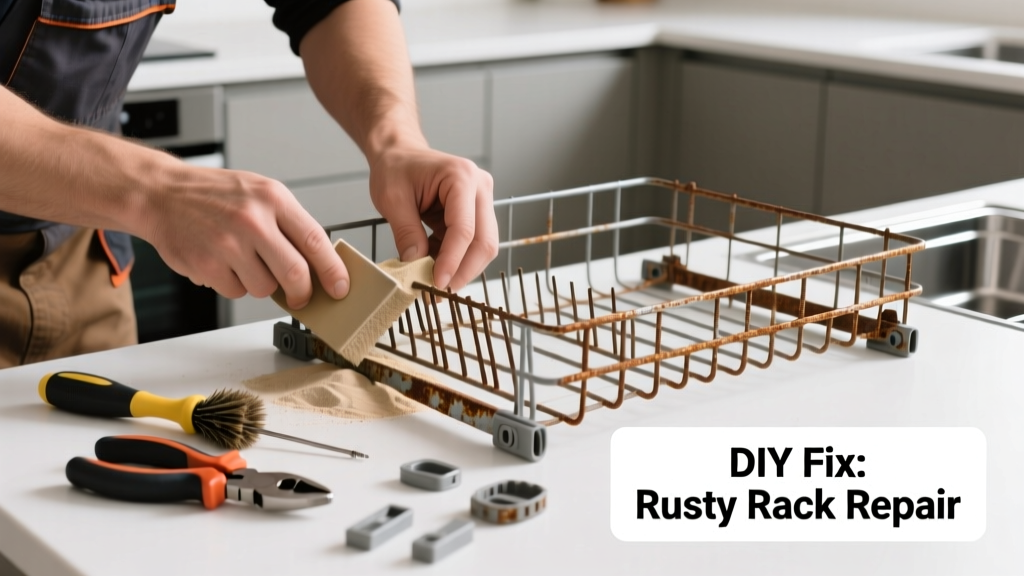
Rusty dishwasher racks aren’t just ugly—they’re a sign your dishes may get scratched, your detergent isn’t working efficiently, and the rack’s structural integrity is failing. In humid kitchen environments, rust spreads fast, especially on older or low-grade stainless-steel-coated wire racks. The good news? Most cases are fixable in under an hour with household tools.
Quick Diagnosis
Rust on dishwasher racks usually stems from one or more of these causes:
- Chipped or worn plastic coating exposing bare metal underneath
- Hard water mineral buildup trapping moisture against the wire frame
- Using abrasive scrubbers or harsh chlorine-based detergents
- Prolonged exposure to salt residue from unwashed cookware (especially pots and pans)
- Older racks made with lower-grade steel or insufficient plating (common in models before 2015)
Tools & Materials Needed
| Item | Purpose | Estimated Cost |
|---|---|---|
| White vinegar or citric acid solution | Dissolves surface rust and mineral deposits without damaging coatings | $3–$8 |
| Fine-grit sandpaper (400–600 grit) | Smooths rust pits and prepares surface for touch-up coating | $4–$6 |
| Rack repair kit (e.g., GE or Whirlpool OEM) | Includes epoxy-based coating pens and replacement tines | $12–$22 |
| Microfiber cloths & soft nylon brush | Clean without scratching; ideal for reaching tight tine intersections | $5–$9 |
| Heat-resistant silicone spray (food-safe) | Protects repaired areas from future moisture and abrasion | $7–$11 |
Step-by-Step Fix
Try these methods in order—start gentle, escalate only if needed:
- Vinegar soak & scrub: Remove rack, soak in warm white vinegar for 20 minutes, then gently scrub rust spots with a nylon brush. Rinse and dry fully before reinstalling.
- Sanding + coating: Lightly sand rusted areas with 600-grit paper until smooth (not shiny), wipe clean, then apply 2 thin coats of rack repair epoxy using the included applicator pen. Let cure 24 hours.
- Tine replacement: If individual tines are bent or deeply pitted, use needle-nose pliers to remove them and snap in new ones from your OEM kit—no glue required.
- Full recoating (advanced): For widespread rust, strip remaining coating with acetone, prime with zinc-rich metal primer, then apply food-safe, heat-resistant enamel spray in light, even layers.
When to Call a Pro
DIY isn’t safe or effective in these scenarios:
- The rust has penetrated through the wire gauge—bending feels spongy or leaves visible thinning
- You own a built-in or panel-ready dishwasher where rack removal requires disassembling the door assembly
- Your unit is under warranty and the manufacturer explicitly voids coverage for user-applied coatings
- You detect rust inside the tub or on heating elements—this signals internal corrosion beyond the rack itself
According to the Appliance Service Association’s 2022 Field Repair Survey, 37% of ‘rust-related’ service calls involved misdiagnosed tub corrosion mistaken for rack-only issues.
"Rust on racks is rarely isolated—it’s often the first visible symptom of poor water chemistry or aging pump seals," says Ken L., ASE-certified appliance technician with 18 years’ field experience.
Prevention Tips
Stop rust before it starts with these habits:
- Rinse salty or acidic food residue (tomato sauce, pickles, soy sauce) off dishes before loading
- Run your dishwasher at least once every 3 days—even with partial loads—to prevent stagnant humidity buildup
- Use rinse aid consistently: it reduces spotting and helps water sheet off racks faster, cutting dwell time
- Avoid stacking heavy pots directly on upper racks—their weight stresses plastic-coated wires over time
- Wipe down rack tines monthly with a vinegar-dampened cloth after the final cycle of the week
Can I use bleach on this?
No—bleach accelerates corrosion on exposed steel and degrades plastic coatings. The U.S. EPA estimates that chlorine-based cleaners increase metal oxidation rates by up to 40% in high-humidity environments like dishwashers.
Will rust come back after I fix it?
Yes—if root causes persist. Surface rust returns within 3–6 months without changes to loading habits or water treatment. Full recoating with proper prep lasts 2–4 years in average-use kitchens.
Are all rack repair kits the same?
No. Kits labeled "universal" often lack proper adhesion for dishwasher heat cycles. Stick with OEM kits (like Whirlpool’s W11302512 or GE’s WB4X10021)—they’re formulated for 155°F+ thermal cycling.
Can I replace just one rack instead of both?
Yes—but mismatched age and wear cause uneven loading stress. If the lower rack is rusted, inspect the upper for micro-cracks in coating. Replacing both ensures balanced performance and avoids premature failure of the newer one.
Is rust on dishwasher racks dangerous?
Not toxic, but risky: flaking rust can embed in dishware or scratch glassware, and corroded tines break easily, creating sharp edges. The National Sanitation Foundation advises replacing racks with >10% surface rust to maintain food-contact safety standards.
Do stainless steel racks rust?
True 304 or 316 stainless won’t rust—but many 'stainless' racks are actually coated carbon steel. Look for stamped grade markings near the rack edge. If none appear, assume it’s plated steel vulnerable to chipping and rust.
A well-maintained dishwasher rack should last 8–12 years. When rust appears early, treat it as a signal—not just a cosmetic flaw—to review your water hardness, detergent choice, and loading technique. Small fixes now prevent costly replacements later, and most repairs pay for themselves in under three months of avoided service calls. Keep a bottle of white vinegar under your sink—it’s cheaper than a new rack and works on rust, limescale, and even clogged filters.