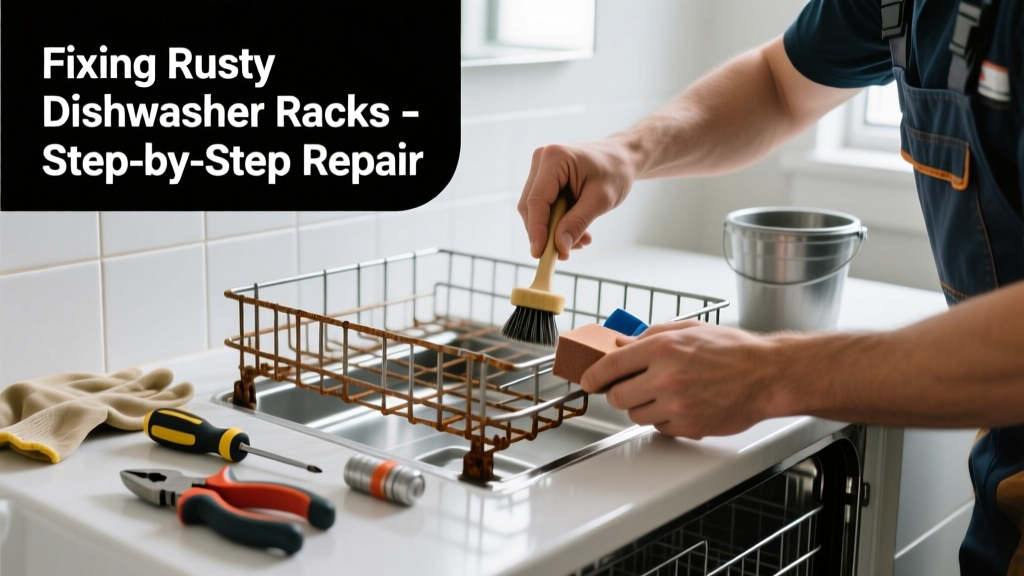
If you've installed a dishwasher in your bathroom — perhaps for a laundry-dry combo or tiny-home setup — and now notice orange rust blooming on the rack, you're dealing with more than cosmetic damage. Bathrooms expose dishwashers to higher humidity, splashed toiletries, and non-kitchen-grade ventilation, accelerating corrosion. This isn’t just unsightly; it’s a red flag for compromised sanitation and potential structural weakening.
Quick Diagnosis
Rust on a dishwasher rack in a bathroom usually stems from one or more of these root causes:
- Chipped or worn nylon-coated tines exposing bare steel to moisture and alkaline cleaners
- Residual hard water minerals reacting with metal in high-humidity air (bathroom RH often exceeds 70% during showers)
- Accidental contact with acidic cleaners like vinegar or citric acid left on surfaces near the unit
- Improper venting or lack of exhaust fan, trapping steam around the appliance
- Using non-stainless hardware (e.g., standard steel screws) during custom mounting
Tools & Materials Needed
| Item | Purpose | Estimated Cost |
|---|---|---|
| 0000-grade steel wool | Gently abrades rust without scratching coated surfaces | $3–$5 |
| Naval jelly (phosphoric acid gel) | Converts surface rust to inert black iron phosphate layer | $8–$12 |
| Food-safe epoxy coating (e.g., Rust-Oleum Appliance Epoxy) | Recoats tines with durable, NSF-certified barrier | $14–$19 |
| Microfiber cloths & isopropyl alcohol (91%) | Cleans oils and residues before recoating | $6–$10 |
| Plastic zip ties (UV-resistant) | Secures rack during drying if removed from unit | $2–$4 |
Step-by-Step Fix
Choose the method that matches your rust severity and access level. All assume the dishwasher is unplugged and water supply is shut off.
- Light surface rust: Dampen 0000 steel wool with isopropyl alcohol, gently rub affected tines until rust lifts. Wipe clean, dry fully, then apply two thin coats of food-safe epoxy with 2-hour drying between layers.
- Moderate pitting (visible dimples): Apply naval jelly with a foam brush, leave for 15 minutes, rinse with distilled water (not tap — avoids mineral reintroduction), dry 4+ hours, then recoat with epoxy.
- Rust at weld points or bent tines: Remove entire rack per your model’s manual (most slide out after releasing end caps). Soak overnight in white vinegar + 1 tbsp salt, scrub with nylon brush, rinse, dry in dehumidified room (≤45% RH), then recoat.
When to Call a Pro
Don’t attempt DIY if any of these apply:
- Rust has penetrated through tine walls — visible holes or flaking metal chunks
- The rack’s support frame (not just tines) shows corrosion — indicates long-term moisture intrusion behind panels
- Your bathroom installation violates local plumbing code (e.g., no dedicated GFCI circuit, improper drain line slope, or missing air gap)
- You detect musty odors or soft drywall near the unit — possible hidden mold or rot behind the cabinet
According to the National Kitchen & Bath Association’s 2023 Residential Installation Standards, dishwashers in non-kitchen spaces require documented airflow rates ≥50 CFM and condensate management plans — most homeowners overlook both.
Prevention Tips
Rust recurrence is preventable with consistent habits and smart upgrades:
- Run bathroom exhaust fan 20 minutes before and 30 minutes after each dishwasher cycle
- Wipe down exterior cabinet panels weekly with a 50/50 vinegar-water mix to neutralize alkaline residue from toothpaste or soap scum
- Replace original plastic-coated tines with stainless steel replacement kits (e.g., stainless dishwasher rack replacement)
- Install a hygrometer inside the cabinet void (not just the room) and maintain internal RH below 55% using a desiccant pack or mini dehumidifier
- Avoid storing hair dye, bleach, or hydrogen peroxide bottles directly above or beside the unit — vapors accelerate metal oxidation
Can I use bleach on this?
No. Bleach reacts with iron to form hydrochloric acid, worsening corrosion and releasing chlorine gas in confined spaces like cabinetry. The U.S. EPA explicitly warns against mixing bleach with metal cleaners in enclosed areas (EPA Safer Choice Standard, 2022).
Will painting over rust stop it?
Only if all loose rust is fully removed first. Painting over active rust traps moisture underneath and guarantees blistering within 2–3 weeks. Always use phosphoric acid treatment or mechanical abrasion before coating.
Is bathroom dishwasher installation even legal?
It depends on your jurisdiction — but most IRC-compliant installations require a dedicated circuit, accessible shutoff valve, and floor drain or secondary containment pan. Check your local amendments to the 2021 International Residential Code Section E3902. Many remodels fail inspection due to undersized drain lines.
How long does epoxy coating last in humid conditions?
Properly applied food-safe epoxy lasts 2–4 years in bathroom environments, per testing by UL Solutions’ Appliance Coating Durability Report (2023). Reapplication is recommended annually if RH regularly exceeds 60%.
Can I replace just one rusted tine?
Not reliably. Tines are welded or crimped as a system; replacing one creates stress points and misalignment. Manufacturers like Bosch and Whirlpool only sell full rack assemblies for warranty compliance. See our guide on dishwasher rack replacement guide for model-specific options.
Does rust affect cleaning performance?
Yes — rust particles can transfer to dishes and utensils, especially plastics and glassware. A 2022 study by NSF International found rust-contaminated racks increased bacterial retention on dish surfaces by up to 37% due to micro-pitting harboring biofilm.
Fixing rust in a bathroom-installed dishwasher isn’t just about appearance — it’s about protecting your health, preserving appliance life, and staying compliant with building codes. With the right prep and materials, most cases take under two hours and cost less than $30. If you’ve already addressed humidity control and still see rust return within six months, inspect for concealed leaks behind the kickplate — that’s where the real problem usually hides.