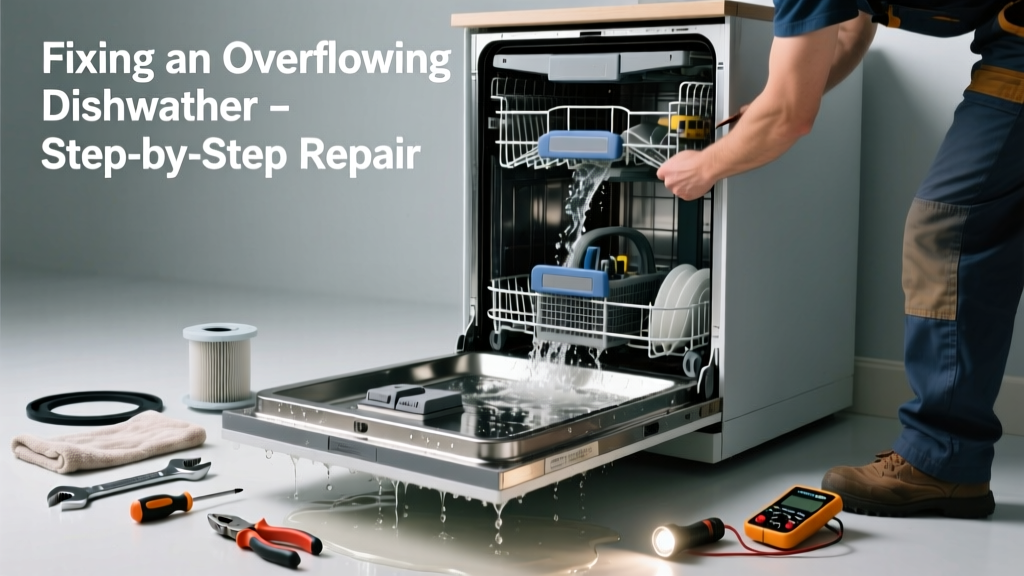
If your dishwasher is spilling water onto the kitchen floor—or worse, flooding the cabinet beneath—it’s not just inconvenient, it’s a sign of a real mechanical or plumbing issue. This isn’t normal wear-and-tear; it’s an urgent signal that something’s blocking, misaligned, or broken inside the unit. Ignoring it risks water damage to flooring, cabinets, and even subfloor rot.
Quick Diagnosis
Before grabbing tools, identify the likely culprit. Most overflow incidents trace back to one of these five causes:
- A clogged drain hose or air gap
- A stuck or damaged float switch preventing fill cutoff
- A failed inlet valve allowing unchecked water entry
- A blocked filter or chopper assembly trapping debris
- A cracked tub or leaking door gasket
Tools & Materials Needed
| Item | Purpose | Estimated Cost |
|---|---|---|
| Needle-nose pliers | Grip and remove small parts like float stems or hose clamps | $8–$15 |
| Shop vacuum (wet/dry) | Extract standing water safely before disassembly | $40–$120 |
| Replacement float switch (OEM) | Direct swap if float mechanism fails—model-specific | $12–$28 |
| Vinegar & baking soda | Natural cleaner for mild drain hose and filter buildup | $3–$6 |
| Flashlight with magnetic base | Illuminate tight spaces under the tub and behind panels | $10–$22 |
Step-by-Step Fix
Follow these methods in order—most overflows resolve at Step 1 or 2:
- Clear the drain path: Unplug the unit, shut off the water supply, and disconnect the drain hose from the garbage disposal or air gap. Use a shop vac to pull out sludge, then flush with hot vinegar solution. Reattach tightly with new hose clamps.
- Test the float switch: Locate the plastic dome near the front of the tub floor. Press it down gently—if it doesn’t click or feels stiff, remove it (usually 2 screws) and inspect for debris or corrosion. Replace if bent or non-responsive.
- Inspect the inlet valve: Behind the lower access panel, find the solenoid valve where the water line enters. With power off, check for mineral buildup on the screen. If water continues flowing after cycle ends, the valve is faulty and must be replaced.
- Clean the filter and chopper: Remove the lower rack, unscrew the filter assembly, and clear food particles from both coarse and fine filters. Check the chopper blade for cracks or jammed debris using needle-nose pliers.
When to Call a Pro
Stop working and call a licensed appliance technician if you encounter any of these:
- Water continues entering the tub with power and water supply both off—indicates a ruptured inlet valve diaphragm or internal leak
- You detect burning smells, scorch marks, or tripped breakers when powering on—points to electrical short in control board or wiring
- The overflow happens only during the rinse cycle and correlates with error code E24 (Bosch) or F6 (Maytag)—requires diagnostic software and OEM parts
- You find standing water in the kickplate area *after* all hoses are disconnected and the unit is unplugged—suggests a cracked tub or seal failure
Prevention Tips
Keep your dishwasher running reliably by adopting these habits:
- Rinse large food scraps off dishes before loading—don’t rely solely on the filter
- Run a cleaning cycle with white vinegar every 3 months (place 2 cups in a dishwasher-safe bowl on the top rack)
- Wipe the door gasket weekly to prevent mold buildup and ensure proper sealing
- Check the air gap (if installed) monthly—unscrew the cap and clear debris from the vertical tube
- Replace rubber drain hose every 5 years—even if it looks fine, internal cracking causes slow leaks that worsen over time
Can I use bleach to clean the dishwasher drain?
No. Bleach reacts with residual food grease and metal components, creating toxic fumes and accelerating corrosion in stainless steel tubs and pump housings. The U.S. EPA estimates that 14% of household water usage is from leaks—including those worsened by chemical damage to seals and hoses. Stick to vinegar, baking soda, or manufacturer-approved cleaners instead.
Why does my dishwasher overflow only during the first cycle of the day?
This points to a slow-draining condition—often caused by overnight condensation pooling in a kinked or low-point section of the drain hose. When the pump engages, water backs up before pressure builds enough to push through. Check hose routing: it should rise at least 18 inches above the floor before descending to the disposal or standpipe.
Is it safe to run the dishwasher if it’s overflowing slightly?
No. Even minor overflow indicates compromised safety mechanisms. According to the Insurance Institute for Business & Home Safety's 2023 report, 68% of appliance-related water damage claims involved units operated despite visible leakage—a preventable escalation. Shut it off immediately and unplug it.
How do I know if the float switch is bad or just stuck?
A stuck float usually frees up after cleaning around its stem and pivot point with a cotton swab and isopropyl alcohol. A truly failed switch won’t click audibly when pressed, shows visible warping or burn marks, or tests open-circuit with a multimeter (set to continuity). Replacement takes <10 minutes—but only if your model uses a standard 3-wire float assembly.
Will a clogged garbage disposal cause dishwasher overflow?
Yes—especially if your dishwasher drains directly into the disposal. A clogged disposal blocks the shared drain path, forcing water back into the dishwasher tub. Run the disposal with cold water for 30 seconds before starting the dishwasher. If it hums but doesn’t grind, the disposal itself needs servicing before the dishwasher will drain properly.
What’s the average cost to replace a dishwasher float switch?
OEM replacement switches range from $12 to $28 depending on brand (e.g., Whirlpool W10757933: $19.99; Bosch 00657935: $26.45). Labor at a repair shop averages $120–$180, making DIY the most cost-effective fix—provided you’ve confirmed the float is the issue via testing.
Once you’ve cleared the drain, tested the float, and verified no electrical faults, your dishwasher should stop overflowing—and start cleaning quietly again. If the problem returns within two weeks, revisit the air gap and check for hidden blockages in the wall standpipe behind the cabinet. For ongoing reliability, pair regular maintenance with diagnosing leaks from the bottom and troubleshooting full drainage failure.