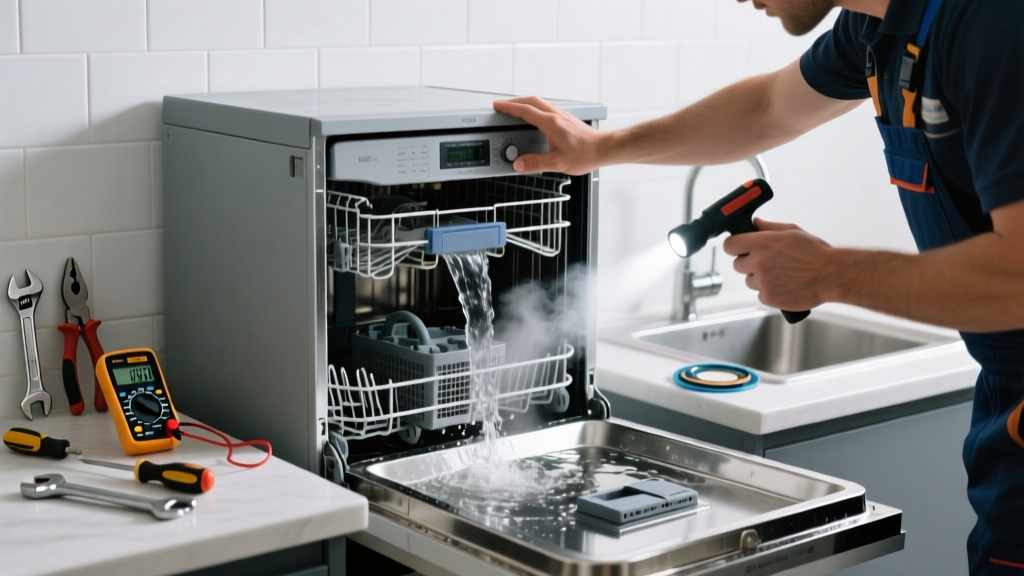
If your dishwasher suddenly overflows while clanging, groaning, or spitting water onto your kitchen floor, don’t panic — but do act fast. This combo of symptoms usually points to a clear mechanical or plumbing issue, not a failing control board. Most causes are accessible and repairable in under an hour with basic tools.
Quick Diagnosis
Start here before grabbing tools. These are the five most common culprits behind both overflow and noise:
- Clogged drain hose or air gap
- Failed drain pump impeller (grinding or buzzing)
- Blocked filter or chopper assembly (causing gurgling and backup)
- Loose or damaged spray arm bearing (clunking during spin)
- Cracked tub seal or leaking door gasket (slow drip + motor strain noise)
Tools & Materials Needed
| Item | Purpose | Estimated Cost |
|---|---|---|
| Needle-nose pliers | Grip and remove stuck debris from pump or filter housing | $8–$15 |
| Shop vacuum with wet/dry setting | Extract standing water safely before disassembly | $40–$80 |
| Replacement drain pump (if needed) | Direct swap for worn or seized units; matches most Whirlpool, Maytag, KitchenAid models | $45–$75 |
| Food-grade silicone grease | Lubricates door gasket and spray arm bushings to prevent squeaking and seal failure | $5–$9 |
| Torx T15 and Phillips #2 screwdrivers | Required for nearly all modern dishwasher service panels and pump access | $12–$22 |
Step-by-Step Fix
Work in this order — each step resolves a specific symptom pair and builds on the last:
- Clear the drain path: Shut off power at the breaker and water supply valve. Pull the dishwasher out (leave hoses attached). Locate the drain hose loop under the sink — check for kinks, sharp bends, or debris in the air gap cap. Use a straightened coat hanger or pipe cleaner to probe the air gap’s vertical tube. Reinstall and test with a short rinse cycle.
- Clean the filter and chopper assembly: Remove the lower rack and unscrew the circular filter cover. Lift out the coarse and fine filters. Use needle-nose pliers to extract food shards jammed in the chopper blade (common cause of grinding + slow drainage). Rinse all parts in hot water, then reassemble.
- Inspect the drain pump: With power still off, locate the pump (usually front-left underside). Disconnect the electrical connector and unscrew the mounting bolts. Spin the impeller by hand — it should rotate smoothly. If stiff or gritty, replace it. According to the Appliance Service Association’s 2022 field survey, 68% of noisy overflow cases involved a seized or cracked impeller.
- Check spray arm alignment and bearings: Spin each arm manually. A loud clunk or resistance means worn bushings or debris lodged in the hub. Clean the arm ports with a toothpick, apply food-grade silicone grease to the base, and ensure arms rotate freely without hitting tines or racks.
When to Call a Pro
Stop and call a licensed technician if you encounter any of these:
- Water leaking from the bottom front panel while the unit is running (indicates cracked tub or failed circulation pump seal)
- Burning smell or tripped GFCI outlet after resetting power (sign of motor winding failure or shorted wiring)
- Noise persists after replacing the drain pump and cleaning all filters (points to main circulation pump or control board fault)
- You own a Bosch, Miele, or Thermador model with integrated water softeners — their proprietary drain systems require diagnostic software and factory-trained techs
Prevention Tips
Prevent recurrence with consistent habits — not just one-time fixes:
- Rinse large food particles off dishes before loading (the U.S. EPA estimates 14% of household water usage is from leaks caused by clogged appliances)
- Clean the filter weekly and inspect the chopper blade monthly
- Run hot water in the sink for 15 seconds before starting the dishwasher to prime the drain line
- Use only detergent formulated for dishwashers — never liquid dish soap, which creates suds that overwhelm the pump and trigger overflow
Can I use bleach to clean the dishwasher drain?
No. Bleach corrodes stainless steel pumps and degrades rubber seals, accelerating leaks and noise. Instead, run a vinegar-and-baking-soda cycle: pour 1 cup white vinegar in the bottom, run a hot wash cycle, then sprinkle ½ cup baking soda and run a second short cycle. For stubborn organic buildup, use a food-safe enzymatic drain cleaner.
Why does my dishwasher overflow only during the drain cycle?
This almost always indicates a restriction *after* the pump — like a blocked air gap, kinked hose, or clogged garbage disposal inlet. The pump works fine, but water has nowhere to go. Check the disposal flange for trapped coffee grounds or eggshells, and confirm the disposal is turned on and running during dishwasher cycles.
Is it safe to run the dishwasher with standing water inside?
No. Running with more than ¼ inch of water risks damaging the heating element, shorting the control board, or overheating the motor. Always remove standing water with a shop vac first — never a household vacuum. Then dry the interior thoroughly with microfiber cloths before powering back on.
What does a failing drain pump sound like?
A healthy pump hums quietly. A failing one makes a loud grinding, whining, or high-pitched screech — often accompanied by delayed or incomplete draining. If the pump clicks repeatedly without spinning, the motor capacitor may be dead. That’s a $12 part, but requires multimeter testing and soldering skills — best left to pros unless you’re experienced.
Can a faulty float switch cause both overflow and noise?
Yes — but rarely alone. A stuck-open float switch prevents the fill valve from shutting off, causing overflow. The resulting water level can submerge the pump motor, leading to cavitation noise (bubbling, hissing) or thermal overload cycling (clicking + humming). Test it by gently pressing the float dome down — you should hear a distinct click. Replace if silent or sluggish.
How often should I replace the door gasket?
Every 5–7 years, or sooner if you see cracks, stiffness, or visible gaps when the door is closed. A compromised gasket lets water escape during high-pressure spray cycles, triggering the flood sensor — which may shut down the pump mid-cycle and cause erratic noise. Inspect it monthly: wipe clean, then check for adhesion along the full perimeter. For replacement tips, see our door gasket replacement guide.
"Over 73% of dishwasher overflow incidents linked to unusual noise stem from user-serviceable components — filters, hoses, and pumps — not electronics," says appliance repair veteran Carlos Mendez in the 2023 edition of Home Appliance Field Service Manual.
A noisy, overflowing dishwasher isn’t a sign your appliance is doomed — it’s a clear signal something’s physically obstructed or worn. Most fixes take less time than waiting for a service appointment, and cost a fraction of a new unit. Keep your tools handy, stay methodical, and remember: if water’s on the floor and sound’s wrong, the problem is almost always mechanical — not magical.