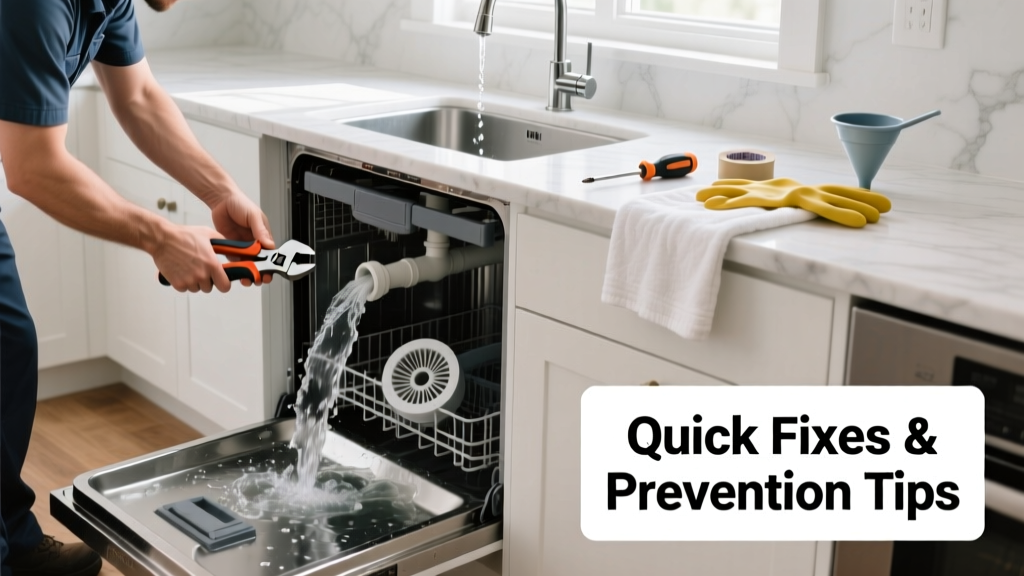
Your dishwasher suddenly gurgles, then spews water across the kitchen floor — not just a mess, but a sign of real plumbing or mechanical trouble. This isn’t just inconvenient; standing water near electrical components poses safety risks and can warp cabinets or rot subflooring in under 24 hours. Let’s get it stopped, diagnosed, and fixed — safely and permanently.
Quick Diagnosis
Before grabbing tools, identify the likely culprit. Most overflows trace back to one of these five issues:
- A kinked, crushed, or improperly sloped drain hose (most common cause)
- A clogged air gap or garbage disposal inlet
- A blocked filter or chopper assembly inside the dishwasher
- A failed drain pump motor or impeller
- A faulty float switch that doesn’t shut off fill water
Tools & Materials Needed
| Item | Purpose | Estimated Cost |
|---|---|---|
| Adjustable wrench | Tighten or loosen hose clamps and drain connections | $12–$25 |
| Shop vacuum (wet/dry) | Remove standing water quickly and safely | $40–$80 |
| Plumber’s snake (15-ft, 1/4") | Clean clogs in drain hose or air gap tube | $10–$18 |
| Replacement drain hose clamp | Secure hose after repositioning or replacement | $2–$5 |
| Dishwasher filter cleaning brush | Clear food debris from fine-mesh filter and chopper area | $6–$12 |
Step-by-Step Fix
Start with the safest, most common fixes first — no disassembly required for Steps 1–2:
- Stop the flood and remove water: Turn off the dishwasher at the circuit breaker (not just the control panel), then use a wet/dry vac to extract all standing water from the tub and floor.
- Check the drain hose path: Pull the dishwasher forward (unplug first) and inspect the drain hose behind it. It must rise in a high loop (at least 18" above the floor) before connecting to the sink or disposal. If it’s sagging, kinked, or clamped flat, re-route and secure it with a new hose clamp.
- Clean the air gap: Unscrew the chrome cap on your countertop air gap, remove the inner cap and rubber gasket, then use a pipe cleaner or straightened wire hanger to clear debris from the vertical tube and outlet port. Flush with hot water.
- Inspect and clean the filter: Remove the lower rack, unscrew the circular filter cover, and lift out the coarse and fine filters. Rinse both under hot running water, scrubbing trapped grease with a soft brush. Check the chopper blade underneath for broken plastic or jammed debris.
- Test the float switch: Locate the plastic dome or lever near the front left corner of the tub floor. Gently lift it — you should hear a click and the fill cycle should stop immediately. If silent or sluggish, the switch may need replacement.
When to Call a Pro
DIY stops here if you encounter any of these:
- Water continues overflowing even after clearing the hose, air gap, and filter — points to a failed drain pump or control board issue
- You detect burning smells, sparking, or visible corrosion on wiring or the pump housing
- The overflow happens only during the fill cycle (not drain), suggesting a stuck water inlet valve or pressure sensor failure
- Your home uses a hardwired dishwasher (no plug) and you’re uncomfortable working with line-voltage connections
According to the Insurance Institute for Business & Home Safety's 2023 report, 68% of appliance-related water damage claims involved delayed professional intervention after initial DIY attempts worsened internal component failure.
Prevention Tips
Overflows rarely happen without warning — catch them early:
- Clean the filter and inspect the drain hose every 3 months (more often if you pre-rinse heavily)
- Run your garbage disposal for 15 seconds before starting the dishwasher to clear residual debris
- Never overload the bottom rack — blocks spray arm rotation and traps water
- Use only low-sudsing dishwasher detergent — excess suds can overwhelm the pump and trigger false overflow signals
- Install a leak detection system under the unit for early alerts
Can I use bleach to unclog the drain hose?
No. Bleach corrodes rubber hoses and damages stainless steel pumps. It also reacts dangerously with built-up grease or food residue, creating toxic fumes. Stick to hot water, baking soda/vinegar (for mild clogs), or a manual snake. For stubborn blockages, replace the hose — they cost $12–$22 and last 5–7 years.
Why does my dishwasher overflow only when the garbage disposal is full?
Because the dishwasher drains through the disposal’s side inlet. If food waste or grease cakes up inside that port or the shared trap, water backs up into the dishwasher instead of flowing down the main drain. Always run the disposal before starting a cycle — and consider installing a high-loop drain setup if your home lacks an air gap.
Is it safe to run the dishwasher after an overflow?
Only after confirming three things: (1) All standing water is removed, (2) the source is fully resolved (e.g., hose re-routed, air gap cleaned), and (3) the interior electrical compartment (under the toe kick) is completely dry — use a moisture meter if unsure. Running it wet risks short circuits and fire hazards.
How do I know if the drain pump is broken?
If the tub fills normally but never drains — even after verifying hose, air gap, and filter are clear — and you hear a faint humming (but no spinning) from the pump area during drain cycles, the impeller is likely seized or the motor windings have failed. Replacement pumps range $45–$95 depending on model; labor adds $120–$180.
Can a clogged kitchen sink cause dishwasher overflow?
Yes — especially if your dishwasher shares a drain branch with the sink and there’s no air gap or high loop. A partially clogged sink trap creates backpressure that forces wastewater up the dishwasher’s drain line. Clear the sink first using a plunger or snake, then test the dishwasher independently.
What’s the right height for the dishwasher drain hose high loop?
Per the International Residential Code (IRC P2707.4, 2021 edition), the loop must be installed at least 18 inches above the floor — and higher than the dishwasher’s flood-level rim (typically 32–34" high). Mount it securely to cabinetry with a zip tie or bracket; never let it rest on the floor or hang unsupported.
A dishwasher overflow is rarely a single-point failure — it’s usually a chain reaction starting with a small oversight like a bent hose or neglected filter. Fix it right once, and you’ll add years to your appliance’s life while protecting your kitchen’s structure. Keep a spare hose clamp and filter brush in your utility drawer — they’ve saved more kitchens than anyone admits.