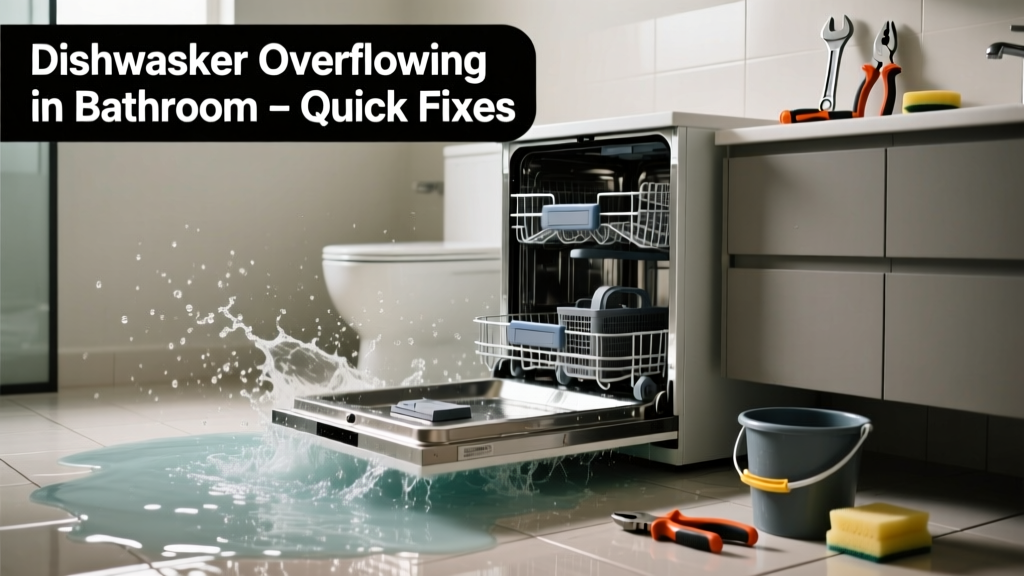
If your dishwasher is flooding your bathroom floor—not the kitchen—you’re dealing with a dangerous plumbing crossover or venting failure. This isn’t just inconvenient; it’s a sign that wastewater is backing up where it shouldn’t, risking mold, structural damage, and code violations. Don’t ignore standing water near your toilet or shower when the dishwasher runs.
Quick Diagnosis
Start here before grabbing tools. Most bathroom overflows tied to dishwasher operation point to one of these root issues:
- A clogged or improperly sloped shared drain line (common in older condos or duplexes)
- A failed air gap or high-loop installation on the dishwasher’s discharge hose
- A blocked or missing vent stack causing negative pressure and siphoning
- A cracked or disconnected P-trap under the bathroom sink or tub that shares the branch line
- A main sewer line blockage upstream of both fixtures
Tools & Materials Needed
| Item | Purpose | Estimated Cost |
|---|---|---|
| Adjustable wrench | Tighten or disconnect drain hose clamps and trap fittings | $12–$25 |
| Plumber's snake (25 ft) | Clean shared branch drains without removing drywall | $20–$45 |
| Bucket and towels | Contain overflow during testing and disassembly | $8–$15 |
| Thread seal tape (Teflon) | Re-seal threaded connections after trap inspection | $3–$6 |
| Flashlight with magnetic base | Inspect under-sink piping and vent access points in tight spaces | $15–$30 |
Step-by-Step Fix
Try these methods in order—most cases resolve at Step 2 or 3. Always shut off the dishwasher’s power at the breaker and close its hot water shutoff valve first.
- Check the dishwasher’s high loop or air gap. If your unit lacks a proper high loop (minimum 32" above floor level, secured to underside of cabinet), wastewater can siphon back when the pump stops. Re-route and clamp the discharge hose to meet code.
- Test the bathroom sink and tub drains. Run water in both while the dishwasher is idle. If either gurgles or backs up, the shared 1.5" branch line is likely clogged. Use the plumber’s snake through the sink’s cleanout plug or overflow plate.
- Inspect the bathroom P-trap and tailpiece. Disconnect the trap and check for grease buildup, hair, or food debris—yes, dishwasher waste can travel far if vents are compromised. Clean thoroughly and reassemble with fresh tape on threaded joints.
- Verify vent integrity. Access your roof vent (if safe) or check for bird nests, ice, or paint sealant blocking the pipe. A blocked vent prevents air replacement during drainage, creating suction that pulls water from bathroom traps.
When to Call a Pro
Stop working and call a licensed plumber if you encounter any of these:
- Water backing up from multiple fixtures (toilet, shower, sink) simultaneously when the dishwasher runs
- Foul sewer odor persisting after cleaning traps and snaking lines
- Visible cracks or corrosion in cast iron or ABS vent stacks inside walls or attic
- No cleanout access between bathroom and dishwasher—requires wall or floor opening
According to the Insurance Institute for Business & Home Safety's 2023 report, 68% of water damage claims involving cross-fixture backups involved undetected vent blockages or improper high-loop installations—both easily missed by untrained homeowners.
Prevention Tips
Maintain your system so this doesn’t recur every few months:
- Run hot water in the bathroom sink for 30 seconds before starting the dishwasher to prime the line
- Install a dishwasher-specific inline filter (like the Dishwasher Drain Filter) to catch food solids before they enter shared pipes
- Have your main sewer line scoped every 3–5 years—especially if you live in a home built before 1990
- Never pour grease down any kitchen or bathroom drain—even small amounts polymerize and trap debris over time
Can I use bleach to clear the backup?
No. Bleach won’t dissolve grease, hair, or food solids clogging shared lines—and it can corrode PVC seals and react dangerously with other cleaners. It also masks odor without fixing the underlying flow issue. Stick to mechanical clearing or enzymatic drain maintainers like Bio-Clean.
Why does only the bathroom flood—not the kitchen?
Because your dishwasher and bathroom share a downstream drain branch but have different trap depths and vent paths. The bathroom’s lower trap seal breaks first under backpressure or siphon action—especially if its P-trap is older, loose, or partially dry.
Is this a code violation?
Yes—most residential codes (IPC 2021 §707.2) require dishwashers to discharge either through an air gap or a high loop *above* the flood rim of the sink. If yours connects directly to a garbage disposal or low-point drain without those safeguards, it violates code and explains the bathroom backup.
Could a broken garbage disposal cause this?
Only indirectly. A seized or leaking disposal may slow drainage enough to increase backpressure—but it won’t cause bathroom overflow unless the shared drain is already compromised. Test the disposal separately: run it with cold water. If it hums but doesn’t grind, replace it—but don’t assume it’s the root cause.
How do I know if it’s the main sewer line?
Flush the toilet while running the dishwasher. If the toilet bubbles, water rises in the shower pan, or you hear gurgling from multiple drains, that’s a classic main line blockage. That requires a sewer camera inspection—not a DIY snake.
Will a water softener make this worse?
Not directly—but softened water increases soap scum buildup in pipes over time, especially in shared branches with low flow. If you’ve added a softener recently and noticed worsening backups, flush your drains quarterly with white vinegar and baking soda to dissolve mineral-soap films.
Fixing a dishwasher-induced bathroom overflow isn’t about brute force—it’s about understanding how pressure, slope, and venting interact in your specific plumbing layout. Once you identify whether it’s a local trap issue or a systemic vent failure, the repair becomes predictable and repeatable. Keep a log of when backups happen (time of day, what else was running) to spot patterns—and revisit your dishwasher installation checklist if you ever replace the unit.