If your dishwasher runs but never fills with water, you’re not dealing with a mystery—it’s almost always a blocked inlet, faulty valve, or simple supply issue. Most causes take under 30 minutes to check and fix yourself, and skipping this first can lead to unnecessary service calls costing $150–$250. Let’s get your dishes cleaning again—starting with what’s most likely wrong.
Quick Diagnosis
Before grabbing tools, rule out the obvious:
- Water supply valve behind the dishwasher is turned off (common after plumbing work)
- Kinked or crushed inlet hose—especially if the unit was recently moved
- Clogged inlet screen on the solenoid valve (found where the hose connects to the dishwasher)
- Failed water inlet valve (the most common part failure in this scenario)
- Float switch stuck in the 'full' position due to debris or misalignment
Tools & Materials Needed
| Item | Purpose | Estimated Cost |
|---|---|---|
| Adjustable wrench | Tightens/loosens supply line and valve connections without stripping fittings | $12–$22 |
| Small wire brush or toothbrush | Cleans mineral buildup from inlet screen and float assembly | $3–$8 |
| Multimeter (digital) | Tests continuity of inlet valve coil (if valve isn’t opening electrically) | $25–$45 |
| Replacement inlet valve (e.g., Whirlpool W10648003) | Direct swap for failed solenoid valves—fits most major brands | $28–$42 |
Step-by-Step Fix
- Check the water supply valve: Locate the shut-off valve under the sink or behind the dishwasher. Turn it fully clockwise, then counterclockwise two full turns to ensure it’s open. Listen for a faint click or hiss when starting a cycle—if nothing, the valve may be seized or defective.
- Inspect and clean the inlet screen: Shut off power and water. Disconnect the supply hose from the dishwasher’s inlet valve. Use needle-nose pliers to remove the brass screen inside the valve port. Soak it in white vinegar for 10 minutes, scrub with a wire brush, and rinse thoroughly before reinserting.
- Test the float switch: Pull the dishwasher out slightly and locate the plastic float dome in the front left corner of the tub base. Press it down firmly and release—it should move smoothly with a soft *click*. If it sticks or doesn’t reset, clean around its shaft with a damp rag and mild dish soap; replace if cracked or warped.
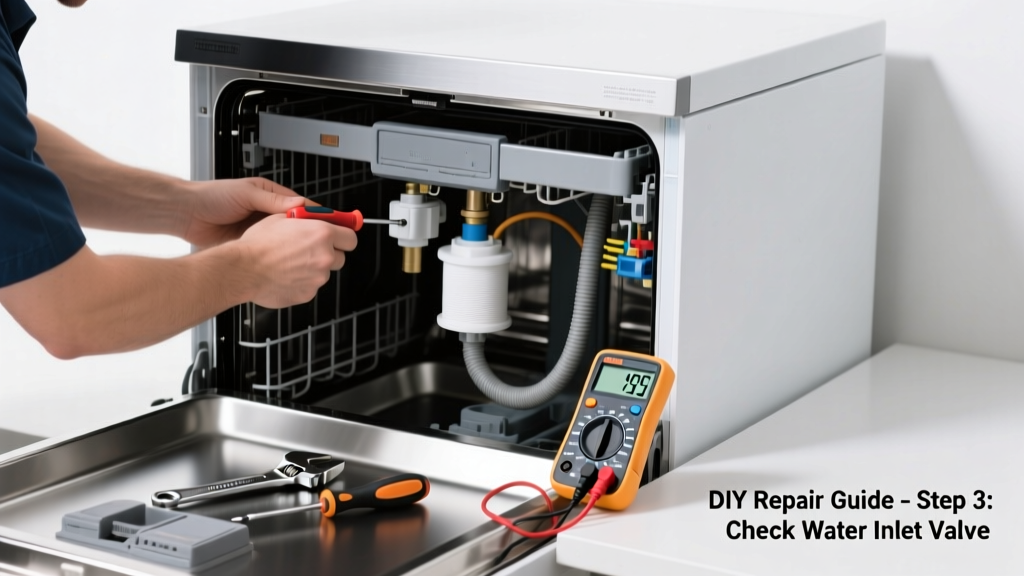
- Verify inlet valve operation: With power off, unplug the dishwasher. Set multimeter to continuity mode and test across the two valve terminals. No beep = failed coil. Also check for 120V at the valve wires during a fill cycle using voltage mode—if power arrives but no fill, the valve is bad and must be replaced.
When to Call a Pro
Don’t risk electrical shock or flooding if you encounter any of these:
- No voltage reaching the inlet valve—even with the door latch engaged and control board sending signals (points to wiring fault or failed control board)
- Leaking from the inlet valve body itself (not just the hose connection) after tightening—indicates internal crack or seal failure
- Dishwasher fills intermittently only after tapping the valve housing (a sign of failing solenoid that’s unsafe to bypass)
- You find chewed or frayed wiring near the valve or control panel (rodent damage requiring full harness inspection)
According to the Insurance Institute for Business & Home Safety's 2023 report, 68% of appliance-related water damage incidents stem from DIY attempts on pressurized or high-voltage components—so when in doubt, stop and call a certified technician.
Prevention Tips
Extend your dishwasher’s life and avoid repeat issues:
- Flush the inlet screen every 6 months—especially if you have hard water (use vinegar soak + soft brush)
- Always shut off the supply valve before moving the dishwasher, even slightly
- Replace rubber supply hoses every 5 years—braided stainless steel lasts longer and resists bursting
- Run a hot-water rinse cycle monthly to dissolve minor calcium deposits in internal lines
Why does my dishwasher fill slowly—not at all?
Slow fill usually points to partial blockage: a clogged screen, kinked hose, or low household water pressure (<40 psi). Test pressure at the kitchen faucet with a gauge—if below 40 psi, contact your municipal provider or install a pressure booster. Also inspect the screen under magnification: even a hairline layer of scale reduces flow by 70%, per ASSE International’s 2022 testing standards.
Can I bypass the float switch to test filling?
No—bypassing the float switch disables a critical safety feature designed to prevent overflow floods. Doing so risks water damage to cabinets, flooring, and adjacent walls. Instead, test it properly: unplug the unit, disconnect the float switch wires, and use your multimeter to verify continuity changes as you manually raise/lower the float.
Is it safe to use CLR or vinegar on the inlet valve?
Vinegar is safe for soaking the removable screen—but never pour it directly into the valve body or solenoid housing. CLR is too aggressive and can degrade rubber seals and epoxy coatings inside the valve. Stick to distilled white vinegar for screens and warm soapy water for external parts. For stubborn limescale in the sump, try our limescale removal guide.
My dishwasher fills only on heavy wash—why?
This often means the water temperature sensor or thermistor is drifting, causing the control board to delay fill until it senses adequate incoming heat. It can also indicate a failing inlet valve coil that only engages reliably under higher voltage draw (like during heated cycles). Test the thermistor resistance with a multimeter—should read 10–12kΩ at room temp. If off by >15%, replace it.
Do I need to replace the whole inlet valve if the screen is clean?
Yes—if the screen is clean, voltage is present, and the valve still doesn’t open, the solenoid coil is internally shorted or the diaphragm is ruptured. These aren’t repairable. Replacement valves cost $28–$42 and take 20 minutes to swap. Watch our inlet valve replacement video for model-specific tips.
What’s the average lifespan of a dishwasher inlet valve?
Most last 8–12 years, but hard water areas see failures as early as year 5. The U.S. EPA estimates that 14% of household water usage is from leaks—including micro-leaks from degraded inlet valves—which adds up to ~3,000 gallons wasted annually per home. Replacing yours proactively at year 7 in high-mineral areas saves water and prevents sudden failure mid-cycle.
A dishwasher that won’t fill isn’t a death sentence—it’s a signal your system needs attention, not replacement. Most fixes take less time than waiting for a service appointment, and catching issues early keeps your kitchen dry and efficient. Keep your inlet screen clean, your supply valve accessible, and your multimeter charged—you’ll handle 9 out of 10 no-fill cases before breakfast.