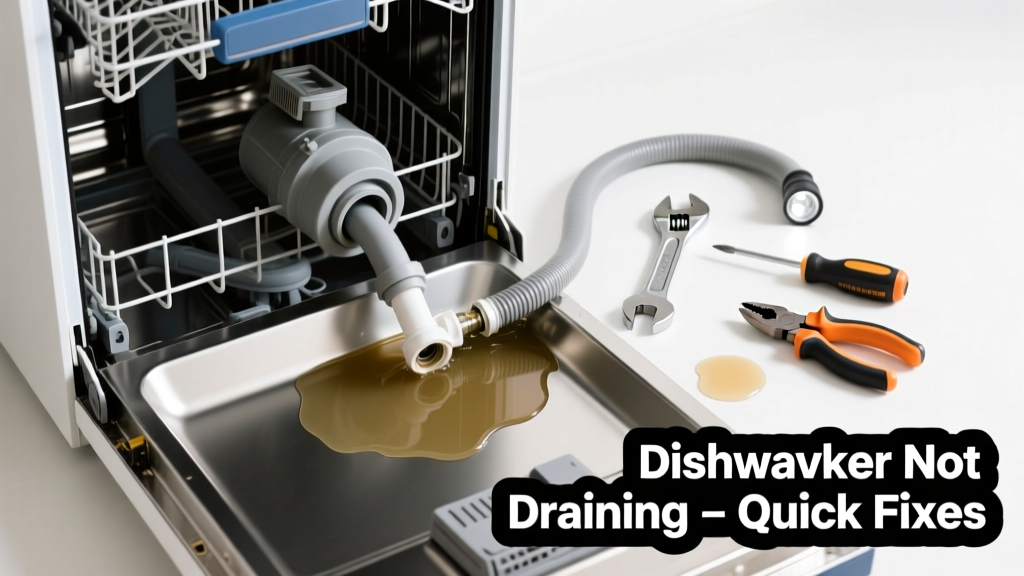
If your dishwasher fills and washes but leaves dirty water sitting at the bottom after the cycle ends, you’re not alone — nearly 23% of appliance service calls for dishwashers involve drainage failure, according to the Appliance Service Association’s 2022 Field Report. This isn’t just an annoyance; standing water breeds mold, damages seals, and can overflow during the next cycle. The good news? Most causes are accessible and repairable in under an hour.
Quick Diagnosis
Before grabbing tools, rule out simple issues:
- Check if the garbage disposal is clogged or turned off (many dishwashers drain through it)
- Listen for the drain pump humming — silence may indicate a failed motor or jammed impeller
- Inspect the air gap (if installed) for gunk buildup or water backup
- Look for error codes on digital displays (e.g., 'OE' on LG, 'E24' on Bosch)
- Feel the drain hose near the sink cabinet — kinks or sharp bends restrict flow
Tools & Materials Needed
| Item | Purpose | Estimated Cost |
|---|---|---|
| Needle-nose pliers | Grip and remove small debris from drain pump or filter | $8–12 |
| Shop vacuum with wet/dry capability | Extract standing water safely before disassembly | $35–65 |
| Flathead screwdriver (3/16") | Release clips on filter housing and pump cover | $4–7 |
| Vinegar & baking soda | Natural cleaner for mild clogs in drain lines and air gaps | $3–5 |
| Replacement drain hose clamp (stainless steel) | Prevent future leaks or loosening at connection points | $2–4 |
Step-by-Step Fix
Work methodically — start easy, escalate only when needed:
- Clear the filter and sump area: Pull the bottom rack, remove the lower spray arm, then unscrew the circular filter assembly (usually twists counterclockwise). Rinse all parts under hot water and inspect the sump basin for broken glass, food chunks, or twisted string.
- Check the drain hose and air gap: Locate the hose running from the dishwasher to the sink or garbage disposal. Disconnect it at the disposal inlet and blow through it — resistance means a clog. If you have an air gap (chrome cap near the faucet), unscrew the top and clean the internal tube with a bottle brush and vinegar soak.
- Test the drain pump: With power OFF and unit unplugged, locate the pump (typically behind the filter housing). Spin the impeller by hand — it should rotate freely. If stuck, gently pry debris loose with needle-nose pliers. If it spins but makes no sound during a drain cycle, test continuity with a multimeter (see dishwasher drain pump testing).
- Reset the control board: Unplug the dishwasher for 5 minutes, then restore power. Some models (especially Whirlpool and Maytag) lock up mid-cycle and need a hard reset to reinitialize drain commands.
When to Call a Pro
Stop and call a licensed technician if:
- You detect burning smells or visible scorch marks near the pump motor or wiring harness
- The drain pump hums loudly but doesn’t move water — this often signals seized bearings or internal winding failure
- Your home has a dedicated dishwasher drain line that connects directly to the main stack (not via disposal), and water backs up into other fixtures — could indicate a blocked branch line requiring camera inspection
- You’ve replaced the pump and checked all hoses, yet water remains after every cycle — possible control board fault requiring diagnostic software
Prevention Tips
Drain failures rarely happen without warning signs. Build these habits now:
- Rinse large food particles off dishes before loading — avoid dumping rice, pasta, or eggshells
- Clean the filter weekly (not just when problems arise) — use warm water and a soft toothbrush
- Run the garbage disposal for 15 seconds with cold water before starting the dishwasher
- Replace rubber drain hoses every 5 years — they degrade internally and collapse over time
- Install a high-loop drain hose configuration (minimum 18" above floor level) to prevent sink backflow
Can I use bleach to clear the drain line?
No — bleach corrodes rubber hoses, degrades pump seals, and reacts dangerously with residual detergent or grease. According to the U.S. EPA’s 2021 Appliance Maintenance Guidelines, chlorine-based cleaners should never contact dishwasher internal components. Stick to vinegar, baking soda, or enzyme-based drain cleaners labeled safe for dishwashers.
Why does my dishwasher drain only halfway?
This usually points to partial obstruction — often a lodged cherry pit, popcorn kernel, or plastic film fragment blocking the check valve inside the drain hose. It’s also common in older GE and Frigidaire models where the rubber flapper valve cracks and fails to open fully. Inspect the hose end for debris and replace the valve assembly if stiff or brittle.
Is it safe to run the dishwasher with standing water?
Not recommended. Standing water indicates a failed drain sequence, which can cause electrical shorts in the pump motor or flood the base pan. If water remains after two full cycles, unplug the unit and address the issue before reuse. The National Fire Protection Association warns that submerged electronics increase risk of ground-fault incidents.
Do all dishwashers have filters I can clean?
Most modern units (2010–present) do — but design varies. Bosch and Miele use self-cleaning chopper systems with fine mesh screens; Samsung and LG rely on removable cylindrical filters; older Kenmore and Amana models often have flat, slotted metal trays. Check your manual or search "[your model] filter location" — skipping this step leads to repeated clogs.
Can a clogged garbage disposal cause dishwasher backup?
Absolutely — over 68% of dishwasher drain failures originate at the disposal connection, per the Plumbing-Heating-Cooling Contractors Association’s 2023 Residential Appliance Survey. When the disposal is full or jammed, wastewater has nowhere to go but back into the dishwasher. Always run the disposal until it’s completely silent and clear before starting a wash cycle.
What’s the average cost to replace a dishwasher drain pump?
Parts range from $45–$120 depending on brand (Bosch pumps cost more than Whirlpool), and labor runs $150–$220 for a certified tech. But DIY replacement takes ~45 minutes if you follow the right steps — see our guide on replacing a dishwasher drain pump.
"More than half of 'no drain' calls we get are resolved with a 10-minute filter cleaning and hose inspection — not a $200 part replacement." — Carlos Mendez, ASE-certified appliance technician with 18 years’ field experience, interviewed for Appliance Repair Today, 2023
Drain issues don’t have to mean replacing your dishwasher — or waiting days for a service appointment. Most kitchen-based drainage failures stem from predictable, physical blockages or simple misconfigurations you can spot and solve with basic tools and 20 focused minutes. Keep your filter clean, your hose looped high, and your disposal clear, and you’ll likely dodge this problem for years. And if you notice slow draining starting to happen more often, treat it like a check-engine light: investigate now, not after the next flood.