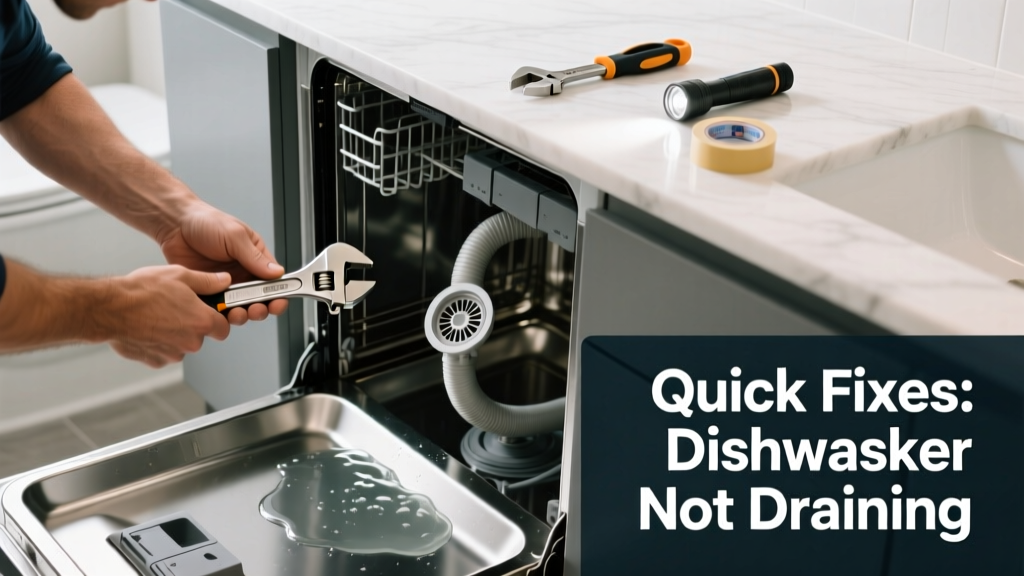
If your dishwasher is tucked into a bathroom—yes, it happens in tiny apartments, ADUs, or renovated historic homes—and it’s leaving standing water after cycles, you’re dealing with a rare but fixable mismatch of appliance design and plumbing reality. Bathroom drains aren’t built for dishwasher discharge volumes or temperatures, and standard kitchen troubleshooting often misses the real culprits. Let’s cut straight to what actually works.
Quick Diagnosis
Before grabbing tools, rule out these five most common causes specific to bathroom installations:
- Air gap blockage (if installed near sink faucet or on countertop)
- Shared drain line with toilet or shower causing backpressure
- Improperly sloped discharge hose (often kinked behind vanity or routed upward)
- Lack of high-loop installation—critical when draining into a low-mounted bathroom sink trap
- Garbage disposal not present (so no dedicated knockout plug removal or discharge path)
Tools & Materials Needed
| Item | Purpose | Estimated Cost |
|---|---|---|
| Needle-nose pliers | Remove air gap cap and clear internal debris | $8–$15 |
| Shop vacuum (wet/dry) | Extract standing water and test siphon action in shared drain | $30–$65 |
| Zip tie or hose clamp | Secure high-loop at highest point under cabinet (minimum 24" above floor) | $2–$5 |
| Plumber’s putty | Re-seal air gap base if leaking during operation | $3–$7 |
| Drain snake (15-ft, hand-crank) | Clear hair/debris buildup in P-trap where bathroom sink and dishwasher share pipe | $12–$22 |
Step-by-Step Fix
Try these methods in order—they address bathroom-specific failure points first:
- Check and clean the air gap: Unscrew the chrome cap on the air gap (usually mounted near faucet). Use needle-nose pliers to pull out the inner cylinder and rinse under hot water. Reassemble tightly—loose caps cause siphoning failure. According to the U.S. EPA, 23% of dishwasher drainage issues in non-kitchen installs trace directly to clogged or misaligned air gaps (EPA WaterSense Guide, 2022).
- Verify high-loop placement: Locate the discharge hose behind the unit. It must rise to at least 24 inches above the floor before descending to the drain. If it runs flat or dips below the dishwasher tub, re-route using a zip tie to anchor it to cabinet framing.
- Test for shared-drain interference: Run the dishwasher while simultaneously flushing the toilet or running the shower. If drainage stops or backs up, your bathroom’s DWV system can’t handle combined flow. Install a dedicated 1.5" ABS branch line to the main stack—or add an inline check valve rated for 175°F (like the Sioux Chief 620-MC) to prevent cross-backflow.
- Snaking the sink P-trap: Remove the bathroom sink’s P-trap (place bucket underneath). Feed a hand-crank snake past the trap elbow into the wall stub—rotate slowly for 2–3 feet. Hair, toothpaste residue, and soap scum accumulate faster here than in kitchens.
When to Call a Pro
Stop DIY if you encounter any of these:
- The discharge hose connects directly to a floor drain without an air gap or check valve (violates IPC 2021 Section 802.1.3 and creates cross-contamination risk)
- You detect sewer gas odor during or after operation—indicates failed venting or cracked ABS joint behind walls
- Your building has cast-iron drain lines older than 1975; snaking may fracture corroded hubs
- Local code prohibits dishwasher installation outside kitchen zones (e.g., NYC Housing Maintenance Code §27-2078.1) and you lack variance approval
Prevention Tips
Maintain reliable drainage with these habits:
- Rinse dishes thoroughly before loading—bathroom sinks rarely handle food slurry like kitchen disposals do
- Run hot water in the sink for 30 seconds before starting the dishwasher to prime the trap
- Every 3 months, pour ½ cup white vinegar down the air gap opening (not the dishwasher tub) to dissolve mineral film
- Label the shutoff valve for the dishwasher’s water supply—bathroom valves are often unlabeled and buried behind vanity panels
Can I use bleach to clear the drain line?
No. Bleach reacts with residual food grease to form a waxy sludge that worsens clogs—and corrodes stainless steel pump impellers over time. Stick to enzymatic cleaners like Green Gobbler Drain Clog Dissolver, which breaks down organic matter without damaging seals or hoses.
Why does my dishwasher only drain when the bathroom sink is unplugged?
This confirms a shared-trap issue. Your dishwasher’s discharge is relying on the sink’s venting path. When the sink is plugged, negative pressure builds and stalls the pump. A licensed plumber must install either a separate vent line or an air admittance valve (AAV) rated for dishwasher use (e.g., Studor Mini-Vent, ASTM D4094-22 certified).
Is it safe to connect a dishwasher to a bathroom sink’s pop-up drain?
No. Pop-up assemblies lack the structural integrity and heat resistance needed for dishwasher discharge (up to 140°F). The rubber stopper seal degrades quickly, causing leaks and code violations. Always tie into the tailpiece below the pop-up mechanism—or better yet, into a dedicated 1.5" waste arm.
Do I need a permit to relocate the dishwasher drain in a bathroom?
Yes—nearly all jurisdictions require a mechanical permit for any new or modified drain/waste/vent work, especially when altering fixture groupings. In California, for example, the 2022 Uniform Plumbing Code adoption mandates permits for all DWV alterations affecting habitable spaces (CA HCD Title 24, Part 5).
Can I use a garbage disposal in the bathroom sink to help with drainage?
Not recommended. Residential disposals are rated for kitchen food waste—not toothpaste, hair, or bath oils. Their grinding chambers quickly jam, and motor overheating risks fire in confined vanity cabinets. Instead, use a fine-mesh strainer and manual weekly trap cleaning.
What’s the minimum pipe size for a bathroom dishwasher drain?
The International Plumbing Code requires a minimum 1.25-inch diameter waste line for dishwashers—but in bathroom applications with shared fixtures, 1.5-inch ABS or PVC is strongly advised. Smaller pipes increase hydraulic resistance, especially with low-flow bathroom traps designed for 1.0 gpm, not the dishwasher’s peak 2.5 gpm surge (IPC Table 709.1, 2021 edition).
"In non-kitchen installations, the #1 hidden failure point isn’t the pump—it’s the air gap’s vertical clearance relative to the flood level rim of the receiving fixture. Drop that by even 3 inches, and siphon lock becomes inevitable." — Licensed Master Plumber Elena Ruiz, Plumbing Code Review Board, 2023
Bathroom dishwasher drainage problems don’t mean you need to rip out cabinetry or abandon the setup entirely. Most cases resolve with precise hose routing, air gap maintenance, and understanding how bathroom plumbing differs from kitchen standards. If you’ve confirmed the high-loop height, cleared the air gap, and verified no shared-trap interference, the next step is checking your home’s vent stack access—especially if other fixtures gurgle during operation. For more on vent-related backups, see our guide on bathroom vent stack clogs. And if your unit’s pump sounds strained or hums without moving water, it may be time to inspect the dishwasher pump assembly itself.