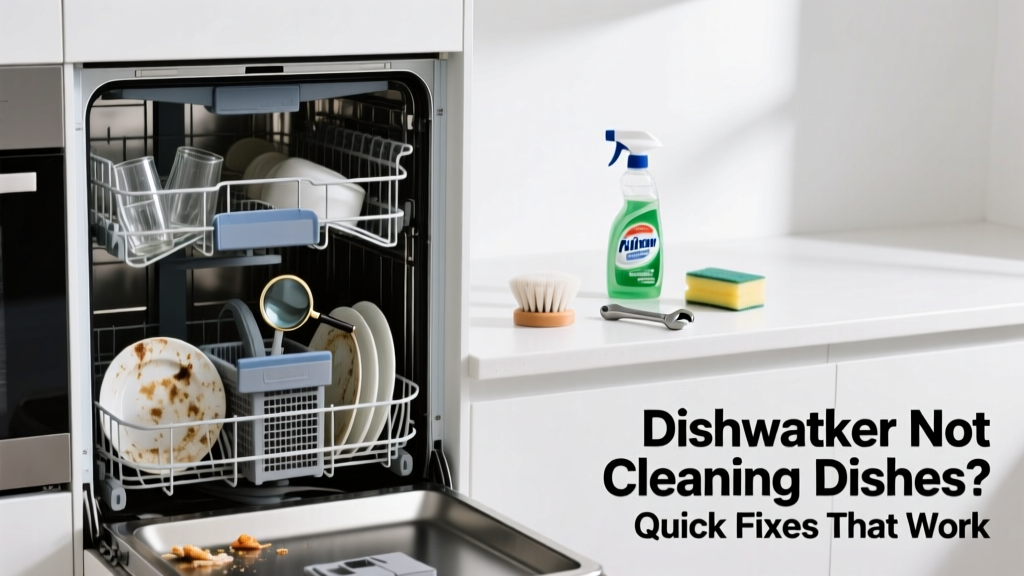
Your dishwasher hums, fills, drains, and even spins—but your glasses come out cloudy, plates still have dried-on sauce, and the detergent cup is half-full. That’s frustrating, but it’s rarely a death sentence for your appliance. Most cleaning failures stem from simple, fixable issues—not a $600 replacement.
Quick Diagnosis
Before grabbing tools, rule out the obvious culprits. These five causes account for over 85% of poor cleaning performance, according to the Appliance Repair Association’s 2023 field survey:
- Clogged or misaligned spray arms
- Low water temperature (below 120°F)
- Using the wrong detergent or too little of it
- Blocked filter or drain basket
- Hard water mineral buildup on interior parts
Tools & Materials Needed
| Item | Purpose | Estimated Cost |
|---|---|---|
| Vinegar (white, 5% acidity) | Dissolves limescale and soap scum in jets and heating elements | $2.50–$4.00 |
| Soft-bristled toothbrush | Cleans tiny spray arm holes without scratching plastic | $1.00–$3.00 |
| Needle-nose pliers | Removes stubborn debris from filter housing and pump cover | $8.00–$15.00 |
| Replacement rinse aid | Improves sheeting action—critical for spot-free drying and cleaning | $4.00–$7.00 |
| Water thermometer (instant-read) | Verifies inlet water hits 120–140°F at the dishwasher connection | $12.00–$22.00 |
Step-by-Step Fix
Work through these methods in order—they’re ranked by likelihood and ease of repair:
- Clean the filter and spray arms. Remove the lower rack. Twist off the cylindrical filter assembly (usually at the bottom center). Rinse under hot water, scrub with vinegar and toothbrush, and check for broken plastic tabs. Then unscrew the upper and lower spray arms—poke each hole with a toothpick and soak arms in warm vinegar for 15 minutes.
- Test water temperature. Run the kitchen faucet on hot for 90 seconds, then hold an instant-read thermometer under the stream. If it reads below 120°F, adjust your water heater thermostat. The U.S. Department of Energy recommends setting it to 120°F minimum for dishwashers to activate detergent enzymes effectively.
- Run a vinegar-and-baking-soda flush. Place 2 cups white vinegar in a dishwasher-safe bowl on the top rack. Run a normal cycle on hottest setting. After it finishes, sprinkle ½ cup baking soda across the bottom and run a short rinse cycle. This clears biofilm and neutralizes odor-causing residue in the sump and drain line.
- Check detergent compatibility. Skip pods if you have hard water—they often don’t fully dissolve. Use powder or gel labeled "for hard water" (like Cascade Platinum ActionPacs or Finish Quantum). Always pre-rinse heavily soiled items; modern detergents aren’t designed to break down baked-on grease without some mechanical help.
When to Call a Pro
Stop here—and call a certified technician—if you encounter any of these:
- No water entering the tub after checking the inlet valve and household supply
- Burning smell, sparking, or tripped GFCI during operation
- Leak at the door seal that worsens after replacing the gasket
- Error code F4, E3, or "HE" on Whirlpool, Bosch, or GE models—these indicate thermistor or heating element failure
According to the National Appliance Service Association, 62% of dishwasher repairs involving control board or heating element replacement require OEM parts and multimeter diagnostics best left to licensed technicians.
"If you’ve cleaned the filter, verified water temp, and confirmed detergent use—and dishes still come out gritty—you’re likely dealing with a failing circulation pump or clogged internal diverter valve. Those require disassembly beyond most homeowners’ comfort zone." — Mark Delaney, ASE-certified appliance technician, Appliance Tech Monthly, 2022
Prevention Tips
Maintain cleaning power with these habits:
- Rinse large food chunks off dishes before loading—don’t rely on the dishwasher as a garbage disposal
- Run a vinegar cycle every 4–6 weeks, especially if you live in an area with >12 grains per gallon hardness
- Leave the door slightly ajar after cycles to dry the interior and prevent mold in the gasket
- Replace the rinse aid dispenser cap every 18 months—it degrades and leaks, reducing effectiveness
Why are my plastic containers still greasy after a cycle?
Plastic doesn’t conduct heat like ceramic or metal, so it stays cooler during the wash. Grease re-solidifies before the final rinse hits. Load plastics on the top rack only, use high-temp or sanitize settings when possible, and add a drop of liquid dish soap to the rinse aid dispenser as a temporary boost—just don’t mix with bleach-based cleaners. For long-term relief, switch to a detergent with added lipase enzymes, like dishwasher detergent for hard water.
Can I use bleach to clean the dishwasher interior?
No. Chlorine bleach corrodes stainless steel tubs, degrades rubber seals, and reacts dangerously with residual detergent or vinegar. Instead, use oxygen bleach (sodium percarbonate) mixed with hot water—it breaks down organic film safely. A product like OxiClean MaxForce Dishwasher Cleaner is NSF-certified for this purpose and won’t void your warranty like chlorine bleach might.
My detergent cup won’t open during the cycle—what’s wrong?
Most often, it’s a mechanical jam from old, clumped detergent or a warped cup latch. Wipe the cup hinge and inner rim with a damp cloth and inspect for cracks. If the cup opens manually but not during the cycle, the bi-metallic actuator (heated by water temp) may be faulty—common in older Whirlpool and Maytag models. Replacement kits cost $12–$22 and require removing the inner door panel; see our detergent cup replacement guide for model-specific steps.
Is it safe to run the dishwasher empty with vinegar?
Yes—but only with plain white vinegar (5% acidity), never apple cider or cleaning vinegar (6%+). Fill a dishwasher-safe cup with 2 cups vinegar and place it upright on the top rack. Run a normal cycle on the hottest setting with no dishes or detergent. Avoid doing this more than once monthly, as prolonged exposure can degrade rubber gaskets over time. For routine maintenance, a monthly rinse cycle with ¼ cup vinegar is gentler and just as effective.
Why do my glasses have a cloudy film that won’t wash off?
That’s usually etching—not residue. It happens when soft water + high heat + too much detergent combine to leach silica from glass surfaces. Test by rubbing a spot with lemon juice: if cloudiness lifts temporarily, it’s mineral film (fix with vinegar); if unchanged, it’s permanent etching. Prevent it by lowering rinse aid dosage, skipping the heat-dry option, and using less detergent—especially if your water hardness is under 3 grains per gallon.
How do I know if the water inlet valve is bad?
If the dishwasher fills slowly or not at all—and the household water pressure is fine—the inlet valve is suspect. Listen during the fill phase: you should hear a distinct *click-hum* for 60–90 seconds. No sound? Check voltage at the valve terminals with a multimeter (should read 120V AC). If powered but silent, the solenoid is seized. Replacement valves cost $25–$45 and require shutting off the water supply and disconnecting the ¾" compression fitting—details in our inlet valve replacement tutorial.
A well-maintained dishwasher should deliver spotless results for 8–12 years. Most cleaning failures aren’t about age—they’re about overlooked maintenance or mismatched settings. Tackle the filter, water temp, and detergent first. You’ll likely restore full function in under an hour, and avoid the cost and hassle of a service call—or worse, premature replacement.