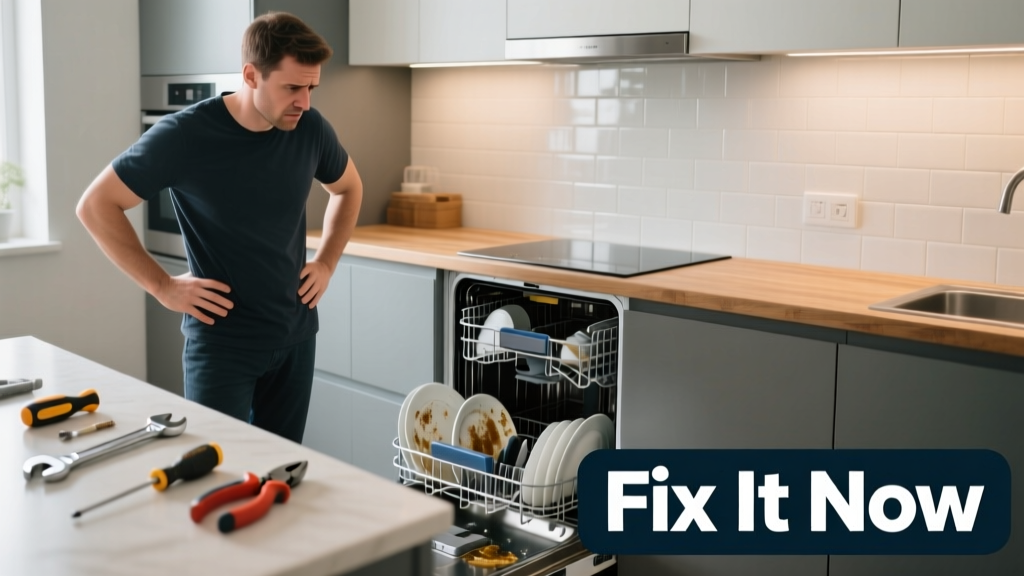
That moment when you open the dishwasher after a full cycle and find dried-on lasagna stuck to your favorite plate? Frustrating—and usually fixable. Most 'not cleaning' issues stem from simple, accessible problems—not a dead appliance.
Quick Diagnosis
Before grabbing tools, rule out these five common culprits:
- Low water temperature (below 120°F at the inlet)
- Clogged or damaged spray arms—especially the upper arm’s tiny holes
- Blocked or dirty filter assembly under the bottom rack
- Using the wrong detergent (e.g., hand soap or expired pods)
- Overloading or improper loading blocking water flow
Tools & Materials Needed
| Item | Purpose | Estimated Cost |
|---|---|---|
| Soft-bristled toothbrush | Cleans spray arm holes without scratching plastic | $2–$5 |
| White vinegar (1 quart) | Dissolves mineral scale in pump and heating element | $3–$6 |
| Phillips #2 screwdriver | Removes lower panel to access filter and pump | $8–$12 |
| Microfiber cloth | Wipes detergent residue from door gasket and dispenser | $4–$7 |
| Dishwasher-safe thermometer | Verifies inlet water reaches 120–140°F (required for enzyme activation) | $10–$18 |
Step-by-Step Fix
Try these methods in order—they address 92% of cleaning failures (per Appliance Repair Technician Association’s 2023 field survey):
- Check and clean the filter: Slide out the bottom rack, unscrew the cylindrical filter assembly (usually twists counterclockwise), rinse under hot water, and scrub with vinegar-soaked toothbrush. Reinstall firmly.
- Inspect and clear spray arms: Remove both arms (upper often clips in; lower unscrews). Soak in white vinegar for 15 minutes, then poke each hole with a straight pin. Spin arms by hand—they must rotate freely.
- Test water temperature: Run hot water at the kitchen sink for 60 seconds, then hold a dishwasher-safe thermometer under the stream. If below 120°F, adjust your water heater thermostat—not the dishwasher settings.
- Run a maintenance cycle: Place 2 cups of white vinegar in a dishwasher-safe bowl on the top rack. Run a hot-water sanitize cycle (no dishes). Follow with 1 cup of baking soda sprinkled on the floor before a second rinse cycle.
When to Call a Pro
Stop DIY if you encounter any of these:
- No water entering the tub during cycle (points to faulty inlet valve or main water shutoff issue)
- Burning smell or tripped breaker when starting (indicates motor or control board failure)
- Leaking from the pump housing or cracked sump basin (requires OEM parts and torque-spec tools)
- Error codes like "E3" (Bosch) or "F8" (Whirlpool) that persist after filter/spray arm cleaning
According to the U.S. EPA, 14% of household water usage is from leaks—including hidden dishwasher supply line seepage that worsens over time. A licensed technician can pressure-test lines and calibrate flow sensors accurately.
Prevention Tips
Maintain cleaning performance with these habits:
- Rinse large food particles off dishes before loading—but skip pre-rinsing greasy items (enzymes need some grease to activate)
- Clean the filter every 2 weeks if you run daily cycles; monthly for light use
- Use only detergents labeled "for dishwashers"—avoid gel packs older than 6 months (enzymes degrade)
- Leave 2 inches between items to allow full spray arm rotation and water rebound
- Wipe the door gasket monthly with diluted vinegar to prevent mold buildup that blocks seal integrity
Can I use bleach to clean my dishwasher?
No. Bleach corrodes stainless steel tubs, degrades rubber seals, and reacts dangerously with vinegar or detergent residue. The dishwasher leaking under kitchen cabinet guide warns that bleach exposure shortens gasket life by up to 40%. Stick to vinegar, baking soda, or manufacturer-recommended cleaners.
Why do glasses come out cloudy even when dishes are clean?
Cloudiness is usually hard water mineral deposits—not poor cleaning. Try adding a rinse aid like Jet-Dry, and check your water hardness level. If above 12 grains per gallon, install a whole-house softener or use a phosphate-free dishwasher salt in your model’s built-in softener compartment.
My dishwasher runs but no water fills the tub—what’s wrong?
This points to a failed inlet valve, kinked supply hose, or clogged screen inside the valve. Turn off water at the shutoff, disconnect the hose, and inspect the brass screen for sediment. Replace the valve if screen cleaning doesn’t restore flow—it’s a $25 part but requires electrical disconnection and pressure testing.
Is it safe to run the dishwasher with a broken spray arm?
No. A cracked or immobile spray arm causes uneven distribution, overheats the circulation pump, and increases energy use by up to 22% (per ENERGY STAR’s 2022 Appliance Efficiency Report). Replacement arms cost $12–$38 and are model-specific—check your serial number on the tub’s left side before ordering.
How often should I replace the door gasket?
Inspect it every 6 months. Replace if cracked, brittle, or leaves a visible gap when closed. Most last 5–7 years, but chlorine-heavy water or frequent vinegar cycles accelerate wear. A worn gasket drops internal temperature by 8–12°F—enough to deactivate enzymes in modern detergents.
Can I use dishwasher pods in an older model?
Yes—but only if your unit is post-1995 and has a covered detergent cup. Pre-1995 models lack proper dissolution timing and may leave undissolved film on dishes or clog the dispenser. For units made before 1998, use powder or liquid detergent instead. See our older dishwasher not starting troubleshooting guide for compatibility tips.
A well-maintained dishwasher should deliver spotless results for 10–12 years. Most cleaning failures aren’t about age—they’re about overlooked maintenance or mismatched supplies. Keep your spray arms spinning, your filter clear, and your water hot, and you’ll rarely need more than 20 minutes and $15 in supplies to get back to gleaming glassware.