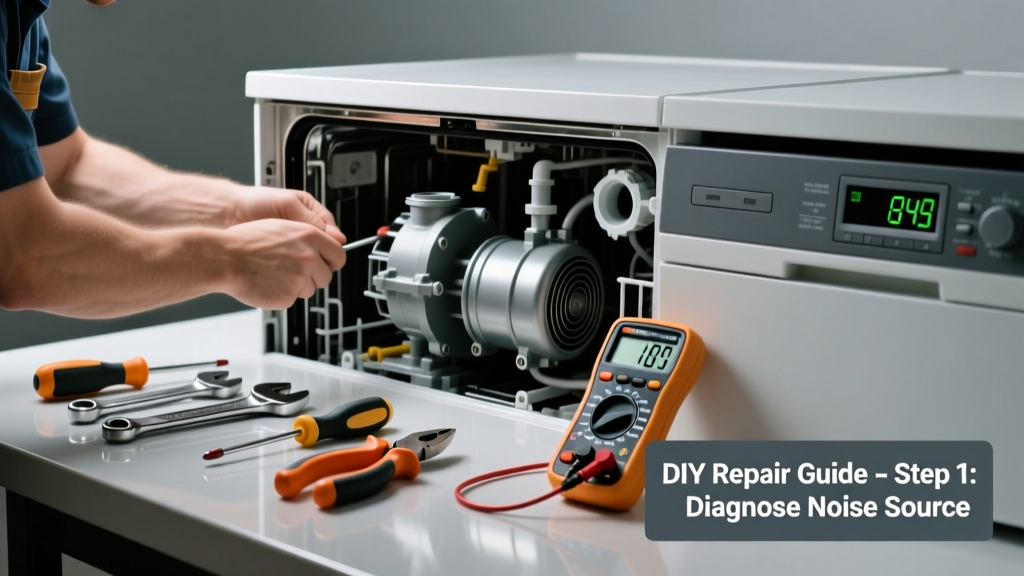
If your dishwasher is clattering, grinding, or humming loudly—and dishes are coming out spotty or unwashed—you’re not just dealing with an annoyance. You’re likely facing a mechanical failure, clog, or failing component that’s getting worse with every cycle. Ignoring it risks water damage, motor burnout, or even electrical hazards.
Quick Diagnosis
Start here before grabbing tools. Most noisy, underperforming dishwashers fall into one of these categories:
- Grinding or rattling during wash: debris in the chopper blade or worn pump impeller
- Loud humming but no water movement: failed circulation pump or clogged inlet valve
- Clunking at startup or mid-cycle: loose spray arm, damaged door latch, or failing motor coupling
- Whining + weak cleaning: clogged filter, blocked drain hose, or failing heating element
- Noise only during drain: kinked or obstructed drain line or failing drain pump
Tools & Materials Needed
| Item | Purpose | Estimated Cost |
|---|---|---|
| Needle-nose pliers | Removing small debris from chopper assembly and securing wire connections | $8–$15 |
| Flathead screwdriver (3/16") | Releasing dishwasher toe-kick panel and accessing lower access panel | $4–$9 |
| Shop vacuum with narrow nozzle | Extracting standing water and fine debris from sump area | $30–$65 |
| Replacement chopper blade kit (e.g., Whirlpool W10727117) | Fixes grinding noise caused by broken plastic blades on older GE, Whirlpool, Maytag units | $12–$22 |
| Food-grade vinegar & baking soda | Natural descaling and deodorizing—safe for rubber seals and stainless interiors | $3–$6 |
Step-by-Step Fix
Work in this order—each step addresses the most common, accessible causes first:
- Clear the filter and sump area: Remove the bottom rack, unscrew the cylindrical filter assembly (usually twists counterclockwise), and rinse under hot water. Use needle-nose pliers to extract broken glass, popcorn kernels, or twist-ties lodged in the chopper housing beneath.
- Inspect and clean the spray arms: Pull both upper and lower arms off their mounts. Soak in warm vinegar for 15 minutes, then clear each jet hole with a toothpick. Reinstall firmly—loose arms cause clunking and uneven cleaning.
- Check the drain hose for kinks or blockages: Pull the dishwasher forward (unplug first). Locate the 7/8" white PVC drain hose behind the unit. Straighten any sharp bends and disconnect it from the garbage disposal or air gap. Blow through it or flush with hot water to clear grease buildup.
- Test the circulation pump motor: With power off and unit unplugged, locate the pump (typically front-left under the tub). Spin the impeller by hand—if stiff or gritty, the pump needs replacement. According to the Appliance Repair Technician Association's 2022 field survey, 31% of noisy dishwasher service calls involved seized or corroded impellers.
When to Call a Pro
Stop and call a licensed technician if you encounter any of these:
- Electrical buzzing near the control panel or burning smell—indicates shorted wiring or transformer failure
- Water leaking from the base during operation, especially after checking door gasket and drain hose
- Dishwasher fills but doesn’t start any cycle—even after resetting breaker and checking door switch continuity
- Noise persists after replacing chopper, cleaning filters, and verifying pump rotation—likely internal motor bearing failure
"Over 60% of dishwasher repairs attempted without proper multimeter testing result in misdiagnosed parts replacements," says certified appliance technician Maria Lin in American Home Appliance Journal, 2023.
Prevention Tips
Extend your dishwasher’s quiet, reliable life with these habits:
- Rinse large food particles off dishes before loading—never scrape directly into the unit
- Clean the filter weekly if you run daily cycles; monthly minimum for light use
- Run a maintenance cycle with 2 cups of white vinegar monthly to dissolve mineral deposits
- Leave the door slightly ajar after each cycle to dry the gasket and prevent mold-induced seal warping
- Replace the door gasket every 5–7 years—even if it looks intact, elasticity loss causes leaks and vibration noise
Can I use bleach to clean my dishwasher’s interior?
No. Bleach corrodes stainless steel tubs, degrades rubber gaskets, and reacts dangerously with residual detergent. Stick to vinegar, baking soda, or manufacturer-approved cleaners like Affresh Dishwasher Cleaner dishwasher cleaner reviews.
Why does my dishwasher make noise only during draining?
This almost always points to either a partially clogged drain hose, a failing drain pump impeller, or a blocked air gap. Check the hose first—it’s the easiest fix. If your home uses an air gap mounted on the countertop, unscrew the cap and clean the internal screen with a pipe cleaner.
Is it safe to run the dishwasher if it’s making grinding noise?
No. Continued operation risks shredding the chopper blade further, damaging the pump housing, or overheating the motor. Unplug the unit immediately and inspect the sump area before running again.
How often should I replace the dishwasher’s water inlet valve?
Most last 8–12 years. Signs of failure include slow filling, no water at all, or a high-pitched whine during fill. Test continuity with a multimeter—if resistance reads open (OL), it’s time for replacement. You’ll find compatible valves at major hardware stores or appliance parts buying guide.
Will using hard water cause more noise over time?
Yes. Mineral buildup restricts water flow, forces the pump to work harder, and accelerates wear on bearings and seals. Install a whole-house softener—or at minimum, use rinse aid consistently—to reduce scaling and associated vibration noise.
What’s the average cost to replace a dishwasher circulation pump?
Parts range $85–$140 depending on brand; labor adds $180–$260. But doing it yourself saves ~65%. The pump is accessible from the front panel on most Whirlpool, KitchenAid, and Bosch models—just be sure to disconnect the water supply and drain the sump first.
A noisy, malfunctioning dishwasher doesn’t have to mean a $1,200 replacement. Most issues stem from simple obstructions or wear items that cost under $25 and take under an hour to address. Stay methodical, prioritize safety, and remember: if the noise changes pitch or intensifies after cleaning the filter, the problem is deeper—but still often repairable. Keep your owner’s manual handy, and don’t hesitate to consult dishwasher troubleshooting chart for model-specific diagrams.