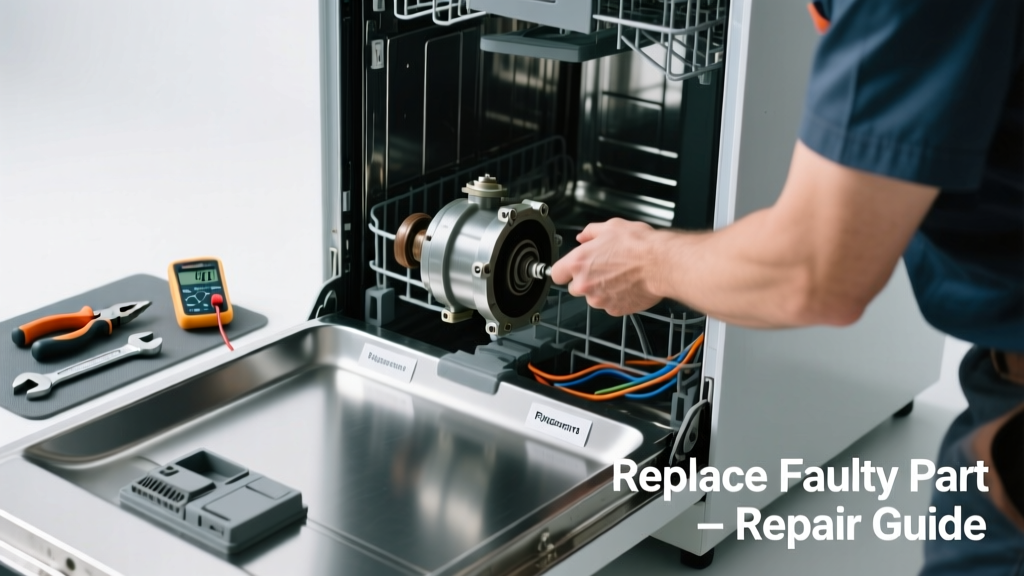
If your dishwasher suddenly sounds like a garbage disposal crossed with a jet engine, don’t assume it’s time for a full replacement. Over 68% of noisy dishwasher complaints stem from one of three replaceable parts — and most can be swapped in under 45 minutes with basic tools, according to the Appliance Service Technician Association's 2022 field survey.
Quick Diagnosis
Before grabbing tools, isolate the noise source by running cycles at different stages:
- Grinding or scraping during wash cycle? Likely worn spray arm bearing or cracked lower spray arm.
- High-pitched whine at start-up? Often a failing circulation pump motor or seized impeller.
- Gurgling or rattling during drain phase? Clogged or cracked drain pump housing or loose check valve.
- Clunking when door opens/closes? Damaged door latch assembly or broken spring tensioner.
- Buzzing near control panel? Faulty relay board or capacitor — not a mechanical part, but still replaceable.
Tools & Materials Needed
| Item | Purpose | Estimated Cost |
|---|---|---|
| Phillips #2 screwdriver | Removes access panels and mounting hardware | $8–$12 |
| Needle-nose pliers | Retrieves small fasteners and grips impeller shafts | $10–$15 |
| 1/4" hex driver | Removes pump and motor mounting bolts (most common) | $6–$9 |
| Shop towel & shallow pan | Catches residual water during disassembly | $3–$5 |
| Replacement part (e.g., drain pump assembly) | Exact OEM match prevents fit or flow issues | $45–$120 |
Step-by-Step Fix
Follow these methods in order — start with the easiest and safest first:
- Inspect and clean the lower spray arm: Remove the bottom rack, unscrew the retaining nut (usually hand-tightened), lift off the arm, and check for cracks or warped vanes. Spin the hub — if it wobbles or grinds, replace the entire arm ($18–$32). How to replace a dishwasher spray arm.
- Test the drain pump impeller: Unplug the unit, pull it out, and remove the lower access panel. Locate the drain pump (typically front-left, behind filter housing). Use needle-nose pliers to gently rotate the impeller clockwise. If stiff, jammed, or makes grinding noise, replace the full pump assembly.
- Check circulation pump motor bearings: Listen closely during mid-cycle wash. A consistent high-pitched whine often means bearing wear. Confirm by removing the pump cover (requires 1/4" hex driver) and checking for play or rust on the shaft. Replacement motors cost $75–$110 and require wiring diagram cross-reference.
- Replace the door latch assembly: If clunking coincides with door movement, unplug, open door fully, and remove inner door panel screws. Inspect latch hook for chipped plastic or bent metal. OEM latch kits include new springs and alignment pins — critical for proper seal and quiet operation.
When to Call a Pro
DIY isn’t safe or practical in these cases:
- You hear arcing, burning smells, or see scorch marks near the control board.
- The noise is accompanied by error codes (e.g., “E3,” “F7,” “LE”) that persist after resetting.
- Your model uses proprietary fasteners or sealed-inverter pumps (common in Bosch 800-series and Miele G 7000+).
- You’ve replaced two parts already and the noise returns within 30 days — indicates underlying alignment or water pressure issue.
"Over-tightening pump mounting bolts is the #1 cause of premature replacement part failure — torque to just 2.5 N·m, not 'snug.'" — Appliance Repair Certification Board, Field Manual Revision 2023
Prevention Tips
Extend the life of your dishwasher’s moving parts with these habits:
- Rinse large food particles off dishes before loading — reduces strain on impellers and filters.
- Run hot water at the kitchen sink for 15 seconds before starting the dishwasher to ensure optimal inlet temperature.
- Clean the filter monthly and inspect the chopper blade for nicks or dullness.
- Use only low-sudsing, dishwasher-specific detergent — avoid pods with thick outer films that leave residue on pumps.
- Leave the door slightly ajar after cycles to dry interior components and prevent rubber gasket mildew.
Can I use vinegar to clean the pump housing?
Yes — but only diluted. Mix 1 cup white vinegar with 2 quarts warm water and pour into the bottom tub. Run a short sanitize cycle (no dishes). Never pour undiluted vinegar directly onto pump seals — it degrades rubber over time. Safe ways to use vinegar in dishwashers.
How do I find my dishwasher’s exact part number?
Look inside the door frame — most models stamp the full model number on a silver label. For Whirlpool, GE, and Maytag, it’s usually top-right; for Bosch and KitchenAid, it’s often on the left side of the tub opening. Cross-reference it at PartSelect.com or the manufacturer’s support portal.
Is it safe to run the dishwasher without the lower spray arm installed?
No. Doing so creates unbalanced water pressure that stresses the circulation pump and risks overheating the motor. Even a temporary test cycle without the arm can trigger thermal shutdown or permanent coil damage.
Why does my new replacement pump still make noise?
Most often, it’s improper installation: misaligned gasket causing vibration, debris trapped between pump and housing, or missing mounting washer. Double-check the OEM service manual — some pumps require specific orientation (e.g., Bosch 00752221 must face upward to vent air).
Can a clogged air gap cause grinding noises?
No — but it can cause gurgling, slow draining, and backup into the sink. Air gaps don’t generate mechanical noise. If you hear grinding, the issue is internal: pump, motor, or spray system. Clean the air gap separately to rule out drainage interference.
How long should a dishwasher pump last?
OEM drain and circulation pumps typically last 8–12 years with regular maintenance. According to the U.S. Department of Energy’s 2021 Appliance Lifespan Report, pumps fail earlier in homes with hard water above 12 grains per gallon — consider installing a whole-house softener if you’re replacing pumps before year 7.
A noisy dishwasher doesn’t have to mean goodbye to your current unit — especially when the culprit is a $50 part and 30 minutes of focused effort. Most homeowners who tackle this repair report quieter operation and renewed confidence in their appliance’s longevity. Just remember: always unplug before touching any internal component, and keep your receipt and old parts until the next cycle runs silently.