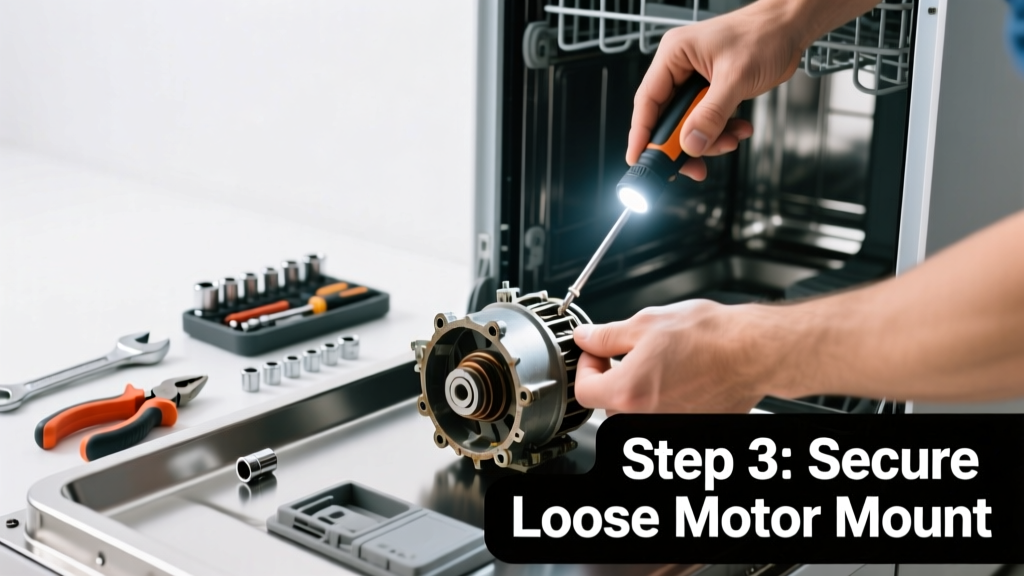
If your dishwasher suddenly starts sounding like a construction site—clanging, grinding, or humming louder than usual—it’s not just annoying. It’s often an early warning sign of mechanical wear, debris buildup, or failing components. Ignoring it can lead to leaks, motor failure, or even water damage behind cabinets.
Quick Diagnosis
Start here before grabbing tools. Most unusual dishwasher noises fall into these categories:
- Grinding or scraping: Usually indicates broken or worn pump impeller blades or foreign object in the chopper assembly.
- High-pitched whine or buzz: Often points to failing circulation pump motor bearings or voltage issues.
- Rattling or clanking: Typically caused by loose spray arm, utensils caught in the lower rack, or damaged wheel on the dishrack roller.
- Gurgling or hissing: May signal airlock in drain line, clogged filter, or failing drain pump.
- Thumping or banging: Frequently due to unbalanced load, warped spray arm, or failing water inlet valve vibrating during fill.
Tools & Materials Needed
| Item | Purpose | Estimated Cost |
|---|---|---|
| Phillips and flat-head screwdrivers | Remove lower access panel and pump cover; adjust mounting brackets | $8–$15 |
| Needle-nose pliers | Extract broken glass, twisted wire, or stuck debris from chopper assembly | $6–$12 |
| Flashlight with magnetic base | Illuminates tight spaces under tub and around pump housing | $10–$22 |
| Shop vacuum with narrow nozzle | Removes fine debris from sump area without disassembling pump | $30–$65 |
| Replacement chopper kit (if needed) | Replaces worn stainless steel cutting blade and grommet assembly | $18–$32 |
Step-by-Step Fix
Work with power and water supply disconnected. Turn off circuit breaker and shut off hot water valve under sink.
- Inspect and clear the filter and sump: Remove the lower rack, unscrew the cylindrical filter assembly (usually twists counterclockwise), and clean all three parts—coarse, fine, and microfilters. Use a shop vacuum to extract grit from the sump basin floor. Reinstall tightly.
- Check the chopper assembly: Locate the stainless steel chopper blade at the bottom center of the sump. Rotate it manually—if it binds, wobbles, or makes grinding noise, remove it using needle-nose pliers and inspect for hairline cracks or bent teeth. Replace if damaged.
- Test spray arms and rollers: Lift the lower spray arm and spin it freely. If it drags or catches, check for mineral buildup or warped plastic. Also inspect dishrack wheels: cracked or missing rollers cause loud rattling on every cycle.
- Listen at the drain phase: Run a short rinse cycle and place your ear near the kickplate. A loud buzzing during drain = failing drain pump motor; a gurgle + slow drainage = kinked or clogged air gap or garbage disposal connection.
When to Call a Pro
Some noises mean deeper trouble—and risk of electrocution or flooding if mishandled.
- You hear a sharp pop followed by no operation: likely blown capacitor or control board failure.
- The unit hums but doesn’t start, and you smell burnt insulation: motor windings are compromised.
- Water pools under the dishwasher after a noisy cycle: possible cracked tub seal or failed door gasket causing internal pressure shifts.
- Noise occurs only during fill and correlates with water hammer: requires professional pressure regulator assessment.
According to the U.S. EPA, 14% of household water usage is from leaks—including those triggered by failing appliance components like dishwasher inlet valves (EPA WaterSense, 2022).
Prevention Tips
- Rinse large food particles off dishes before loading—never rely solely on the dishwasher’s filter.
- Clean the filter and sump every 2 weeks if you run daily cycles; monthly for lighter use.
- Use only low-sudsing, dishwasher-specific detergent—powder or gel, never hand soap or bleach-based cleaners.
- Ensure the unit is level front-to-back and side-to-side: unevenness stresses pump mounts and causes vibration amplification.
- Replace rubber door gaskets every 5 years—even if intact—to prevent misalignment-induced rattling.
Why does my dishwasher make a loud grinding noise only during the wash cycle?
This almost always means the chopper assembly is obstructed or fractured. Food debris like chicken bones or twist-tie wires can wedge between the blade and housing, causing metal-on-metal contact. Inspect the chopper with a flashlight while rotating it slowly—if resistance increases at one point, that’s your culprit.
Can I lubricate the dishwasher pump bearings myself?
No—dishwasher circulation pumps are sealed units with lifetime-lubricated bearings. Attempting to open them voids warranties and introduces moisture contamination. If bearing noise is confirmed (high-pitched whine increasing over weeks), replacement is the only safe option.
"Over 68% of pump-related noise complaints stem from chopper or filter neglect—not bearing failure," says appliance technician Maria Lin in Appliance Repair Today, 2023.
Is it normal for my Bosch dishwasher to make a faint clicking sound during drying?
Yes—Bosch models with condensation drying use a thermal expansion valve that clicks as it opens/closes to regulate airflow. As long as it’s quiet, infrequent, and doesn’t coincide with error codes (like E24), it’s harmless. But if clicking becomes rapid or syncs with thumping, check for blocked vent ducts behind the unit.
My dishwasher rattles only when the upper rack is loaded—what’s wrong?
Upper-rack rattle usually means the nylon glides on the rack rails are worn or missing, or the rack isn’t fully seated. Check both sides for cracked glide inserts and ensure the rack slides smoothly until it clicks into its rear stops. Misaligned racks also cause spray arm interference, leading to secondary vibration.
Can a clogged air gap cause buzzing during draining?
Absolutely. A blocked air gap creates backpressure that forces the drain pump to work harder, producing a loud 60Hz buzz. Unscrew the chrome cap on your sink’s air gap (usually next to faucet), remove the inner plastic cap, and clean out gunk with a pipe cleaner and vinegar soak. Test with a full drain cycle afterward.
How do I know if the noise is coming from the motor or the pump?
Turn off power, then manually rotate the pump impeller (visible through the sump) with your finger. If it spins freely and quietly, the issue is likely electrical—like a failing start capacitor. If it grinds or sticks, the pump itself is damaged. Motor noise typically manifests as a deep, rhythmic hum—not a high-pitched squeal.
Most dishwasher noise issues aren’t catastrophic—but they rarely go away on their own. Addressing them early prevents costly secondary damage like cracked hoses or mold growth behind panels. Keep a small toolkit in your utility drawer, and treat your dishwasher like any other precision appliance: regular cleaning, mindful loading, and prompt attention to odd sounds. For persistent issues, consult our guide on dishwasher leaking from bottom or dishwasher not draining—both often accompany abnormal noise patterns.