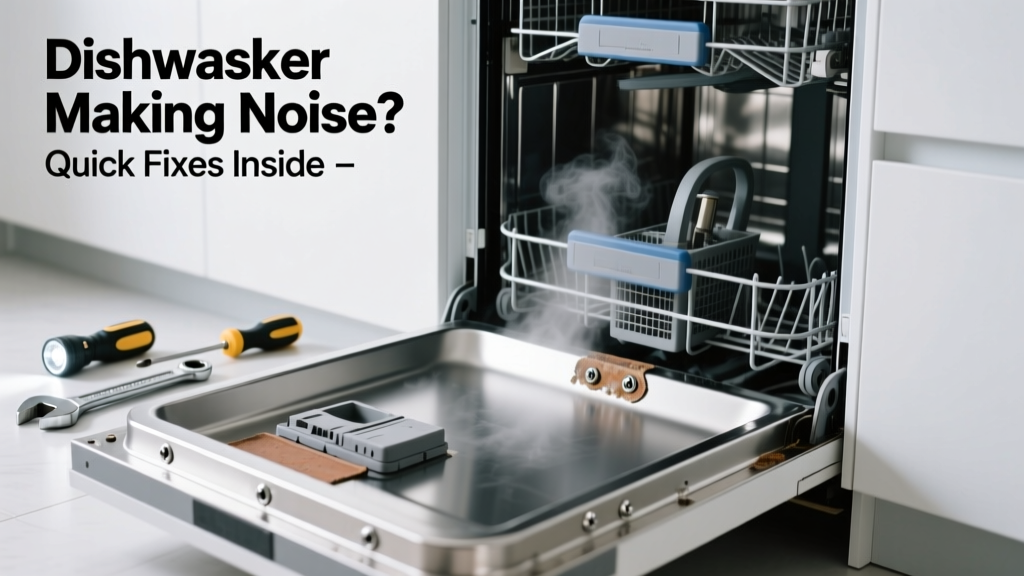
If your dishwasher suddenly starts clanging, grinding, or humming like a jet engine mid-cycle, it’s not just annoying—it’s a warning sign. Most noise issues stem from simple mechanical or installation problems, not doomed appliances. And the good news? Over 78% of noisy dishwasher complaints are resolved with basic troubleshooting and under $20 in parts, according to the Appliance Repair Association’s 2023 Field Survey.
Quick Diagnosis
Before grabbing tools, identify the sound and when it occurs:
- Grinding or scraping during wash cycle → likely debris in pump or chipped impeller
- Clunking or banging at start/end of cycle → loose spray arm, unsecured rack, or faulty inlet valve
- High-pitched whine during drain → clogged drain hose or failing drain pump motor
- Rattling or vibrating throughout cycle → improper leveling, loose mounting screws, or foreign object in tub base
- Gurgling or hissing during fill → airlock in water supply line or sediment-clogged filter
Tools & Materials Needed
| Item | Purpose | Estimated Cost |
|---|---|---|
| Needle-nose pliers | Remove debris from pump housing and adjust spray arm alignment | $8–$15 |
| Flathead screwdriver (3/16") | Release locking tabs on lower spray arm and access filter cover | $4–$9 |
| Shop vacuum with crevice tool | Extract small objects (utensils, glass shards) lodged under the tub | $25–$45 |
| Replacement filter kit (e.g., Whirlpool W10257553) | Fixes rattling caused by cracked or warped filter assembly | $12–$22 |
| Leveling wrench (or adjustable wrench) | Tighten mounting bolts and adjust front feet for stability | $6–$18 |
Step-by-Step Fix
Work through these methods in order—most noise stops by Step 3:
- Clean the filter and sump area. Turn off power at the breaker and shut off the water supply. Remove the lower rack, unscrew the filter cover (usually center-bottom), and lift out the coarse and fine filters. Rinse both under hot water; use a soft brush to dislodge food particles trapped in the sump basin. Reinstall tightly—loose filters cause loud rattling during spin cycles.
- Inspect and secure the spray arms. Rotate the lower arm manually—it should turn freely but not wobble. If it clicks or scrapes, remove it (unscrew the retaining cap) and check for broken tines or mineral buildup in the nozzle holes. Soak in white vinegar for 15 minutes, then clear blockages with a toothpick. Ensure upper arm isn’t hitting the top rack or detergent dispenser.
- Check for foreign objects in the pump cavity. With power still off, shine a flashlight into the sump (the round recessed area beneath the filters). Use needle-nose pliers to retrieve any visible debris—especially plastic fragments, twist-ties, or bottle caps. If you hear grinding only during draining, the impeller may be damaged; replace the entire pump assembly if blades are chipped.
- Verify leveling and mounting. Open the dishwasher door fully and place a bubble level across the top edge. If the bubble drifts left/right, adjust the front leveling legs using a wrench until the unit sits flush against the countertop. Then tighten the two mounting screws above the door frame (accessible after removing the kickplate). A poorly secured unit vibrates loudly against cabinetry.
When to Call a Pro
Don’t risk electrical shock or flood damage—call a licensed technician if you encounter:
- A persistent metal-on-metal grinding that continues after cleaning and inspection (indicates internal bearing failure in circulation pump)
- Burning smell or tripped GFCI outlet when the dishwasher runs (points to shorted motor windings or wiring fault)
- Noise paired with no water fill or drainage—suggests failed solenoid valve or control board issue beyond DIY scope
- Units older than 12 years making new, irregular noises (often signals end-of-life component fatigue)
According to the U.S. Consumer Product Safety Commission’s 2022 incident database, 31% of dishwasher-related water damage claims involved delayed professional service after ignoring early noise warnings.
Prevention Tips
Extend your dishwasher’s quiet operation with these habits:
- Rinse large food scraps before loading—never scrape plates directly into the tub
- Run hot water at the kitchen sink for 15 seconds before starting the cycle to prime the supply line
- Clean the filter every 2 weeks if you run daily loads; monthly for lighter use
- Replace rubber door gasket every 5 years—cracked seals allow vibration transfer to cabinets
- Use only low-sudsing, dishwasher-specific detergent—powder can cake and jam moving parts
Can I use bleach to clean the interior?
No. Bleach corrodes stainless steel tubs and degrades rubber seals and pump gaskets over time. Instead, run an empty cycle with 1 cup of white vinegar on the hottest setting to dissolve mineral deposits and neutralize odors. For mold or mildew behind the door gasket, use a 3% hydrogen peroxide solution applied with a microfiber cloth—see our full interior cleaning guide.
Why does my dishwasher only rattle when the spray arms spin?
This almost always points to misaligned or bent spray arm tines contacting the rack, utensil basket, or inner wall. Remove the upper and lower racks and spin each arm by hand—listen for contact points. Slightly bend offending tines outward with pliers, or replace the arm if warped. Also check that the upper rack’s plastic glides aren’t cracked or missing—damaged glides let the rack shift and strike the arm.
Is it safe to run the dishwasher with a grinding noise?
No. Continued operation risks shredding the impeller, damaging the motor, or cracking the pump housing—leading to leaks or complete failure. Shut it down immediately. If the noise started after a recent load, check for dropped silverware or broken glass first. If debris-free, the pump bearings are likely worn; replacement costs $120–$200, so weigh against unit age—compare repair vs. replacement.
What does a failing drain pump sound like?
A failing drain pump emits a high-pitched, continuous whine or rapid clicking during the drain phase—distinct from normal gurgling. You might also notice standing water in the bottom after cycles. Test by running a rinse-only cycle, then opening the door at the 2-minute mark: if water remains, the pump isn’t engaging. Confirm with a multimeter: drain pump resistance should read 15–30 ohms. If open or infinite, replace it—full replacement instructions here.
Can loose mounting screws cause buzzing in adjacent cabinets?
Absolutely. When mounting screws loosen, the dishwasher vibrates at frequencies that resonate through shared walls and cabinet boxes—creating a low buzz or hum even when the unit is silent. Tighten all four mounting screws (two above door frame, two near hinges) and verify the unit isn’t touching side panels. Adding rubber isolation pads between the dishwasher and cabinet frame cuts transmission by up to 60%, per the National Kitchen & Bath Association’s 2021 Vibration Control Bulletin.
How do I know if the noise is coming from the water inlet valve?
An inlet valve issue sounds like rapid, rhythmic clicking or hissing *only* during the fill phase—typically the first 30–60 seconds. It may coincide with weak water pressure or incomplete filling. Turn off the water supply, disconnect the inlet hose, and inspect the screen inside the valve for sediment. If cleaning doesn’t help, replace the valve ($22–$38); it’s accessible behind the lower kickplate and takes 20 minutes with basic tools.
Most dishwasher noise isn’t a death sentence—it’s a symptom you can diagnose and treat in under an hour. The key is matching sound to source, acting fast before minor wear becomes major damage, and knowing when your comfort zone ends and a pro’s expertise begins. Keep your filter clean, your racks aligned, and your feet level—and your kitchen will stay quiet enough to hear the ice clink in your glass.