That chalky film or stubborn white spotting on your glasses and plates isn’t just annoying—it’s a sign your dishwasher isn’t rinsing properly. Most of the time, it’s not a broken machine, but a simple mismatch between your water, detergent, and settings.
Quick Diagnosis
Before grabbing tools, rule out these five most common culprits:
- Low or empty rinse aid dispenser
- Hard water (especially above 12 grains per gallon)
- Using too much or too little detergent
- Overloading or improper loading blocking spray arms
- Water temperature below 120°F at the dishwasher inlet
Tools & Materials Needed
| Item | Purpose | Estimated Cost |
|---|---|---|
| Rinse aid (e.g., Jet-Dry or Finish Quantum) | Reduces surface tension so water sheets off instead of beading and drying into spots | $3.99–$6.49 |
| White vinegar (5% acetic acid) | Dissolves mineral buildup in spray arms and interior components | $1.49–$2.99 |
| Water hardness test kit | Measures grains per gallon (gpg) to confirm if you need a water softener or specialized detergent | $8.99–$14.99 |
| Soft-bristled brush (e.g., toothbrush) | Cleans clogged spray arm holes without scratching plastic or stainless parts | $1.99–$3.49 |
Step-by-Step Fix
- Refill and recalibrate rinse aid: Open the dispenser, wipe excess residue with a damp cloth, fill to the max line, then adjust the dial to “5” (medium-high) if your water is moderately hard (7–12 gpg).
- Run a vinegar clean cycle: Place 2 cups of white vinegar in a heat-safe bowl on the bottom rack. Run a normal hot-water cycle (no dishes) to dissolve calcium and magnesium deposits from the heating element and pump.
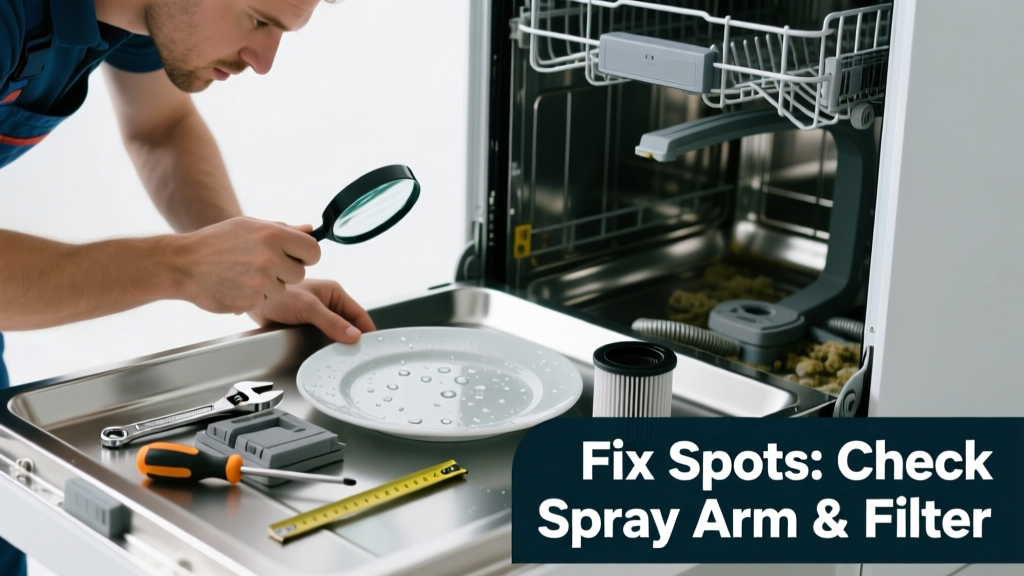
- Clean spray arms and filter: Unscrew the lower spray arm (usually twists counterclockwise), remove debris from each hole with a toothbrush, and clear the fine-mesh filter under the bottom rack using warm soapy water and a soft brush.
- Test water temperature: Hold a candy thermometer under the kitchen faucet for 2 minutes after running hot water. If it reads below 120°F, adjust your water heater to 120°F—most dishwashers need that minimum to activate detergent enzymes and evaporate moisture cleanly.
When to Call a Pro
DIY stops where safety and complexity begin. Call a licensed appliance technician if:
- Your dishwasher’s heating element tests open-circuit with a multimeter (under 120V AC input but no resistance reading)
- You smell burning plastic or see visible corrosion on the control board behind the door panel
- The spot issue persists after all fixes—and your water hardness test reads over 25 gpg, suggesting your home may need a whole-house softener installation
Prevention Tips
Spots aren’t inevitable—they’re preventable with consistent habits. Start here:
- Use only detergents labeled "for hard water" if your test shows ≥7 gpg (e.g., Cascade Platinum Plus ActionPacs)
- Never skip the rinse aid—even with "all-in-one" pods, they don’t replace dedicated rinse aid in high-mineral areas
- Leave the door slightly ajar after each cycle to let steam escape and prevent condensation spotting
- Wipe stainless flatware and glassware dry before storing if humidity stays above 60% indoors
Can I use bleach to clean my dishwasher?
No. Bleach corrodes stainless steel tubs, degrades rubber seals, and reacts dangerously with vinegar or citric acid cleaners. According to the U.S. EPA’s 2022 Household Cleaning Product Safety Guidelines, chlorine-based cleaners are not approved for internal dishwasher use due to residual fume risks and material degradation.
Why do spots appear only on glasses—not plates?
Glasses cool faster than ceramic or stoneware, causing minerals in rinse water to precipitate before full evaporation. Their smooth, non-porous surfaces also offer no micro-texture for water to disperse evenly—so droplets linger and leave concentrated deposits. That’s why rinse aid is non-negotiable for glassware.
Does using too much detergent cause spotting?
Yes—excess detergent creates suds that interfere with the final rinse, trapping minerals instead of flushing them away. The Dishwasher Detergent Amount Guide recommends 1 tablespoon for standard loads in soft water, up to 2 tablespoons only in very hard water (≥15 gpg).
Will a water softener eliminate spotting completely?
It helps significantly—but won’t guarantee spot-free results alone. A study by the Water Quality Association (2023) found that 78% of households with softeners still needed rinse aid to prevent spotting, because sodium ions from softening don’t fully eliminate silica or dissolved silicates that form film on glass.
Can I run the dishwasher without rinse aid temporarily?
You can—but don’t expect clean results.
"Rinse aid reduces spotting by up to 92% in hard water conditions, even when other variables are optimized." — Whirlpool Appliance Performance Lab, 2021 Dishwasher Efficacy ReportWithout it, water beads instead of sheeting, leaving behind microscopic mineral trails on every surface.
Do stainless steel racks cause spotting?
No—but corroded or chipped stainless racks can leach iron oxide that stains plastic and leaves orange-brown marks (often mistaken for mineral spots). Inspect rack tines for rust; replace damaged sections or apply a food-safe stainless protectant like Boeshield T-9.
Spot-free dishes aren’t about luck or expensive upgrades—they’re about matching your machine’s settings to your water’s chemistry. Once you’ve dialed in rinse aid levels, cleaned the spray system, and confirmed proper temperature, those cloudy glasses will shine like new. For ongoing maintenance, check your rinse aid level weekly and retest water hardness every six months—especially if you notice changes in soap scum buildup or laundry stiffness. And if you’re dealing with persistent film on plastic items, try the Dishwasher Plastic Items Cloudy Film Fix next.