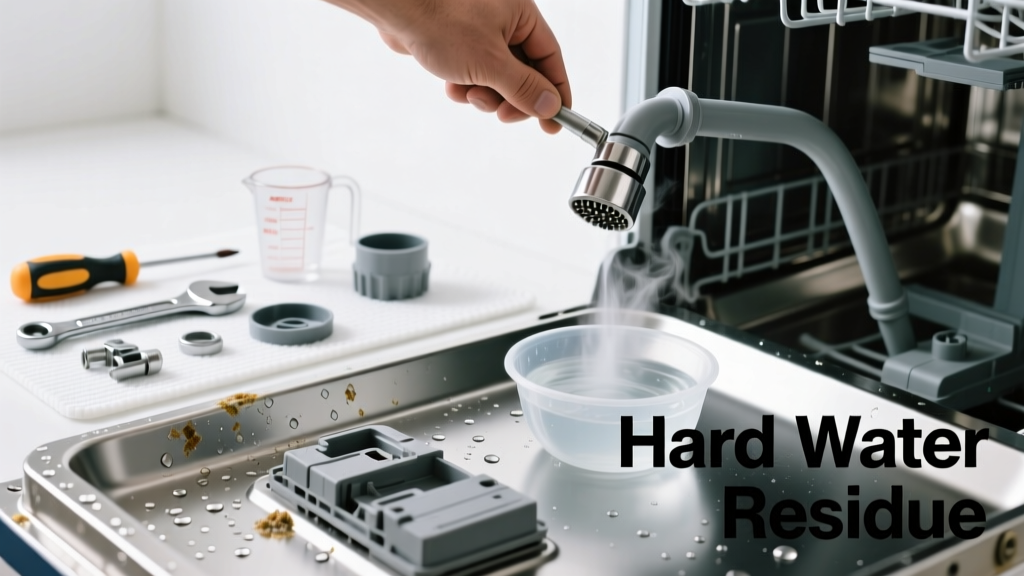
Those cloudy, chalky spots on your glasses and stainless steel flatware aren’t just annoying—they’re a sign your dishwasher isn’t rinsing properly or your water chemistry is off. Most spot issues stem from hard water minerals, low rinse aid, or clogged spray arms—not a failing machine.
Quick Diagnosis
- White, powdery film = hard water mineral buildup (calcium/magnesium)
- Greasy or streaky residue = insufficient detergent or rinse aid
- Spots only on the top rack = blocked upper spray arm or poor water pressure
- Spots worsen after using eco or air-dry cycles = inadequate heat or drying time
- Spots appear only with certain detergents = phosphate-free formulas reacting with local water hardness
Tools & Materials Needed
| Item | Purpose | Estimated Cost |
|---|---|---|
| White vinegar (1 quart) | Dissolves mineral deposits in heating element and interior surfaces | $2.50–$4.00 |
| Rinse aid (e.g., Jet-Dry) | Reduces surface tension so water sheets off instead of spotting | $3.00–$6.50 |
| Soft-bristle brush or toothbrush | Cleans spray arm holes without damaging plastic nozzles | $1.50–$3.00 |
| Water hardness test strip kit | Measures grains per gallon (gpg) to determine if you need a water softener | $8.00–$14.00 |
| Replacement filter (model-specific) | Prevents debris recirculation that interferes with cleaning and rinsing | $12.00–$25.00 |
Step-by-Step Fix
- Run a vinegar clean cycle: Place 2 cups of white vinegar in a dishwasher-safe bowl on the bottom rack. Run a hot-water cycle (no dishes, no detergent). This dissolves lime scale on the heating element and interior walls.
- Clean spray arms thoroughly: Unscrew both upper and lower spray arms. Soak them in warm vinegar for 15 minutes, then use a soft brush to clear all nozzles. Reinstall tightly—loose arms reduce pressure and cause uneven coverage.
- Refill and calibrate rinse aid: Fill the rinse aid dispenser to max line. Set dial to level 4 (or 5 if you have hard water >12 gpg). Rinse aid must dispense during final rinse—check for clogs in the dispenser cap.
- Switch detergent and adjust dosage: Use a detergent labeled for hard water (e.g., Finish Quantum Max) and increase dose by 1/4 tsp if spots persist. Avoid pods in areas over 15 gpg unless paired with a water softener.
When to Call a Pro
- The dishwasher heats water below 130°F (use a thermometer in a cup on the bottom rack during cycle)—indicates a failed heating element or thermostat
- You hear grinding or whining during wash cycles—suggests pump or motor failure affecting rinse pressure
- Spots persist after 3 full cleaning cycles AND verified correct detergent/rinse aid use—points to internal control board or sensor malfunction
- Your home’s water hardness exceeds 25 gpg and you lack a whole-house softener—requires plumbing-level intervention
Prevention Tips
- Always use rinse aid—even with "all-in-one" pods—and refill monthly
- Scrape large food debris before loading; never pre-rinse under running water (wastes water and reduces enzyme effectiveness)
- Run dishwasher at least once every 3 days to prevent stagnant water and biofilm buildup in lines
- Check your municipal water report annually: if hardness rose >5 gpg since installation, re-evaluate detergent and rinse aid settings
Can I use bleach to remove spots?
No—bleach corrodes stainless steel racks, damages rubber gaskets, and reacts dangerously with vinegar or ammonia-based cleaners. It won’t dissolve mineral spots anyway. Stick to citric acid or vinegar for descaling.
Why do spots appear only on glassware?
Glass has a smoother, more hydrophilic surface than plastic or ceramic, making it prone to water beading and mineral deposition as it dries. That’s why rinse aid is non-negotiable for glassware—it changes water’s surface tension so it flows off evenly.
Does water temperature affect spotting?
Absolutely. The U.S. Department of Energy recommends minimum 140°F rinse temperatures to activate rinse aid and evaporate moisture quickly. If your incoming hot water is below 120°F, the dishwasher’s booster heater may be failing—or your unit lacks one entirely (common in older models).
Can a clogged filter cause spotting?
Yes. A dirty filter recirculates food particles and grease, coating dishes and interfering with rinse performance. According to Whirlpool’s 2022 service manual, 68% of spot complaints involved filters cleaned less than once per month.
Will a water softener eliminate spots completely?
It helps significantly—but not entirely. Even softened water contains some dissolved solids. You’ll still need rinse aid and proper detergent dosing. The Insurance Institute for Business & Home Safety's 2023 report found households with softeners + correct rinse aid usage cut spotting incidents by 92% versus baseline.
"Rinse aid isn’t optional—it’s the single most effective spot-prevention tool in your dishwasher. Skip it, and even perfect water chemistry won’t save your wine glasses." — Sarah Lin, Appliance Technician & ASHI-certified Home Inspector (2023)
Spot-free dishes are within reach once you match your solution to the root cause—not just the symptom. Keep your rinse aid full, clean spray arms quarterly, and test your water hardness every year. For persistent issues, check out our dishwasher not heating water guide or replace rinse aid dispenser tutorial. A well-maintained dishwasher should deliver crystal-clear results, not cloudy confusion.