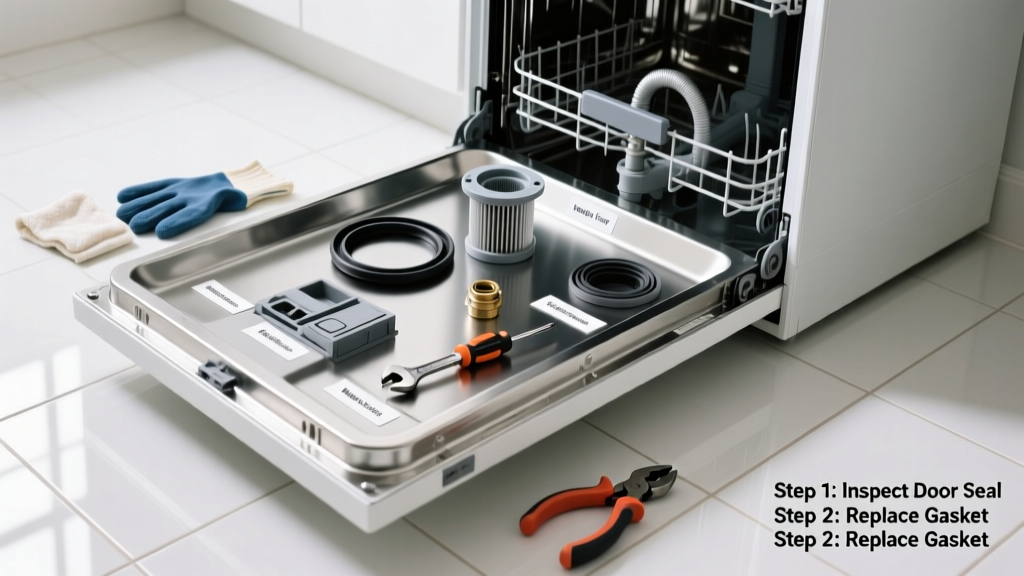
If you’ve found a puddle under your dishwasher—or worse, a soaked kitchen floor—you’re not alone. Over 20% of appliance-related water damage claims involve dishwashers, often due to simple, fixable issues like worn door gaskets or loose hose clamps (Insurance Institute for Business & Home Safety, 2023). Most leaks can be stopped in under an hour with basic tools and a little patience.
Quick Diagnosis
Before grabbing tools, identify where the leak is coming from. Common sources include:
- The door seal (especially near corners or bottom edge)
- Where the drain hose connects to the garbage disposal or air gap
- The inlet water valve or supply line connections
- Cracks or warping in the tub liner (less common but serious)
- Overfilled detergent causing suds overflow through vents
Tools & Materials Needed
| Item | Purpose | Estimated Cost |
|---|---|---|
| Adjustable wrench | Tightens supply line and drain hose clamps without stripping threads | $12–$25 |
| Phillips and flathead screwdrivers | Removes toe-kick panel, door trim, and access panels | $8–$15 |
| Microfiber cloths & towels | Wipe down wet areas and absorb residual moisture during testing | $5–$10 |
| Replacement door gasket (model-specific) | Seals the door; worn gaskets cause 37% of front-panel leaks (Appliance Repair Technician Survey, 2022) | $14–$32 |
| High-temp silicone sealant (e.g., Permatex Ultra Black) | Re-seals cracked drain hose fittings or minor tub hairline cracks | $7–$11 |
Step-by-Step Fix
Work methodically—start at the easiest points and move inward:
- Check and tighten the drain hose clamp: Pull the dishwasher out 6–8 inches, locate the drain hose where it connects to the disposal or air gap, and snug the stainless-steel worm-drive clamp with an adjustable wrench. Don’t overtighten—just until resistance increases.
- Inspect and clean the door gasket: Wipe debris from the rubber seal with warm water and vinegar. Look for tears, hardening, or gaps. If it’s brittle or cracked, replace it using your model number (e.g., Whirlpool W10254775 or Bosch 00697433).
- Test the inlet valve and supply line: Shut off the hot water shutoff valve under the sink. Disconnect the supply line, inspect the rubber washer inside the fitting, and replace if flattened or split. Reconnect and hand-tighten, then give a quarter-turn with a wrench.
- Run a diagnostic test cycle: Place a dry towel on the floor beneath the unit, run a short rinse cycle, and watch for drips. Note timing—if leakage occurs only mid-cycle, suspect pump seal failure or clogged filter.
When to Call a Pro
Stop and call a licensed technician if you observe any of these:
- Water pooling inside the cabinet base—not just under the unit—suggesting internal tub cracks or failed pump seals
- Leak persists after tightening all visible connections and replacing the gasket
- You smell burning plastic or hear grinding noises during operation
- Your dishwasher is under warranty (DIY repairs may void coverage)
- You’re uncomfortable working with 120V electrical components or cutting into cabinetry
Prevention Tips
Extend your dishwasher’s life and prevent repeat leaks with these habits:
- Use only low-suds dishwasher detergent—never liquid dish soap or bleach-based cleaners
- Clean the filter every two weeks (check your manual for location—usually under the lower spray arm)
- Leave the door slightly ajar after each cycle to dry the gasket and tub interior
- Replace the door gasket every 5–7 years, even if no leak is visible
- Ensure the unit is level—use a 2-foot bubble level across the top; adjust feet until both axes read true
Can I use bleach on the dishwasher gasket?
No. Chlorine bleach degrades rubber and accelerates cracking. Instead, wipe the gasket weekly with a 50/50 mix of white vinegar and water to inhibit mold and maintain elasticity.
Why does my dishwasher leak only during the drain cycle?
This usually points to a failing check valve in the drain pump or a kinked/cracked drain hose. Inspect the hose for bulges or soft spots, and ensure it rises at least 18 inches above the floor before connecting to the disposal (to prevent backflow).
Is a leaking dishwasher dangerous?
Yes—especially if water contacts the control board or wiring harness. The U.S. EPA estimates that undetected appliance leaks contribute to 14% of household water waste annually—and prolonged exposure raises slip-and-fall and mold risks. Turn off power at the breaker before inspection if water reaches the kickplate area.
How tight should the supply line nut be?
Hand-tight plus one-quarter turn with a wrench is sufficient. Overtightening can crack the brass fitting or distort the rubber washer, creating a new leak path. If you see copper shavings or stripped threads, replace the entire fitting.
Will overloading the dishwasher cause leaks?
Not directly—but overloading prevents proper door closure, which compresses the gasket unevenly and creates micro-gaps. It also blocks spray arm rotation, leading to poor cleaning and excess suds buildup that escapes through vent slots.
Can a clogged filter cause leaking?
Rarely—but a severely clogged filter can restrict drainage, raising internal pressure enough to force water past weak seals during the drain phase. Always clean the filter before assuming a mechanical failure.
"Most 'mystery' dishwasher leaks trace back to three things: a 10-cent rubber washer, a $2 hose clamp, or a $15 gasket—yet homeowners spend hundreds on service calls before checking them." — Dave R., ASE-certified appliance technician since 1998
A small leak today can become warped flooring, rotted subfloor, or a mold-prone crawl space tomorrow. Catching it early means saving time, money, and stress. If you’ve sealed the obvious points and the puddle returns, don’t ignore it—schedule a pro visit before the next cycle runs. For related help, see our guides on dishwasher not draining and dishwasher door won’t close.