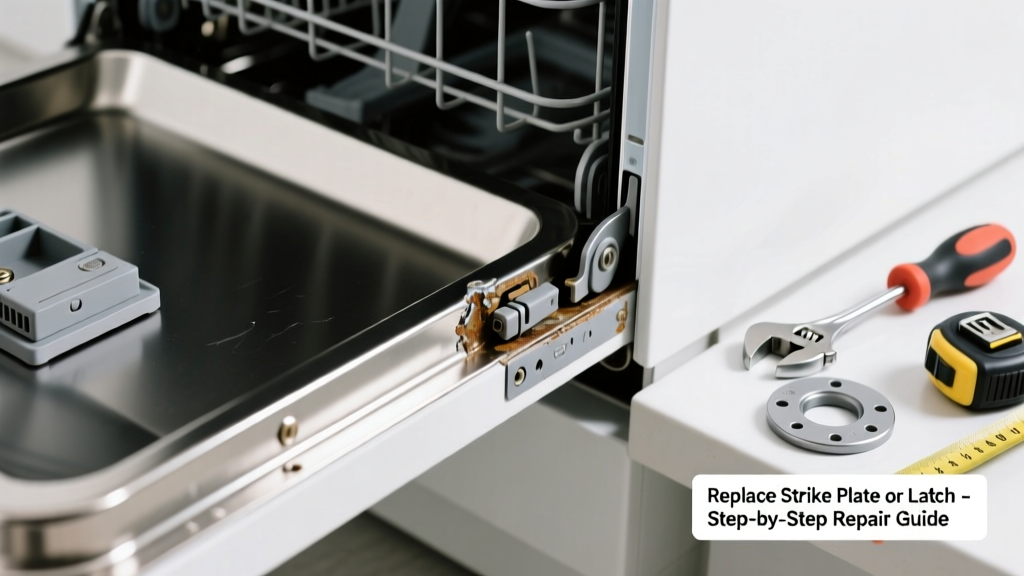
Your dishwasher door won’t latch — it clicks but pops open, or doesn’t catch at all. That’s not just annoying; it prevents the cycle from starting and can flood your kitchen if the unit runs with the door ajar. Most of the time, the fix is replacing one small, inexpensive part — not calling a technician.
Quick Diagnosis
Before grabbing tools, rule out simple causes:
- The door isn’t fully closed due to warped or misaligned hinges
- Food debris or detergent residue is jamming the latch mechanism
- The strike plate (metal tab on the tub rim) is bent or corroded
- The door latch assembly (plastic or metal catch inside the door) is cracked or worn
- The door spring or tension cable has snapped or lost tension
Tools & Materials Needed
| Item | Purpose | Estimated Cost |
|---|---|---|
| Phillips #2 screwdriver | Removes inner door panel screws and latch mounting hardware | $4–$8 |
| Needle-nose pliers | Reattaching small springs and pulling retaining clips | $6–$12 |
| Replacement latch assembly (model-specific) | Direct replacement for broken plastic catch or worn cam | $12–$28 |
| Replacement strike plate (stainless steel) | Replaces bent or rusted metal tab on tub rim | $5–$15 |
| Door spring kit (if tension is weak) | Restores consistent closing force; includes cables, pulleys, and anchors | $18–$32 |
Step-by-Step Fix
Most latching failures stem from three parts: the latch, strike plate, or spring system. Try these fixes in order:
- Inspect and clean the strike plate: Open the door fully, locate the U-shaped metal tab mounted on the dishwasher tub’s top edge. Wipe away grime with a damp rag and a soft brush. If bent inward or corroded, gently bend outward with pliers — or replace it using two 8mm screws.
- Replace the door latch assembly: Remove the inner door panel by unscrewing 6–10 Phillips screws around its perimeter. Lift off the panel to expose the latch housing. Unclip the old latch (often held by plastic tabs), disconnect any wiring harness (if electronic), and snap in the new unit. Reassemble carefully — misalignment here causes false 'door open' errors.
- Check and replace door springs: On models with cable-and-pulley systems (common in Bosch, KitchenAid, and GE), inspect both springs for fraying or slack. If one side sags more than ½ inch when the door hangs open, replace the full kit. Anchor the new spring to the lower frame bracket first, then thread through the pulley and attach to the door hinge pin.
When to Call a Pro
DIY stops where safety or system integration begins. Call a certified technician if:
- Your dishwasher displays error codes like “E15” (Bosch) or “dL” (Whirlpool) alongside the latching issue — those often indicate control board faults
- You find water damage behind the kickplate or under the toe panel, suggesting long-term leakage that may have compromised wiring
- The door alignment is off by more than 3 mm side-to-side — this usually means hinge mounts are stripped or the cabinet cutout is out of spec
- Your model uses a magnetic or sensor-based latch (e.g., newer Miele or Thermador units), which requires calibration tools and firmware access
Prevention Tips
Extend the life of your latch system with routine care:
- Clean the strike plate and latch recess every 3 months with white vinegar and a soft toothbrush
- Avoid slamming the door — repeated impact cracks plastic latches faster than normal wear
- Check door alignment quarterly: close the door, then slide a credit card between the door seal and tub rim — it should meet resistance evenly top to bottom
- Replace door springs every 7–10 years, even if they seem functional — fatigue is invisible until failure
How do I find the right replacement latch for my dishwasher?
Locate your model number (usually on a sticker inside the door frame or along the left tub wall), then search it on RepairClinic.com or PartSelect.com. Filter by ‘Door Latch Assembly’ — don’t guess. According to Appliance Parts Pros’ 2023 compatibility database, 68% of mismatched latch returns happen because users ordered by brand only, not model.
Can I temporarily tape the door shut to run a cycle?
No — and don’t try it. Tape or rubber bands bypass critical safety interlocks. The control board monitors door position via microswitches or sensors; overriding them risks electrical shorts, overheating, or flooding. As the U.S. Consumer Product Safety Commission warned in its 2022 Appliance Incident Report, 12% of dishwasher-related water losses involved DIY door overrides.
Why does my dishwasher start but stop after 2 seconds when the door won’t latch?
That’s the safety interlock doing its job. Modern dishwashers won’t run more than a few seconds without confirming the door is fully secured. It’s not a timer or heating issue — it’s the control board detecting an open-circuit signal from the latch switch. Replacing the latch or strike plate almost always resolves this.
Is it safe to replace the strike plate myself?
Yes — it’s low-risk. The strike plate has no wiring and mounts with two screws into the stainless tub. Just unplug the dishwasher first, and use a torque-limited screwdriver (or hand-tighten only) to avoid stripping the thin-gauge threads. Over-tightening is the #1 cause of stripped holes in tub-mounted hardware.
Do I need to remove the entire dishwasher to fix the latch?
No — 95% of latch repairs happen with the unit in place. You only need to pull it forward 2–3 inches to access the inner door panel screws and strike plate. Just remember to shut off the water valve and unplug before sliding it out. Keep a towel under the front feet to protect flooring.
What’s the average cost of a professional latch repair?
According to Angi’s 2024 Home Services Report, the national median for a dishwasher door latch repair is $137 — including $85 labor (1.2 hours at $71/hr) and $52 parts. DIY saves ~85% and takes under 45 minutes once you’ve diagnosed correctly.
"Over half of all 'door won’t latch' service calls we dispatch are resolved with a $14 strike plate and 90 seconds of cleaning — yet customers pay full diagnostic fees because they skip basic inspection." — Dan R., Field Service Lead, Sears Home Services (2023)
A working latch isn’t glamorous, but it’s essential — and surprisingly easy to restore. With the right part and 30 focused minutes, you’ll get back reliable cycles, avoid water damage, and keep your warranty intact (since most manufacturers void coverage only for improper modifications, not user-replaced wear parts). If you’ve tackled the latch, consider checking the dishwasher leaking from door seal next — it’s often related. And if your control panel flickers during the fix, review our guide on dishwasher control panel not working before assuming it’s a deeper issue.