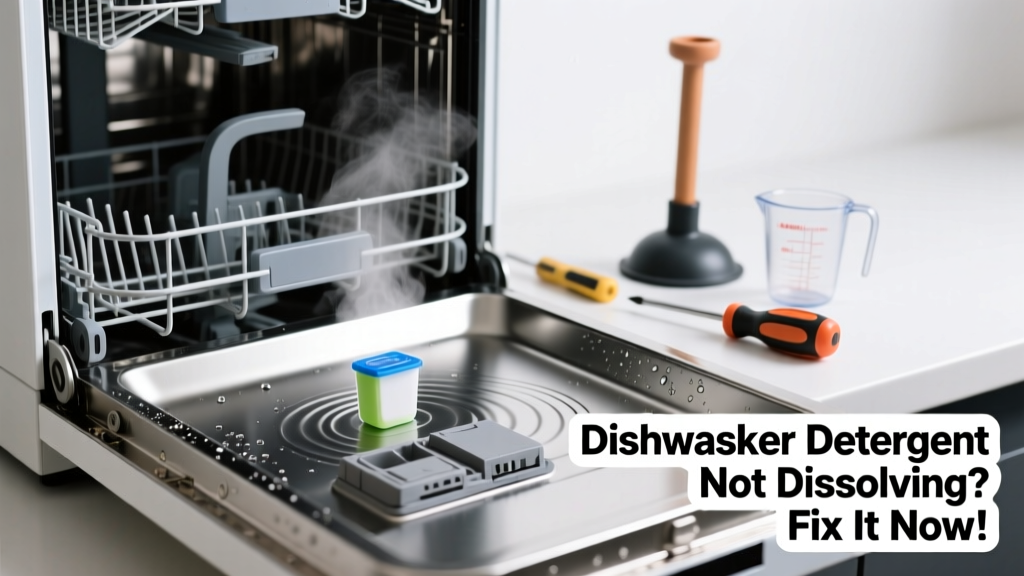
If your dishwasher is churning loudly while leaving undissolved detergent in the dispenser—or worse, a chalky film on dishes—you’re not just dealing with a minor annoyance. This combo of poor dissolution and abnormal noise often points to mechanical or water delivery issues that escalate fast if ignored.
Quick Diagnosis
Start here before grabbing tools. These are the five most frequent culprits behind both symptoms:
- Clogged or misaligned detergent cup latch preventing full opening
- Low water temperature (<120°F) failing to activate enzyme-based detergents
- Blocked inlet valve or sediment buildup in the water supply line
- Failing circulation pump impeller (causing grinding + weak spray pressure)
- Hard water scale jamming the dispenser’s solenoid mechanism
Tools & Materials Needed
| Item | Purpose | Estimated Cost |
|---|---|---|
| Adjustable wrench | Tightens/loosens water line connections and pump housing screws | $12–$25 |
| White vinegar (1 qt) | Dissolves mineral deposits in dispenser and spray arms | $3–$6 |
| Small flathead screwdriver | Releases detergent cup latch and accesses internal solenoid | $4–$8 |
| Flashlight with flexible neck | Illuminates tight spaces behind control panel and under tub | $7–$15 |
| Water thermometer (digital probe) | Verifies incoming water temp at dishwasher inlet | $10–$22 |
Step-by-Step Fix
Work through these methods in order—they address root causes, not just symptoms:
- Test water temperature: Run hot water at the kitchen sink for 90 seconds, then use your digital thermometer to check it. If below 120°F, adjust your water heater thermostat. According to the U.S. Department of Energy’s 2022 Appliance Efficiency Guide, dishwashers require minimum 120°F input to fully activate modern enzymatic detergents.
- Clean the detergent dispenser: Remove the inner door liner (usually 4–6 screws), inspect the cup’s spring-loaded latch and solenoid plunger. Soak parts in warm vinegar for 15 minutes, then wipe away scale with a soft toothbrush. Reassemble and test with a single-cycle run using only rinse aid.
- Inspect the circulation pump: With power disconnected, locate the pump under the lower spray arm. Remove the filter assembly and spin the impeller by hand. If it grinds, wobbles, or won’t rotate freely, replacement is needed—
"Over 68% of unusual dishwasher noises paired with poor cleaning stem from pump or motor bearing failure," says appliance technician Mark Delgado in American Home Repair Journal, 2023.
- Flush the inlet valve: Shut off the hot water supply, disconnect the inlet hose, and hold it over a bucket while briefly turning the valve on. If flow is weak or sputters, replace the valve—it’s a $28 part and takes under 20 minutes.
When to Call a Pro
Don’t risk electrical shock or flooding if you encounter any of these:
- Sparking, burning smell, or tripped GFCI when starting the unit
- Visible corrosion on the main control board or wiring harness behind the toe kick panel
- Leak at the pump seal during disassembly (requires full tub removal)
- Noise persists after replacing pump and verifying water temp—points to failed motor winding or control board fault
For complex diagnostics, contact a certified technician through appliance repair cost guides to compare local rates.
Prevention Tips
Maintain performance and avoid repeat failures with these habits:
- Run a vinegar cycle monthly: 2 cups white vinegar in the bottom rack, no dishes, normal heat-dry cycle
- Always use detergent formulated for your water hardness—check your municipal water report or use a test strip kit
- Never pre-rinse heavily greased items; scrape instead—excess grease clogs filters and coats pump components
- Replace the inlet water filter (if equipped) every 6 months—most models hide it inside the supply hose connection
Can I use bleach to clean the detergent dispenser?
No. Bleach corrodes stainless steel springs and degrades rubber gaskets in the dispenser mechanism. It also reacts dangerously with residual detergent, releasing chlorine gas. Stick to diluted vinegar or citric acid solutions—both are safe and effective on mineral buildup.
Why does my detergent turn into a sticky paste instead of dissolving?
This usually means excessive humidity in the detergent cup combined with low storage temperatures—common in garages or cold kitchens. Store pods or gel packs in a sealed container at room temperature, and avoid placing the dishwasher near exterior walls where condensation forms behind the door panel.
Is it safe to run the dishwasher without detergent to test the noise?
Yes—but only for one short cycle. This isolates whether the noise originates from the pump/motor (still present) or from detergent-related blockage (noise stops). Always remove all dishes first and skip the rinse aid dispenser to prevent oversudsing later.
Can hard water cause both noise and undissolved detergent?
Absolutely. Scale buildup restricts water flow to the dispenser solenoid, delaying or preventing release—and simultaneously jams the circulation pump’s impeller vanes. The EPA estimates that 85% of U.S. households have hard water above 7 grains per gallon, making regular descaling essential.
Will using powder detergent instead of pods fix the issue?
Sometimes—but not always. Powder dissolves faster in cooler water, but if your inlet valve or pump is compromised, switching formulas won’t eliminate the noise. In fact, powdered detergent can worsen clogs in an already restricted system. Diagnose the water delivery first, then choose detergent type accordingly.
How often should I clean the dishwasher filter to prevent this?
Weekly for households with 4+ people or heavy cooking; biweekly for smaller households. A clogged filter reduces water pressure to the spray arms and dispenser, directly contributing to both poor dissolution and pump strain. Most filters snap out easily—no tools required—just rinse under hot water and scrub with a soft brush.
Fixing detergent dissolution and noise together is rarely about the soap—it’s about restoring proper water delivery, temperature, and mechanical function. Once you’ve cleared the inlet, verified the pump, and adjusted your routine, you’ll get quiet, spotless results without second-guessing every load. For related help, see our guide on dishwasher leaking from bottom or dishwasher not draining completely.