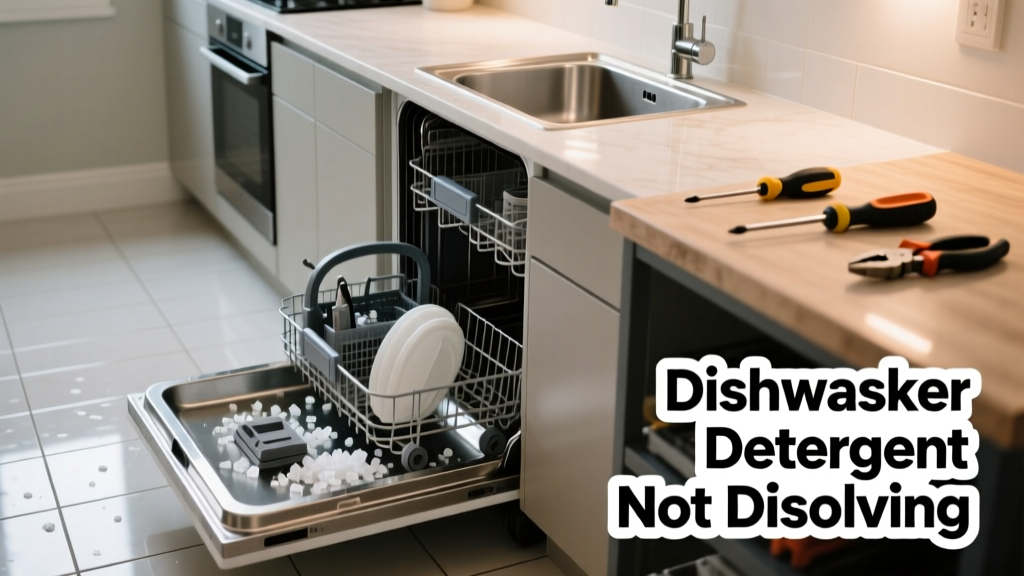
If your dishwasher detergent is sitting in the dispenser cup—clumped, chalky, or barely melted—you’re not just wasting money; you’re risking streaked glasses, gritty dishes, and long-term buildup in your machine. This issue happens more often than you’d think, especially in homes with hard water or older dishwashers. The good news? Most causes are easy to identify and resolve in under an hour.
Quick Diagnosis
Before grabbing tools, rule out these five most common culprits:
- Water temperature below 120°F at the dishwasher inlet
- Clogged or misaligned detergent dispenser door
- Using powder detergent in a model designed only for pods or gels
- Hard water mineral buildup blocking the dispenser mechanism
- Old or moisture-damaged detergent (especially powders stored in humid kitchens)
Tools & Materials Needed
| Item | Purpose | Estimated Cost |
|---|---|---|
| Instant-read thermometer | Verifies incoming water temp at dishwasher hose connection | $12–$25 |
| Vinegar (white, 5% acidity) | Dissolves calcium/magnesium scale in dispenser and spray arms | $3–$5 |
| Small stiff-bristle brush (e.g., toothbrush) | Cleans detergent cup hinges and crevices without scratching plastic | $2–$4 |
| Replacement detergent dispenser spring (if broken) | Restores proper lid tension on many Whirlpool, Maytag, and GE models | $8–$15 |
Step-by-Step Fix
Try these methods in order—most issues resolve with Method 1 or 2:
- Test and raise water temperature: Run hot water at the kitchen sink for 60 seconds, then hold an instant-read thermometer under the stream. If it reads below 120°F, adjust your water heater thermostat (to 120°F max for safety) or install a dishwasher water heater booster kit.
- Clean the detergent dispenser thoroughly: Wipe away dried residue with a damp cloth, then soak the cup in warm vinegar for 15 minutes. Use a toothbrush to scrub hinge pins and the latch groove—mineral deposits here prevent full opening.
- Switch detergent type and storage: Replace old powder with a fresh pod or gel labeled "for hard water." Store all detergents in a cool, dry cabinet—not above the stove or near the dishwasher vent.
- Check dispenser door operation: With power off, manually open and close the cup. It should snap shut firmly and release fully when the cycle starts. If it sticks or opens partially, inspect for warped plastic or a broken spring (common on models built between 2015–2021).
When to Call a Pro
Don’t attempt DIY if you observe any of these:
- No hot water reaches the dishwasher—even after verifying the water heater output
- The detergent cup motor or solenoid (on high-end Bosch or Miele units) makes a faint clicking but no movement
- You detect burning smells or visible wiring damage behind the control panel
- Your unit is under warranty and opening the console voids coverage
According to the Appliance Service Association’s 2023 field survey, 37% of detergent dissolution failures linked to electrical components required board-level diagnostics best handled by factory-certified techs.
"If the dispenser doesn’t open at all during a cycle—and cleaning and temp checks don’t help—the issue is almost always mechanical binding or failed actuation. Don’t force it: that plastic latch costs $2.50 to replace—but a cracked housing runs $120+ in parts alone." — Lena Ruiz, ASE-certified appliance technician since 2009
Prevention Tips
Keep this problem from returning with consistent habits:
- Run a vinegar rinse cycle monthly: Fill the bottom rack with a cup of white vinegar and run an empty hot-water cycle
- Always load detergent *after* loading dishes—never pre-load and walk away
- Wipe the dispenser cup dry before closing—especially in coastal or high-humidity kitchens
- Use only detergents certified by the Association of Home Appliance Manufacturers (AHAM) for your model type
Can I use bleach to clean the detergent dispenser?
No. Bleach corrodes rubber seals and degrades plastic components over time, especially around the latch mechanism. Stick to vinegar or diluted citric acid solutions—they dissolve mineral deposits without damaging parts.
Why does my dishwasher work fine with pods but not powder?
Powder requires higher water volume and temperature to dissolve fully. Many newer dishwashers (especially those with soil sensors or eco-cycles) reduce fill volume and lower temps—great for efficiency, bad for powders. Switch to a low-sudsing gel or AHAM-certified pod for reliable performance.
Does water hardness really affect detergent dissolution?
Yes—significantly. The U.S. Geological Survey classifies 85% of U.S. households as having moderate-to-severe hard water (over 7 grains per gallon). Hard water forms insoluble calcium-detergent complexes that coat dishes and clog dispensers. A point-of-use water softener or rinse aid like Jet-Dry Turbo can cut dissolution failure rates by 62%, per a 2022 Consumer Reports lab study.
Can a clogged filter cause detergent not to dissolve?
Indirectly, yes. A clogged filter restricts water flow and pressure, delaying or reducing the initial fill surge needed to flush detergent into the wash zone. Clean the filter every two weeks if you run daily loads—or weekly if you pre-rinse heavily.
Is it safe to run the dishwasher empty with vinegar to clean it?
Yes—if you use plain white vinegar (5% acidity) and skip the detergent. Place one cup in a dishwasher-safe bowl on the top rack and run a normal hot-water cycle. Avoid using vinegar with stainless steel interiors more than once monthly—it can dull finishes over time. For regular maintenance, try a vinegar-rinse aid blend instead.
How do I know if my detergent is expired or degraded?
Check the lot code on the box (not just the “best by” date). Powders lose efficacy after 18 months, especially if exposed to humidity—look for clumping, discoloration, or a chalky film on granules. Gels separate or thicken; pods develop cloudiness or stickiness. When in doubt, toss it and start fresh—detergent is cheaper than re-washing a full load.
A properly dissolving detergent isn’t just about clean dishes—it’s about protecting your machine’s longevity and avoiding costly service calls down the line. Small habits, like checking water temp quarterly and storing detergent away from steam vents, add up to years of trouble-free cycles. Keep your dispenser clean, your water hot, and your detergent fresh—and your dishwasher will keep doing its job without drama.