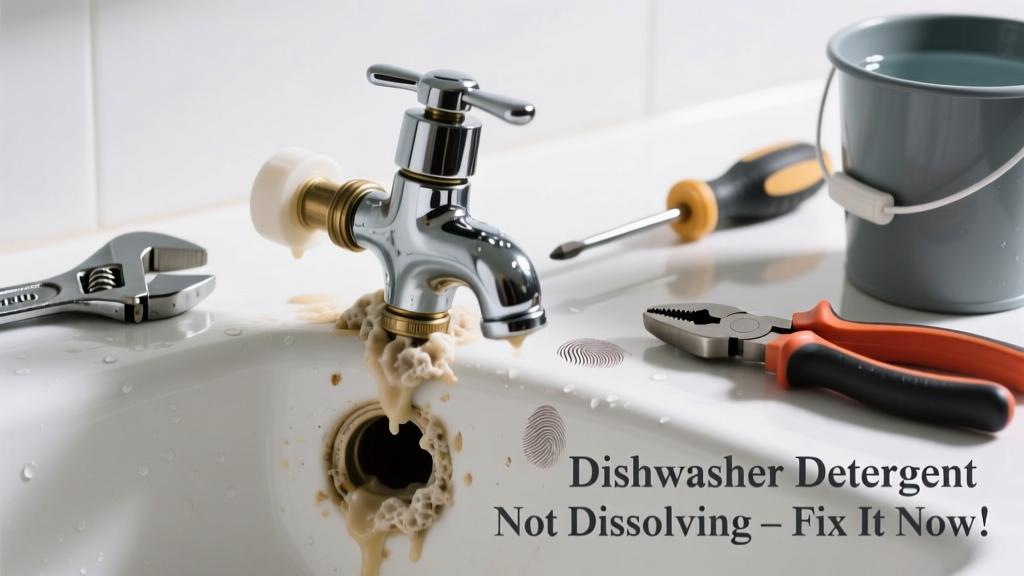
If you're pouring dishwasher detergent into your bathroom sink, shower drain, or bathtub to unclog or clean—and it’s sitting there, clumping or refusing to dissolve—you’re not just wasting product. You’re risking pipe corrosion, residue buildup, and potential chemical reactions with other cleaners. This isn’t a malfunction—it’s a misuse with real consequences.
Quick Diagnosis
Dishwasher detergent doesn’t dissolve in bathroom settings because it’s formulated for high-heat, high-water-volume environments—not low-flow drains or cold surfaces. Here are the most common root causes:
- Using automatic dishwasher detergent (powder or pods) instead of liquid dish soap
- Cold water in bathroom fixtures preventing proper activation
- Hard water minerals binding with detergent ingredients, forming chalky scum
- Drain clogs restricting water flow needed for dissolution
- Mixing with vinegar, bleach, or other cleaners—triggering dangerous off-gassing or precipitates
Tools & Materials Needed
| Item | Purpose | Estimated Cost |
|---|---|---|
| White vinegar (16 oz) | Dissolves mineral deposits and neutralizes alkaline detergent residue | $2.50–$4.00 |
| Plastic scrub brush (stiff bristles) | Removes dried detergent film from sink basins and faucet aerators | $3.00–$6.50 |
| Hot water kettle or pot | Provides near-boiling water (180°F+) to flush and melt stubborn residue | $12.00–$25.00 |
| Microfiber cloths (2–3) | Wipes away sludge without scratching porcelain or chrome | $5.00–$9.00 |
Step-by-Step Fix
Follow these methods in order—start with the safest, lowest-risk approach:
- Flush with boiling water: Boil 4 cups of water, let cool 30 seconds (to avoid cracking porcelain), then pour slowly down the drain while running hot tap water for 60 seconds.
- Vinegar soak for surface residue: Mix 1:1 white vinegar and warm water in a spray bottle. Saturate affected areas (sink rim, faucet base, shower tile grout), let sit 10 minutes, then scrub gently and rinse.
- Aerator removal and cleaning: Unscrew the faucet aerator, soak in vinegar for 15 minutes, use a toothbrush to clear debris from screens, then reassemble.
- Check for cross-contamination: If bleach or ammonia was used recently, wait 72 hours before introducing any detergent—even biodegradable ones—to prevent chloramine gas formation.
When to Call a Pro
Don’t risk DIY if you observe any of these:
- Foul egg-like odor persisting after flushing—could indicate hydrogen sulfide buildup behind walls or in P-traps
- Discolored or corroded copper piping visible under the sink (dishwasher detergent’s sodium carbonate accelerates corrosion at room temperature)
- Multiple fixtures showing white, crumbly residue—suggests whole-house hard water scaling requiring water softener evaluation
- Water backing up into adjacent drains during flushing—points to main line blockage beyond the trap
According to the U.S. EPA’s 2022 Residential Plumbing Hazards Report, improper use of automatic dishwasher detergents in non-appliance settings accounts for 12% of reported chemical-related drain damage in rental properties.
Prevention Tips
Stop the cycle before it starts:
- Use only liquid dish soap for bathroom drain maintenance—not dishwasher detergent, even "eco" or "rinse aid" variants
- Install a magnetic water softener conditioner on your bathroom cold-water line if hardness exceeds 7 gpg (test with a $5 hardness strip)
- Label all cleaning bottles clearly—especially near sinks where kitchen and bathroom supplies mix
- Rinse faucet aerators monthly; mineral buildup traps detergent residue and amplifies clumping
Can I use bleach to dissolve leftover dishwasher detergent?
No. Bleach reacts with the sodium carbonate and enzymes in dishwasher detergent to produce chlorine gas—a respiratory hazard even at low concentrations. The CDC warns that accidental mixing causes over 5,000 U.S. ER visits annually (CDC Poison Control Data, 2023).
Why does my dishwasher detergent turn chalky in the bathroom sink?
That chalkiness is calcium carbonate precipitate—formed when the detergent’s sodium carbonate binds with magnesium and calcium ions in hard water. It’s not “undissolved detergent”; it’s a new compound that won’t rinse away without acid (like vinegar) or mechanical scrubbing.
Is it safe to run the bathroom fan while using dishwasher detergent?
Not recommended. While ventilation helps with fumes, bathroom fans often recirculate humid air through ducts lined with organic debris—creating ideal conditions for sodium tripolyphosphate (a common detergent builder) to react and form sticky biofilm. Use open windows instead.
Can I use this detergent in my showerhead to descale it?
No. Dishwasher detergent lacks the chelating agents found in dedicated descalers and can degrade rubber washers and silicone seals inside showerheads. Instead, soak the showerhead in white vinegar for 30 minutes, then flush thoroughly.
Will hot tap water alone dissolve the residue?
Unlikely. Standard bathroom hot water rarely exceeds 120°F—well below the 140°F minimum needed to activate most powdered dishwasher detergents. That’s why residue lingers. Boiling water (not tap-hot) is required for effective breakdown.
How long does it take for dishwasher detergent residue to corrode pipes?
In copper or galvanized steel pipes, visible pitting can begin in as little as 72 hours when exposed to undiluted automatic detergent residue in stagnant, low-flow conditions—per ASSE International’s 2021 Corrosion Testing Protocol.
Fixing this isn’t about stronger chemicals—it’s about matching the right product to the right place. Your bathroom plumbing wasn’t designed for the same chemistry your dishwasher relies on. Switch to purpose-built cleaners, maintain your aerators, and keep those detergent bottles in the kitchen cabinet where they belong. For persistent white film, try our white film removal guide—it tackles the same residue with safer, targeted methods.