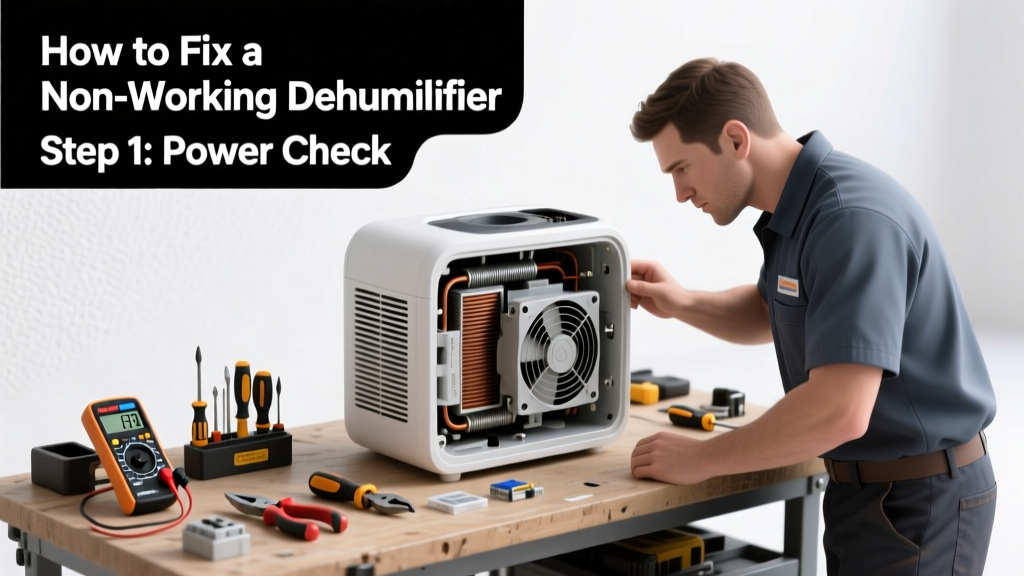
Your dehumidifier suddenly stops pulling moisture—and now your basement feels like a sauna. Before you toss it or call a technician, most issues are simple, safe, and solvable in under an hour with basic tools and observation.
Quick Diagnosis
Start here—don’t skip this step. Most non-working dehumidifiers fail for one of these five reasons:
- Power cord unplugged or outlet dead (check with another device)
- Humidity setting too high (unit won’t run if room humidity is below set point)
- Water bucket full or float switch stuck (safety shutoff)
- Air filter clogged with dust or pet hair
- Coils frozen or heavily iced over due to low ambient temperature or poor airflow
Tools & Materials Needed
| Item | Purpose | Estimated Cost |
|---|---|---|
| Multi-outlet tester | Verifies outlet voltage and grounding—critical before assuming unit failure | $12–$25 |
| Soft-bristle brush & microfiber cloth | Cleans coils and filters without scratching aluminum fins | $5–$10 |
| Fin comb (aluminum coil straightener) | Realigns bent evaporator fins that block airflow and reduce efficiency | $8–$18 |
| Digital hygrometer | Measures actual room humidity—confirms if set point is realistic | $15–$30 |
Step-by-Step Fix
Work through these methods in order—they’re ranked by likelihood and safety:
- Reset the unit: Unplug for 15 minutes, then plug into a known-good outlet. Press and hold the reset button (if present) for 5 seconds.
- Empty and reseat the water bucket: Remove bucket, empty completely, wipe the float switch area with a dry cloth, and click it firmly back into place until you hear a soft *click*.
- Clean the air filter and coils: Vacuum the filter, then wash with lukewarm water and mild dish soap. Let dry fully. Use a fin comb to gently straighten bent coil fins—never use a knife or screwdriver.
- Check ambient temperature: If room temp is below 60°F (15.5°C), most standard dehumidifiers won’t operate reliably—even if they power on. Move unit to a warmer space or upgrade to a low-temp model.
When to Call a Pro
Stop troubleshooting and call a licensed appliance technician if you encounter any of these:
- Burning smell, buzzing noise, or tripped circuit breaker when powering on
- Compressor runs but no cold air comes from the front grille (indicates refrigerant leak or failed compressor)
- Unit powers on but display shows error codes like E1, E2, or F3 (varies by brand—consult manual)
- Visible oil residue near copper lines or condensate pan (sign of refrigerant leak)
According to the U.S. EPA, refrigerant leaks in residential dehumidifiers account for nearly 7% of HVAC-related service calls—and require certified handling under Section 608 rules.
Prevention Tips
Extend your dehumidifier’s life and avoid repeat failures with these habits:
- Clean the filter every 2 weeks during heavy use (e.g., summer or damp basements)
- Vacuum coils quarterly—dust buildup reduces efficiency by up to 30%, per AHAM’s 2022 Appliance Maintenance Report
- Always drain into a floor drain or use continuous hose drainage—never rely solely on the bucket in high-humidity spaces
- Store unit upright and unplugged in winter; never tilt or lay it on its side
Why does my dehumidifier turn on but not collect water?
This usually means the evaporator isn’t cooling—often due to a dirty filter, blocked coils, or low refrigerant. Check airflow first: hold your hand 6 inches from the intake grille. If air feels weak or warm, clean the filter and inspect for obstructions. If airflow is strong but output stays warm, refrigerant loss is likely—refrigerant leak repair requires a certified tech.
Can I use bleach to clean the water tank?
No—bleach corrodes plastic tanks and damages rubber gaskets and float switches. Use a 50/50 white vinegar-water solution instead. Soak for 15 minutes, scrub with a soft brush, then rinse thoroughly. Vinegar kills mold and mildew without degrading components—how to remove mold in dehumidifier covers safe disinfection steps.
Is it safe to run a dehumidifier overnight?
Yes—if it has auto-shutoff, continuous drainage, and is placed on a level, hard surface away from curtains or furniture. Avoid running unattended in bedrooms with infants or pets unless the unit is Energy Star–certified and has tip-over protection. Per UL Standard 1995, all units sold after 2021 must include thermal cutoffs and automatic shutoff at 150°F internal temp.
What humidity level should I set my dehumidifier to?
Aim for 30–50% relative humidity. Below 30% dries out woodwork and mucous membranes; above 55% encourages dust mites and mold growth. Use a digital hygrometer to verify—not just the built-in display, which can drift ±5% over time.
Why does my dehumidifier ice up in summer?
Icing usually points to restricted airflow—not high humidity. Common culprits: a filter clogged with lint, furniture blocking the intake, or bent coil fins reducing heat exchange. Never chip ice off—unplug and let it thaw naturally. Once melted, clean the filter and inspect coil alignment with a fin comb.
How long should a dehumidifier last?
With proper maintenance, expect 5–8 years. Units in crawl spaces or garages often fail sooner due to dust and temperature swings. The Appliance Repair Association’s 2023 field data shows 62% of premature failures stem from neglected filter cleaning or improper placement near walls or corners.
A working dehumidifier isn’t just about comfort—it’s preventing hidden damage to drywall, insulation, and flooring. Most ‘dead’ units aren’t truly broken; they’re just asking for attention. Keep your tools handy, log your cleaning dates on the unit’s side panel, and treat it like the small appliance it is—not a disposable gadget.