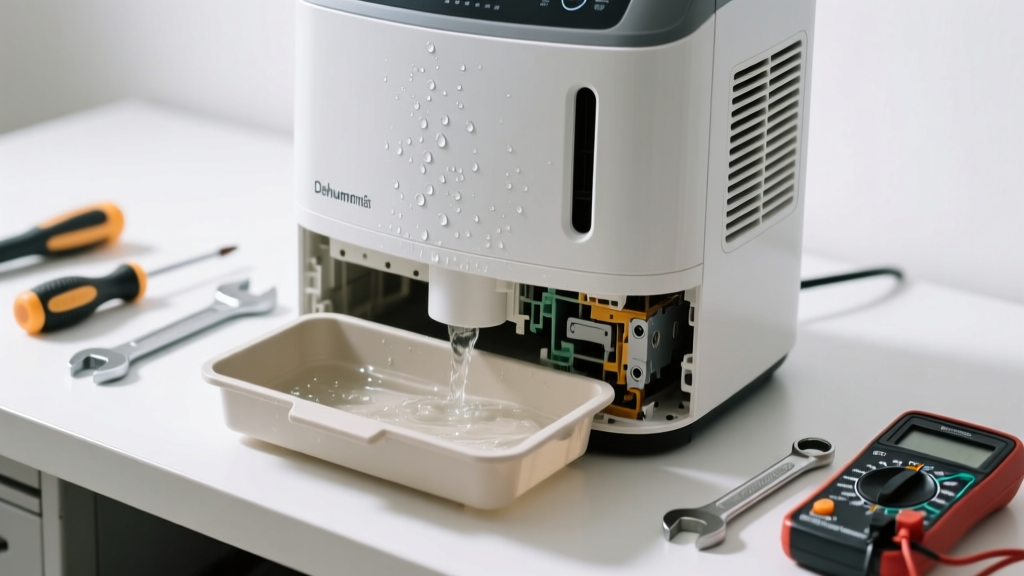
If your dehumidifier’s fan is humming, rattling, or buzzing—but the bucket stays dry—you’re not just dealing with a minor glitch. This combo of no condensate and odd noise usually points to a mechanical or refrigerant issue that worsens fast if ignored.
Quick Diagnosis
Before grabbing tools, rule out these five most common causes:
- Air filter clogged with dust or pet hair (blocks airflow, prevents condensation)
- Coils frozen solid due to low room temperature (<60°F) or dirty coils
- Compressor failing—clicking on/off repeatedly without cooling
- Fan motor bearings worn out or fan blade hitting housing
- Refrigerant leak (no frost, no cool air from coils, hissing sound)
Tools & Materials Needed
| Item | Purpose | Estimated Cost |
|---|---|---|
| Phillips #2 screwdriver | Removes outer casing and access panels safely | $4–$8 |
| Digital multimeter | Tests compressor and fan motor continuity and voltage | $22–$35 |
| Soft-bristle coil brush | Cleans evaporator coils without bending fins | $6–$12 |
| Microfiber cloths & white vinegar | Removes mineral buildup from drain pan and sensor | $5–$9 |
Step-by-Step Fix
Try these fixes in order—most issues resolve in under 30 minutes:
- Clean the air filter and evaporator coils: Power off, unplug, remove front panel. Vacuum filter; use coil brush + 50/50 vinegar-water spray on coils. Let dry 20 minutes before reassembly.
- Check ambient temperature: If room is below 60°F, move unit to warmer space or switch to a low-temp model. Cold air = no condensation, even with working compressor.
- Test fan operation: With unit unplugged, spin fan blade by hand. If stiff or gritty, lubricate motor shaft with 1 drop of 3-in-1 oil—or replace fan assembly ($25–$45).
- Verify compressor engagement: Listen closely after startup: a healthy compressor hums steadily for 3–5 seconds, then cools. Click-click-click means start capacitor failure (replace for $12–$18).
When to Call a Pro
Stop DIY if you encounter any of these:
- You smell burning insulation or see charring near wiring terminals
- Refrigerant lines are oily, dented, or leaking (R-410A requires EPA 608 certification to handle)
- Compressor runs but coils stay at room temperature—confirmed with IR thermometer
- Unit trips circuit breaker repeatedly after cleaning and resetting
According to the U.S. EPA estimates that 14% of household water usage is from leaks—including those caused by failed dehumidifiers left running without collection. A silent, dry unit often hides deeper electrical or refrigerant faults best handled by certified technicians.
Prevention Tips
- Replace or clean the filter every 2 weeks during heavy-humidity months (May–September)
- Vacuum coils quarterly—even if unit seems fine—to prevent frost lockup
- Keep intake and exhaust vents unobstructed by furniture or curtains (minimum 12" clearance)
- Drain hose must slope downward continuously—no kinks or uphill sections
- Use a dedicated 15-amp circuit; avoid power strips or extension cords
Can I use bleach on the water tank?
No. Bleach corrodes plastic tanks and damages internal float switches. Use diluted white vinegar (1:1 with water) and a soft cloth instead. Rinse thoroughly—residue can trigger false full-tank shutoffs.
Why does it make a grinding noise only when starting up?
This usually signals failing fan motor bearings or a bent blade contacting the housing. Unplug immediately and inspect for debris or warping. If bearings are dry, a single drop of non-detergent oil may quiet it temporarily—but replacement is safer long-term.
Is it safe to run with a cracked drain pan?
No. Cracks cause overflow into the electronics compartment, risking short circuits or mold growth in insulation. Replace the pan ($18–$27) or, if unavailable, seal with food-grade silicone rated for continuous water exposure—not duct tape or epoxy.
How do I know if the humidistat is faulty?
Set the dial to 30% and watch the display: if the unit doesn’t activate within 5 minutes in a 70°F/65% RH room, test continuity across humidistat leads with a multimeter. Most fail open-circuit—replacing it takes 10 minutes and costs $11–$16.
Can a clogged drain line cause noise?
Yes—especially a gurgling or bubbling sound. That’s trapped air pushing through partial blockage. Clear it with a turkey baster and warm vinegar solution, then flush with distilled water. For permanent installs, add an inline sediment trap dehumidifier drain hose installation guide.
What’s the average lifespan of a dehumidifier compressor?
According to AHAM’s 2022 Appliance Reliability Survey, compressors last 6–8 years with proper maintenance—but drop to 3–4 years in dusty, high-humidity basements without regular coil cleaning.
Fixing a noisy, dry dehumidifier early keeps humidity in check and avoids mold-prone conditions in your basement or crawl space. Most problems stem from simple neglect—not design flaws—so consistent care pays off faster than replacement. If you’ve tried all steps and still hear clunks or silence where cooling should be, it’s time to consult a technician—appliance repair cost guide helps you compare service quotes fairly.