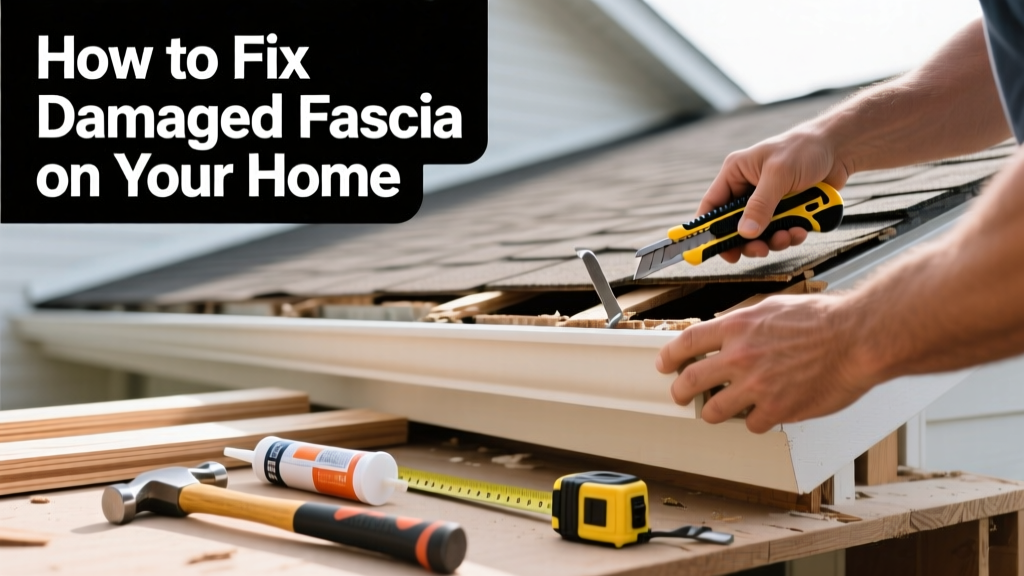
Fascia isn’t glamorous, but it’s critical: it seals the roof’s edge, supports gutters, and blocks pests and moisture from entering your attic. When it rots, cracks, or sags, water can seep behind siding or into rafters—leading to $5,000+ in structural repairs if ignored (Insurance Institute for Business & Home Safety, 2023). Catching damage early lets you patch or replace sections before decay spreads.
Quick Diagnosis
Fascia damage rarely appears out of nowhere. Watch for these telltale signs:
- Soft, spongy wood when pressed with a screwdriver
- Peeling paint or blistered stain, especially near gutter seams
- Gutters pulling away or sagging—even slightly—often signals weakened fascia behind them
- Visible mold, mildew, or dark staining along the roofline
- Small holes or sawdust piles near soffits—possible carpenter ant or termite activity
Tools & Materials Needed
| Item | Purpose | Estimated Cost |
|---|---|---|
| 10-ft aluminum extension ladder | Safe, stable access to roofline without overreaching | $180–$250 |
| 16d galvanized nails or #10 stainless steel screws | Corrosion-resistant fasteners that won’t rust behind gutters | $8–$15 |
| Pressure-treated or PVC fascia board (1×6 or 1×8) | Rot-resistant replacement material; PVC lasts 3x longer than wood in humid climates | $2.50–$6.00/linear ft |
| Caulk gun + exterior-grade polyurethane caulk | Seals joints between new board and rafter tails; prevents capillary wicking | $12–$20 |
| Oscillating multi-tool with flush-cut blade | Cuts damaged wood cleanly without damaging rafters or shingles | $85–$140 |
Step-by-Step Fix
Most fascia repairs fall into three categories—choose based on severity:
- Spot Repair (minor rot): Cut out only the decayed section (minimum 6" beyond visible damage), treat exposed rafter ends with borate solution, then sister a new wood block alongside using construction adhesive and screws.
- Full Board Replacement (moderate damage): Remove gutters first, pry off old fascia, inspect rafter tails for hidden rot, cut and install new board level and plumb, seal all seams, then rehang gutters with new hangers spaced ≤36" apart.
- PVC Overlay (budget-friendly upgrade): Leave sound but weathered wood in place, attach 1×6 PVC fascia over it using corrosion-proof screws every 16", caulk top and bottom edges—no painting required and zero rot risk.
When to Call a Pro
Don’t risk your safety—or your home’s integrity—on these scenarios:
- Rafter tails show softness, cracking, or fungal growth beyond the fascia (structural compromise)
- More than 3 consecutive fascia boards are compromised (indicates chronic moisture intrusion)
- You’d need to work from a roof pitch steeper than 6:12 without fall protection
- Gutter system is integrated (e.g., K-style gutters built into fascia channel) or attached to concealed brackets
"Fascia isn’t just trim—it’s the last line of defense against attic moisture. If you see more than 12 inches of continuous rot, assume hidden damage exists behind it." — Bob Vila’s Home Repair Handbook, 2022 edition
Prevention Tips
Extend fascia life by addressing root causes—not just symptoms:
- Clean gutters twice yearly; clogged gutters cause water to back up and soak fascia from above
- Install drip edge flashing under shingles and over fascia to direct runoff away from wood
- Paint or stain wood fascia every 3–5 years—use acrylic latex with mildewcide in shaded areas
- Add ventilation baffles behind soffits to reduce condensation buildup near rafter ends
Can I use bleach to clean mold off fascia?
No—bleach only kills surface spores and doesn’t penetrate porous wood. It also degrades wood fibers over time. Use a 1:10 mix of oxygen bleach (sodium percarbonate) and water instead. Scrub gently with a stiff nylon brush, rinse thoroughly, and let dry before sealing.
How long does PVC fascia last compared to wood?
PVC fascia typically lasts 30–50 years with no maintenance, while pressure-treated pine lasts 15–25 years if painted regularly and kept dry. According to the Vinyl Siding Institute’s 2021 durability study, PVC retains >95% of its tensile strength after 30 years of UV exposure and freeze-thaw cycling.
Do I need to remove gutters before replacing fascia?
Yes—always. Gutters mount directly to fascia, and prying them off an unstable board risks bending or breaking the gutter itself. Label each hanger location with chalk before removal, and inspect hangers for corrosion while gutters are down.
What size fascia board should I use?
Match the original depth: most homes use 1×6 (5.5" wide) or 1×8 (7.25" wide). Measure the exposed face width—not thickness—of your existing board. Using a deeper board without adjusting rafter tail length creates gaps at the roofline and invites wind-driven rain.
Can I paint over rotted fascia to hide the damage?
No—painting over rot traps moisture and accelerates decay. It also violates building codes in most jurisdictions. The U.S. Department of Housing and Urban Development requires all structural wood to be sound before applying finishes. Sanding and priming won’t fix internal fiber breakdown.
Is fascia the same as soffit?
No—they’re adjacent but distinct components. Fascia runs horizontally along the roof’s edge, visible from street level. Soffit is the underside of the eave, usually vented, and attaches to the fascia’s bottom edge. Damage to one often affects the other, but repair methods differ.
A well-maintained fascia keeps water where it belongs—outside your home—and protects thousands in potential repair costs downstream. Replacing a single board takes half a day and less than $100 in materials, but waiting until multiple sections fail forces full eave reconstruction. For related fixes, see our guides on gutter leak repair and roof vent installation, both of which impact fascia longevity.